US Grants India Temporary Waiver for Russian Oil Amidst Middle East Energy Crisis
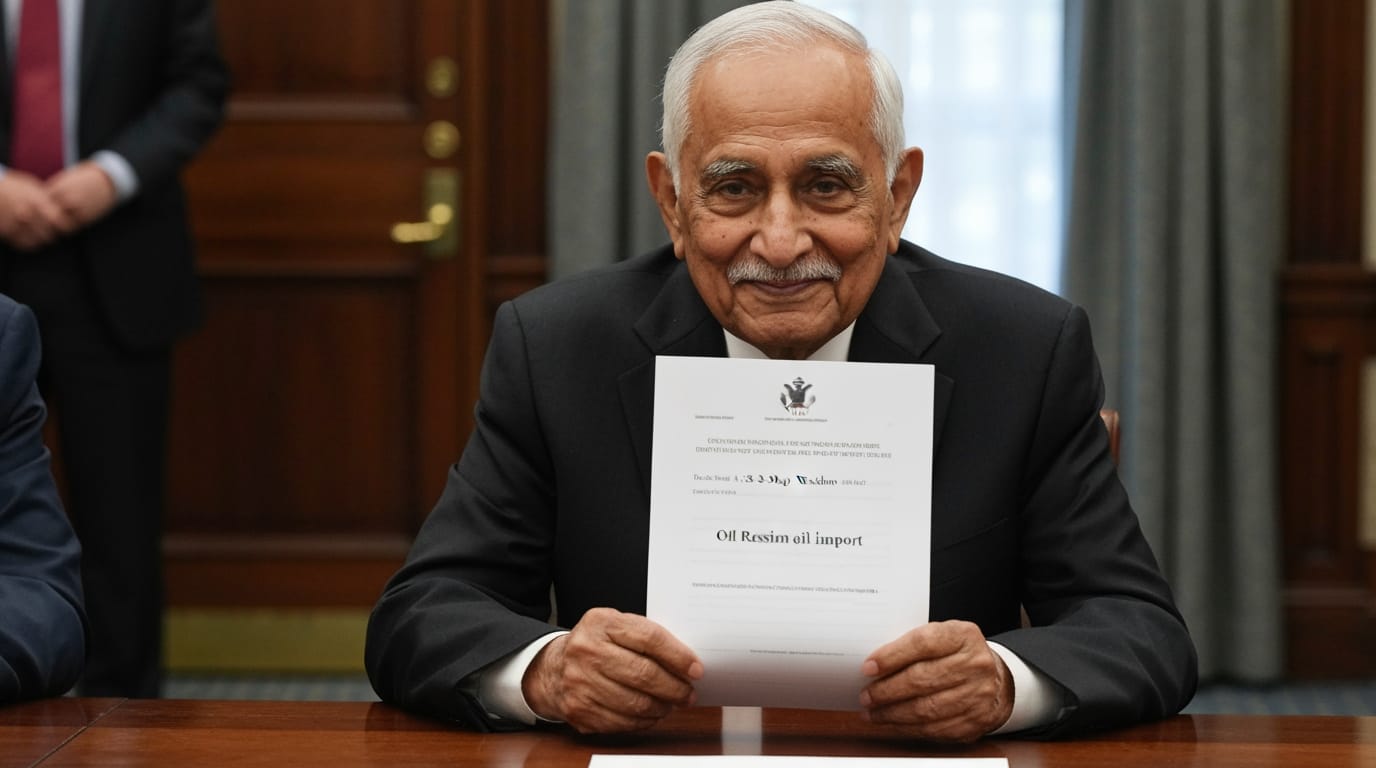
Washington D.C. – In a significant move to stabilize global energy markets, the United States Treasury Department has issued a 30-day waiver allowing India to purchase Russian crude oil currently stranded at sea. The decision, announced by Treasury Secretary Scott Bessent, comes as escalating tensions and conflict in the Middle East threaten to disrupt vital oil supplies and push global prices upward. This temporary measure is designed to alleviate immediate supply pressures, although Washington reiterates its long-term expectation for India to diversify its energy imports away from Russia.
The waiver, issued on Thursday, March 5, 2026, and publicly announced Friday, permits Indian refiners to acquire Russian oil that was loaded onto vessels before the specified date. It is set to expire on April 3, 2026, marking it as a deliberately short-term solution. Secretary Bessent emphasized that this "stopgap measure" is intended to ensure oil keeps flowing into the global market and is structured to prevent significant financial benefit to the Russian government. Millions of barrels of Russian crude are reportedly idling in Asian waters, a direct consequence of previous US sanctions and pressure on purchasers.
Navigating a Volatile Geopolitical Landscape
The immediate catalyst for this waiver is the intensifying Middle East conflict, which has raised concerns over the security of crude shipments, particularly through the Strait of Hormuz. This crucial waterway accounts for approximately 40% of India's oil imports and roughly 20% of the world's oil and gas supply. Iran's actions, described by Secretary Bessent as an "attempt to take global energy hostage," have exacerbated fears of supply shortages and price spikes. India, heavily reliant on imports for nearly 90% of its oil needs and with crude reserves covering only about 25 days of demand, is particularly vulnerable to such disruptions.
This development underscores the delicate balance the United States is attempting to strike between maintaining pressure on Russia over the Ukraine conflict and ensuring stability in the global energy supply chain. The US has, for months, actively urged countries like India to reduce their reliance on Russian energy, even imposing sanctions on Russian oil majors last November. This diplomatic effort had seen success, with India significantly cutting its Russian oil imports in recent months. In January 2026, Russia's share in India's oil imports fell to less than 20% for the first time since May 2022, down from a high of 33% in May 2025.
India's Balancing Act and US Expectations
India's recent reduction in Russian oil purchases was partly a response to Washington's pressure, which included the threat of 25% punitive tariffs. These tariffs were removed by an Executive Order from US President Donald Trump last month, following an interim trade agreement framework between the two nations, which reportedly included a commitment from New Delhi to halt Russian energy imports. However, India has consistently maintained that its energy import policy is guided by national interest and the need to diversify sources.
While the current waiver offers India a temporary reprieve, the US has made it clear that it expects New Delhi to "ramp up purchases of U.S. oil" in the long term. Data indicates that India has indeed been increasing imports from the US, with American oil's share in India's imports growing to 8% between April 2025 and January 2026. This aligns with President Trump's administration's energy agenda, which has reportedly led to record-high oil and gas production in the US.
Economic Implications and Market Response
The announcement of the waiver had an immediate, albeit modest, impact on global crude oil prices. Prices fell in early trading on Friday, offering temporary relief to market concerns about supply disruptions. This suggests that even a short-term authorization for the sale of stranded Russian oil can help temper market volatility fueled by geopolitical uncertainties. However, the broader economic implications for India, a major net importer of oil, remain significant. Elevated oil prices could strain India's current account deficit, weaken its currency, and fuel inflation.
For Russia, the waiver's limited scope – applying only to oil already loaded and explicitly designed not to provide significant financial benefits – means it offers minimal economic relief amidst ongoing international sanctions. The US Treasury specified that the authorization covers only transactions involving oil loaded on vessels as of March 5, 2026, and for delivery to Indian ports, with the purchaser being an Indian entity. This carefully worded authorization underscores the US's continued commitment to its sanctions regime against Moscow, even as it seeks to prevent a wider global economic fallout.
Conclusion: A Precarious Balance
The 30-day waiver for India to import Russian oil is a testament to the complex and often contradictory pressures shaping global energy politics. It highlights the US's dual challenge of isolating Russia economically while simultaneously preventing a severe energy crisis triggered by other geopolitical hotspots. For India, it provides a crucial, albeit brief, lifeline to secure necessary energy supplies amidst regional instability. Yet, the underlying message from Washington remains firm: this is a temporary measure, and a sustained shift towards alternative, non-Russian energy sources, particularly from the United States, is the expected path forward. As the Middle East conflict continues to evolve, the delicate balance between geopolitical objectives and energy security will undoubtedly face further tests.


