US Imposes Maritime Blockade on Iran as Peace Talks Collapse, Escalating Regional War
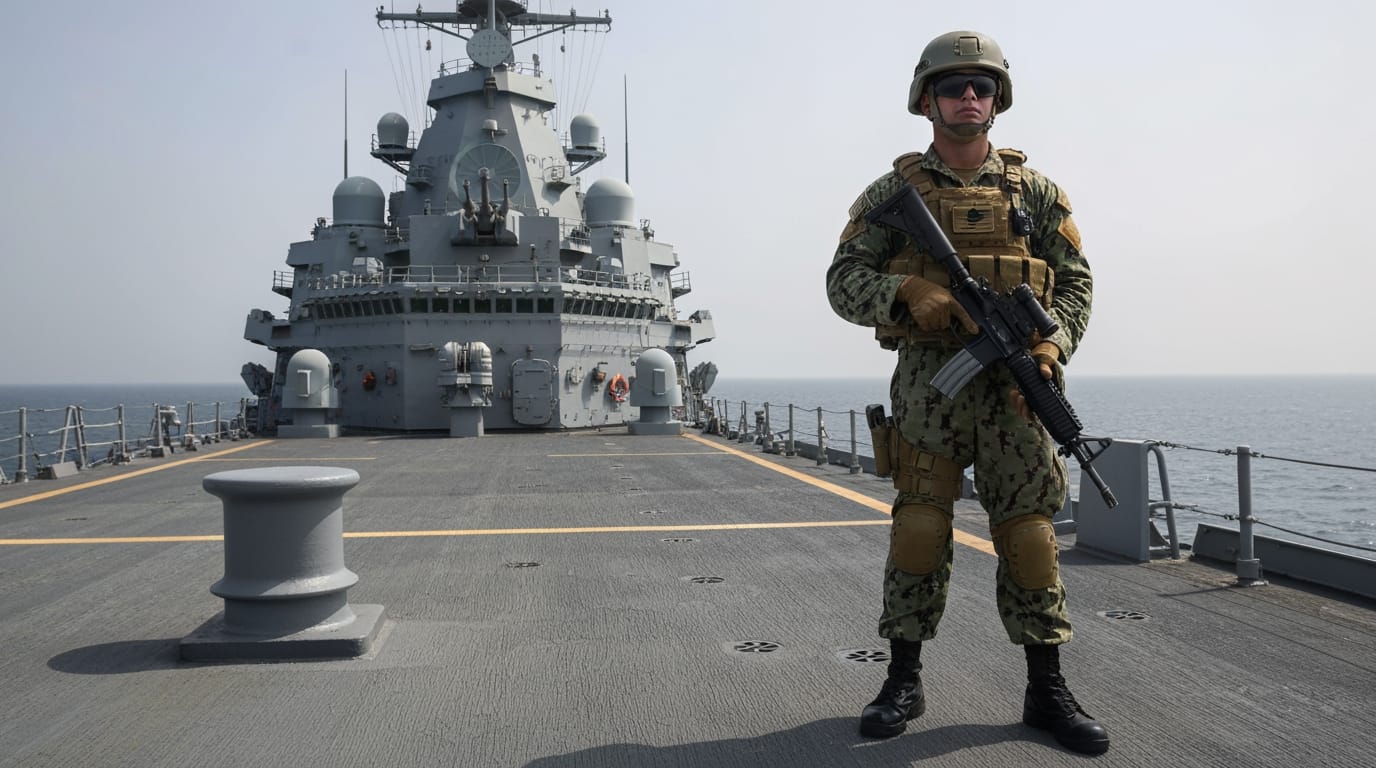
WASHINGTON, D.C. – The United States military is set to initiate a comprehensive maritime blockade of all Iranian ports today, Monday, April 13, 2026, following the dramatic collapse of peace negotiations aimed at ending a contentious seven-week conflict. U.S. Central Command (CENTCOM) announced the drastic measure, which begins at 1400 GMT, after marathon talks in Islamabad, Pakistan, failed to yield an agreement between Washington and Tehran. The decision marks a significant escalation in a conflict that has already claimed thousands of lives and rattled global markets.
The breakdown in diplomacy was attributed by Washington to Iran's steadfast refusal to abandon its nuclear ambitions and its reluctance to ensure the free passage through the strategic Strait of Hormuz. Conversely, Iranian Foreign Minister Abbas Araghchi cited "maximalism, shifting goalposts, and blockade" from the U.S. side as the reasons for the impasse. President Donald Trump, who ordered the naval blockade, emphasized that his administration's goal was to clear the Strait of Hormuz of mines and ensure its accessibility to all shipping, preventing Iran from profiting from its control.
Diplomacy Fails, Blockade Commences
The high-stakes peace talks, led by U.S. Vice President JD Vance, concluded early Sunday without a breakthrough, leaving the status of a fragile two-week ceasefire uncertain. The negotiations, described by President Trump as "very deep," ultimately faltered on key U.S. demands, primarily Iran's nuclear program. Trump asserted that Iran continued to pursue a nuclear weapon, a stance he unequivocally stated would not be tolerated. Adding to the tensions, the U.S. had previously struck Kharg Island, a critical terminal responsible for the majority of Iran's oil exports, during the ongoing hostilities.
The imminent blockade comes amidst a broader regional conflict that has intensified over the past seven weeks, causing widespread casualties and significant disruptions to international trade and energy markets. Despite the ceasefire, which was intended to pause fighting until April 22, the core disagreements remained unresolved, leading directly to the U.S. decision to impose the maritime restrictions.
Impartial Enforcement and Maritime Directives
CENTCOM's statement outlined that the blockade would be "enforced impartially against vessels of all nations entering or departing Iranian ports and coastal areas," encompassing all Iranian ports on the Arabian Gulf and Gulf of Oman. Crucially, the U.S. military indicated that its forces would not impede vessels transiting the Strait of Hormuz if their destination or origin was not an Iranian port. Further instructions for commercial mariners are expected to be issued.
President Trump, in a social media post, directed the U.S. Navy to interdict any vessel in international waters found to have paid an "illegal toll" to Iran. He declared that such vessels would not have safe passage, and issued a stark warning that any Iranian force firing upon U.S. or peaceful vessels would face severe retaliation. This directive underscores the U.S. commitment to challenging what it perceives as Iran's attempts to control maritime traffic in the region through illicit means.
Iran's Retort and Escalation Risks
In response to the escalating situation, Iran's Revolutionary Guards issued their own stern warnings. The Guards' naval command stated that military vessels approaching the Strait of Hormuz would be met with a "firm and forceful response," cautioning that any challenger would become trapped in a "deadly vortex." They reiterated their claim of full control over traffic within the Strait of Hormuz, directly contradicting the U.S. objective of unfettered access.
The announcement of the blockade has immediate and profound implications for global energy security. The Strait of Hormuz is a vital choke point through which approximately 20% of the world's oil supply transits. Reports indicate that oil tankers are already rerouting and avoiding the strait in anticipation of the blockade, signaling potential disruptions to global energy markets. The confrontation also involves a broader geopolitical landscape, with President Trump reportedly engaged in public disagreements with Pope Leo XIV over the ongoing conflict, highlighting the far-reaching impact of the war.
An Uncertain Path Forward
As the U.S. military commences its blockade of Iranian ports, the international community watches with heightened concern. The failure of diplomatic efforts in Pakistan has pushed the long-standing tensions between the United States and Iran into a perilous new phase. The declared blockade, coupled with Iran's defiant posture, creates an environment ripe for miscalculation and further escalation. The coming days will be critical in determining the immediate operational impacts of the blockade, Iran's practical response, and the broader ramifications for global trade, energy prices, and regional stability. The prospect of prolonged conflict and its humanitarian and economic costs looms large, leaving an uncertain path forward for a region already grappling with significant turmoil.


