US Intensifies Strikes Against Iran for Ninth Consecutive Night Amid Escalating Regional Conflict
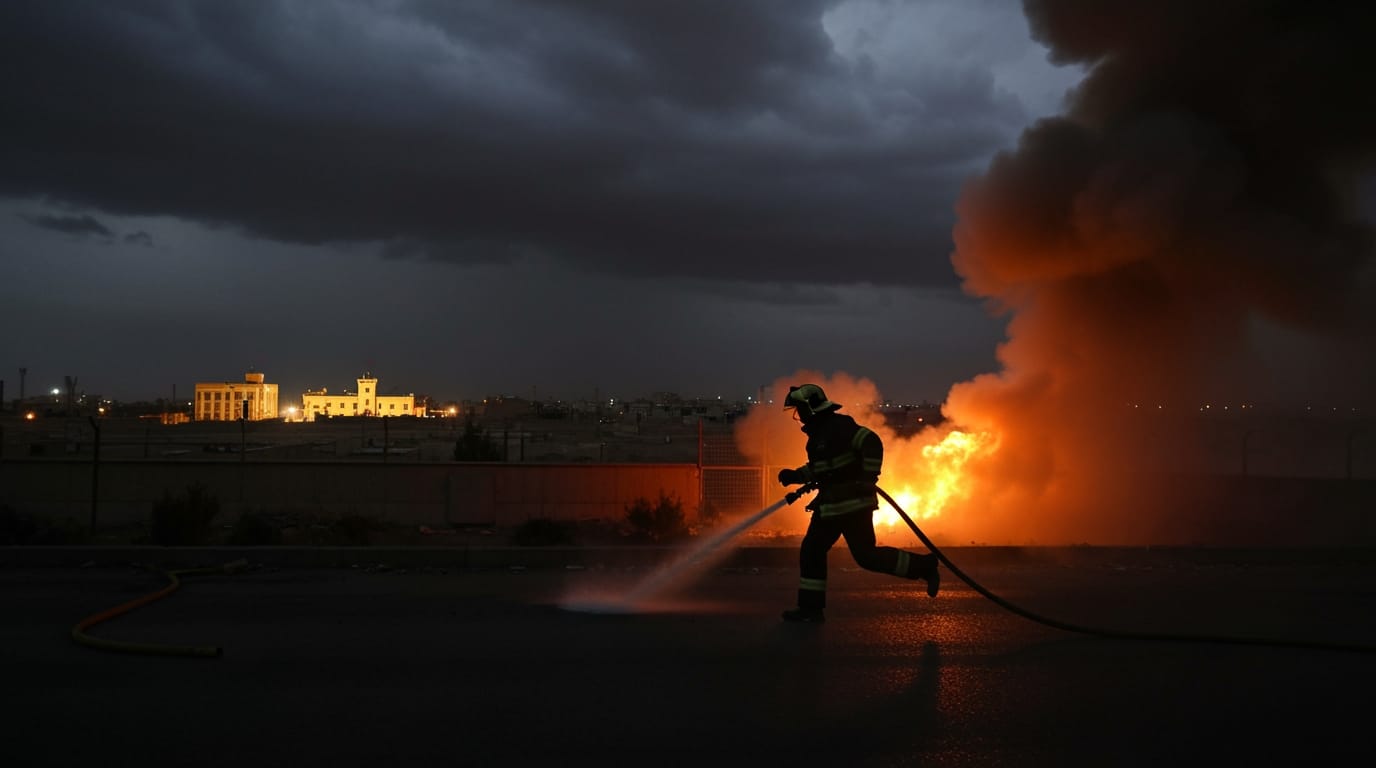
WASHINGTON – The United States military has carried out strikes against Iran for a ninth consecutive night, marking a severe escalation in a conflict that has gripped the Middle East and sent shockwaves through global energy markets. The sustained aerial campaign by U.S. forces comes as an interim deal aimed at de-escalating tensions between Washington and Tehran has collapsed, pushing the two adversaries closer to an all-out confrontation. The latest wave of attacks targets Iranian military capabilities, primarily those involved in menacing commercial shipping and responding to recent Iranian aggression that resulted in American casualties.
The protracted exchange of hostilities underscores the volatile nature of the region, where a complex web of alliances and antagonisms threatens to draw in more actors. As strikes continue, regional powers express growing alarm over the potential for miscalculation and widespread destabilization, while both sides appear entrenched in a dangerous tit-for-tat dynamic with no immediate resolution in sight.
Relentless Retaliation: The Latest Offensive
The U.S. Central Command (CENTCOM) announced the ninth night of strikes against Iranian targets on July 19, 2026, asserting that the operations are designed to "swiftly punish" Iran's Islamic Revolutionary Guard Corps (IRGC). This intensified campaign was triggered by a deadly drone and missile attack on a U.S. base in Jordan on Friday, July 17, which killed two American service members and left one missing, with four others requiring hospitalization. In addition to avenging the loss of American lives, the strikes aim to "degrade Iranian military capabilities used to attack commercial vessels and civilian mariners transiting the Strait of Hormuz".
Targets across Iran have included crucial military infrastructure. US forces have struck Iranian air defense systems, command and control networks, coastal radar sites, anti-ship missile capabilities, and more than 60 IRGC small boats operating in and near the Strait of Hormuz. Specific locations hit within Iran include Qeshm Island, areas near Sirik in Hormozgan province, and sites close to Bandar Abbas, which hosts Iran's largest port and significant naval facilities. In a notable expansion of targets, U.S. forces have also reportedly struck bridges, electrical facilities, and even water desalination plants inside Iran. An Iranian government spokesperson indicated that these recent U.S. strikes have resulted in over 30 Iranian casualties, including seven at a military barracks.
This sustained American response follows a pattern of "tiered" actions, as U.S. officials had previously indicated any retaliation would not be a single event but a prolonged campaign to diminish Iran's capacity for regional aggression. President Donald Trump, signaling a firm stance, has indicated the likelihood of continued strikes throughout the week, potentially expanding targets to include more bridges and power plants.
A Conflict Reignited: Roots of the Current Crisis
The current full-blown conflict between the United States and Iran officially commenced on February 28, 2026, following joint U.S.-Israeli military operations against the Iranian regime. These initial strikes, dubbed "Operation Epic Fury," targeted Iran's nuclear facilities, military infrastructure, and leadership, coming after a conclusion in Washington and Jerusalem that diplomatic avenues had been exhausted and that a nuclear-armed Iran posed an unacceptable security threat. The U.S. had previously engaged Iran-backed militia groups in Iraq and Syria, such as in February 2024 and June 2021, in response to attacks on U.S. personnel. However, the 2026 escalation marked a direct and comprehensive confrontation with Iran itself.
The underlying tensions have been simmering for years, characterized by Iran's nuclear program, its support for regional proxy groups, and its consistent threats to disrupt international shipping lanes. The Strait of Hormuz, a vital chokepoint for global oil supplies, remains a focal point of contention, with Iran frequently threatening to close it in response to perceived provocations. The current crisis intensified significantly after an "interim deal" — intended to establish a lasting cessation of hostilities — dramatically collapsed last month, leading both nations further down a path toward open warfare. Since the broader conflict began in February, 17 U.S. service members have tragically lost their lives.
Widening Regional Fallout and Iranian Counter-Actions
The American strikes have not gone unanswered. Iran has responded with its own offensive actions, expanding the geographic scope of the conflict. Tehran has reportedly fired missiles toward neighboring Jordan, raising concerns in Israel that the conflict could spill over into its territory for the first time in weeks. Beyond direct military confrontations, Iran has targeted critical civilian infrastructure in U.S.-allied countries, hitting power and desalination plants in Kuwait. The Islamic Republic has also launched dozens of missiles and drones at various Gulf nations that host U.S. forces, with Bahrain and Kuwait activating their air defenses to intercept incoming threats. Jordan's air defenses successfully shot down several Iranian missiles during one such barrage.
The immediate consequence for regional commerce has been severe. Shipping traffic through the Strait of Hormuz, a conduit for roughly a fifth of the world’s oil supply, has largely stalled amidst the ongoing hostilities and increased threats to commercial vessels. This disruption portends significant impacts on global energy markets and supply chains. On the diplomatic front, Iran's supreme leader has issued stern warnings, vowing "unforgettable lessons" for the United States if it continues its offensive. Meanwhile, the United Arab Emirates, a key U.S. ally, has also issued a warning to Iran overnight, reflecting the heightened state of alert across the Gulf. Iran has also claimed a "surprise attack on enemy special ops command center" in Syria, indicating its willingness to strike perceived adversaries beyond its borders.
International Concerns and Humanitarian Implications
The relentless tit-for-tat attacks have drawn increasing international concern, with fears mounting over the conflict's potential to spiral out of control and its humanitarian consequences. The targeting of civilian infrastructure, such as bridges, electrical grids, and water desalination plants, by both sides raises serious questions regarding adherence to international humanitarian law. Experts have previously noted that such attacks could be considered war crimes if they disproportionately harm civilian populations. The significant number of reported Iranian casualties from the U.S. strikes underscores the human cost of the ongoing confrontation.
The United Nations and other international bodies have yet to broker a meaningful de-escalation, as both the U.S. and Iran appear determined to press their respective advantages. The strategic imperative for the U.S. to protect its forces and vital shipping lanes clashes directly with Iran's perceived right to respond to attacks on its sovereignty and defend its regional influence. The broader international community watches anxiously, recognizing that a full-scale conflict in the Middle East could have devastating global economic and geopolitical repercussions.
The current situation represents a perilous juncture in the long-standing animosity between the United States and Iran. With both sides engaging in direct and indirect military actions, and an interim peace deal now defunct, the path forward remains fraught with uncertainty. The ninth consecutive night of U.S. strikes highlights a determination to curb Iranian aggression, yet each retaliatory act from either side pushes the region closer to an abyss of widespread war, threatening millions of lives and the stability of a critically important global region.


