US Private Spacecraft Achieves Historic Lunar Landing
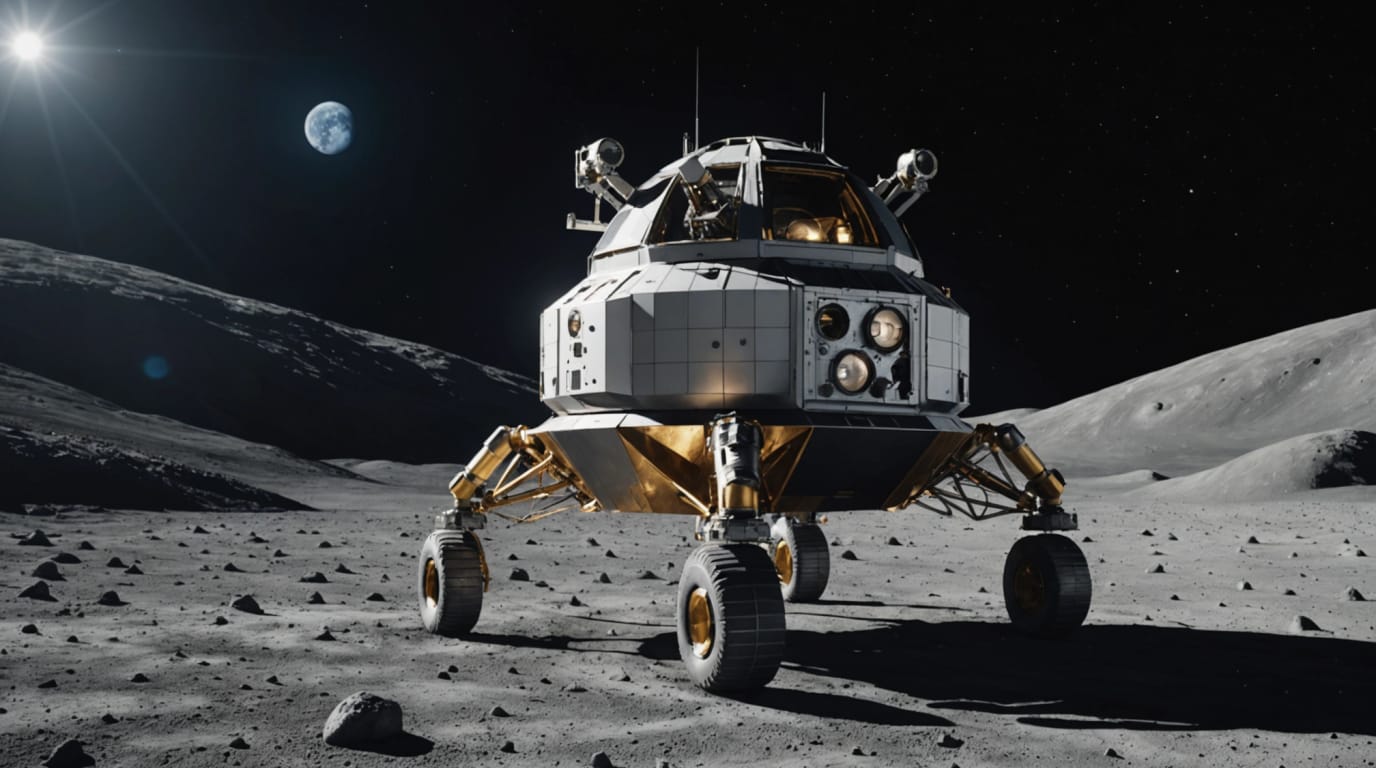
A U.S. company successfully landed its spacecraft on the moon Sunday, marking only the second private mission to achieve the milestone – and the first to do so upright. The successful landing signals a significant step forward for commercial lunar exploration and a boost for NASA's Artemis program.
Firefly Aerospace's Blue Ghost Mission 1 touched down shortly after 3:34 a.m. EST near Mons Latreille, a volcanic formation in Mare Crisium on the moon's northeastern near side. The landing was confirmed by mission control in Austin, Texas, prompting cheers as engineers celebrated the achievement.
The Blue Ghost lander, launched on a SpaceX Falcon 9 rocket on Jan. 15, embarked on a 2.8 million-mile journey. The mission is part of a NASA-industry partnership aimed at reducing costs and supporting Artemis, the program designed to return astronauts to the moon.
A Smooth Lunar Arrival
The landing was not only successful but also upright, a feat that eluded the first private lunar landing attempt last February, which ended with the spacecraft on its side. Firefly's chief engineer, Will Coogan, confirmed the stable position of the lander after touchdown.
The spacecraft autonomously navigated the rocky terrain to select its landing spot, decelerating from thousands of miles per hour to a mere 2 mph. Shortly after landing, Blue Ghost transmitted its first images from the lunar surface, including a "selfie" and a view of Earth as a distant blue dot.
Scientific Objectives
Blue Ghost carries 10 instruments, including a lunar soil analyzer, a radiation-tolerant computer, and an experiment to test the feasibility of using existing global satellite navigation systems for lunar navigation. The lander is designed to operate for a full lunar day, equivalent to 14 Earth days.
During its mission, Blue Ghost is expected to capture high-definition imagery of a total eclipse on March 14, when Earth blocks the sun from the moon's horizon. On March 16, it will record a lunar sunset, providing insights into how dust levitates above the surface under solar influence.
Implications for Lunar Commerce
The successful landing of Blue Ghost is a major milestone for the burgeoning lunar commercial sector. It demonstrates the viability of private companies playing a key role in lunar exploration and resource utilization.
NASA's Artemis program aims to establish a sustainable presence on the moon, and partnerships with private companies like Firefly Aerospace are crucial to achieving this goal. By contracting with private entities for transportation and other services, NASA can focus on its core competencies of scientific research and deep space exploration.
Future Lunar Missions
Blue Ghost is not alone in the current wave of lunar missions. Two other companies' landers are expected to reach the moon soon, further expanding the scope of commercial lunar activities.
The increasing number of lunar missions reflects a growing interest in the moon as a destination for scientific research, resource extraction, and potential future human settlements. The success of Blue Ghost paves the way for more ambitious and complex missions in the years to come.
A New Era of Lunar Exploration
The successful landing of Firefly Aerospace's Blue Ghost lander marks a pivotal moment in lunar exploration. It signifies the growing role of private companies in pushing the boundaries of space exploration and opening up new opportunities for scientific discovery and commercial development. As more companies join the lunar race, the moon is poised to become a hub of activity in the 21st century.


