US Seizes Oil Tanker Off Venezuela Coast, Escalating Tensions in Region
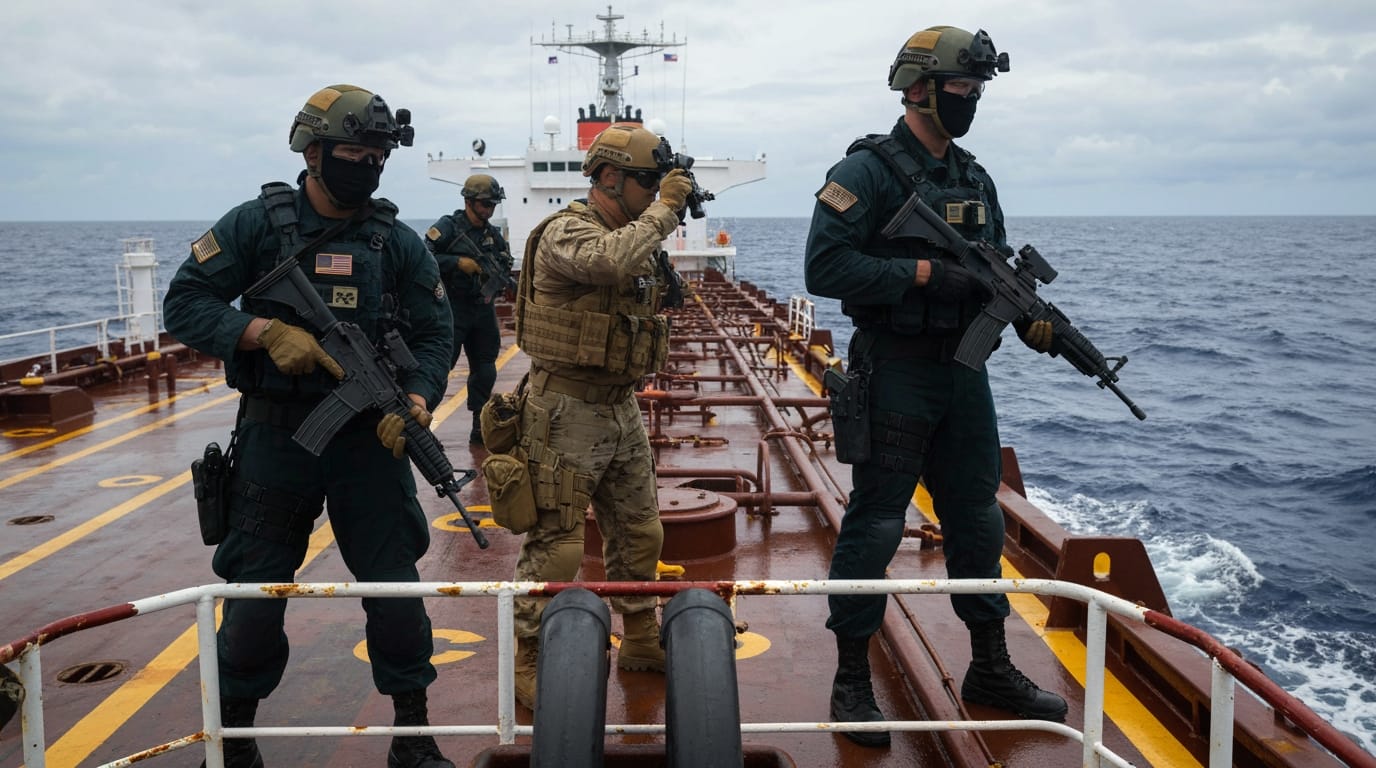
WASHINGTON D.C. – The United States has announced the seizure of an oil tanker off the coast of Venezuela, a move confirmed by President Donald Trump on Wednesday. This operation marks a significant escalation in Washington's ongoing pressure campaign against the government of Venezuelan President Nicolás Maduro, further intensifying an already volatile geopolitical standoff in the Caribbean region. While details regarding the vessel's identity and exact location remain undisclosed by U.S. officials, President Trump characterized the interdiction as the "largest one ever seized," underscoring the assertive nature of the action.
The seizure, reportedly led by the U.S. Coast Guard with support from the Navy, injects a new level of direct intervention into a strategy that has primarily relied on economic sanctions and a heightened military presence. The development comes amid a period of escalating rhetoric and increased military deployments by the U.S. in the vicinity of Venezuela, a nation with the world's largest proven oil reserves.
Decades of Deteriorating Relations and Mounting Pressure
The relationship between the United States and Venezuela has been characterized by deepening animosity, particularly since the Trump administration intensified efforts to dislodge President Maduro from power. Washington views Maduro as an illegitimate leader, having charged him with narco-terrorism and asserting that he maintains power through repression and fraudulent elections. This stance has underpinned a comprehensive "maximum pressure" campaign designed to choke off revenue streams to the Maduro government and foster a transition to democracy.
Key components of this campaign have included a sweeping array of financial and sectoral sanctions. In August 2017, the Trump administration imposed financial sanctions, barring U.S. banks from new financial deals with the Venezuelan government and its state-run oil company, Petróleos de Venezuela S.A. (PDVSA). These measures were expanded in 2019, specifically targeting PDVSA and aiming to prevent Venezuela from being paid for its oil exports to the U.S., freezing billions in assets, and limiting the export of naphtha to Venezuela. These sanctions have severely impacted Venezuela's economy, which relies heavily on oil exports for foreign currency earnings.
Beyond economic measures, the U.S. has significantly bolstered its military footprint in the Caribbean. This includes the largest naval deployment in the region since the 1962 Cuban missile crisis, involving aircraft carriers, fighter jets, and thousands of troops. Military operations have included lethal airstrikes on alleged drug-trafficking boats, with more than 20 such strikes and 80 fatalities reported since September. Just prior to the tanker seizure, U.S. fighter jets conducted flights over the Gulf of Venezuela, signalling a readiness for more direct engagement. President Trump has also indicated the possibility of expanding these strikes onto Venezuelan land.
The Economic and Geopolitical Impact of the Seizure
The seizure of an oil tanker represents a tangible escalation from sanctions, directly disrupting Venezuela's crucial oil supply chain. For a nation where oil exports account for a substantial portion of revenue – over 900,000 barrels per day last month – such an interdiction directly attacks the lifeline of the Maduro government. The U.S. action is clearly aimed at preventing the Maduro administration from accessing energy revenue, a critical source of hard currency for the cash-strapped South American state.
Venezuela's state-owned oil company has increasingly relied on a network of shadowy intermediaries and "ghost tankers" to circumvent U.S. sanctions, often selling its crude at steep discounts to refiners, particularly in China. These transactions often involve complex trading structures and shell companies registered in jurisdictions known for secrecy, making enforcement challenging. The direct seizure of a vessel signals a more aggressive enforcement posture by Washington, targeting these clandestine operations.
The news of the tanker seizure caused global oil prices to rise, with Brent crude futures climbing by 0.8% and U.S. West Texas Intermediate futures settling higher. This immediate market reaction underscores the geopolitical significance of the event and the potential for broader disruptions to global energy supplies if tensions continue to escalate. For Venezuela, the seizure deepens an already severe economic crisis, further limiting its ability to import essential goods, including food and medicine. While some concessions have been made in the past, such as allowing Chevron Corp. to operate, the overall trend has been towards tightening the economic noose.
A Challenging Path Forward
The United States has consistently justified its actions by citing Maduro's alleged involvement in narcotrafficking, human rights abuses, and the subversion of democratic institutions. The U.S. Department of State, under the Trump administration, has explicitly stated that it will not tolerate third countries or their companies engaging in oil production or export with the Maduro regime, threatening sanctions and tariffs against any who do.
This latest seizure is a forceful reaffirmation of that policy, demonstrating Washington's willingness to use direct military and law enforcement actions to enforce its sanctions regime. The operation was conducted under U.S. law enforcement authority. Despite the increased pressure, the Maduro government has consistently vowed to resist what it perceives as U.S. attempts at regime change and military intervention, maintaining that the country's armed forces would defend against any attacks.
The implications for regional stability are considerable. The U.S. continues to press for a democratic transition, while Maduro remains entrenched, backed by key allies. The recent awarding of the Nobel Peace Prize to María Corina Machado, an opposition leader, for her work promoting democratic rights in Venezuela, highlights the international focus on the country's political future. However, the increasing frequency of direct interventions, such as the tanker seizure, indicates a hardening of Washington's approach, raising questions about the trajectory of U.S.-Venezuela relations and the potential for further confrontation in the coming months.
Conclusion
The U.S. seizure of an oil tanker near Venezuela represents a pivotal moment in the protracted struggle between the Trump administration and the Maduro government. Moving beyond economic sanctions and military posturing, this direct interdiction of a Venezuelan asset signals a pronounced shift towards more aggressive enforcement tactics. While framed by Washington as a necessary step to combat a regime accused of illicit activities and undermine democracy, the action further destabilizes Venezuela's already fragile economy and elevates the risk of intensified confrontation in the Caribbean. As global oil markets react to the disruption, the international community watches closely to see whether this bold move will hasten a resolution to the Venezuelan crisis or merely plunge the region into a deeper state of volatility.


