US-Venezuela Conflict Escalates Amid Economic Crisis and Geopolitical Maneuvers
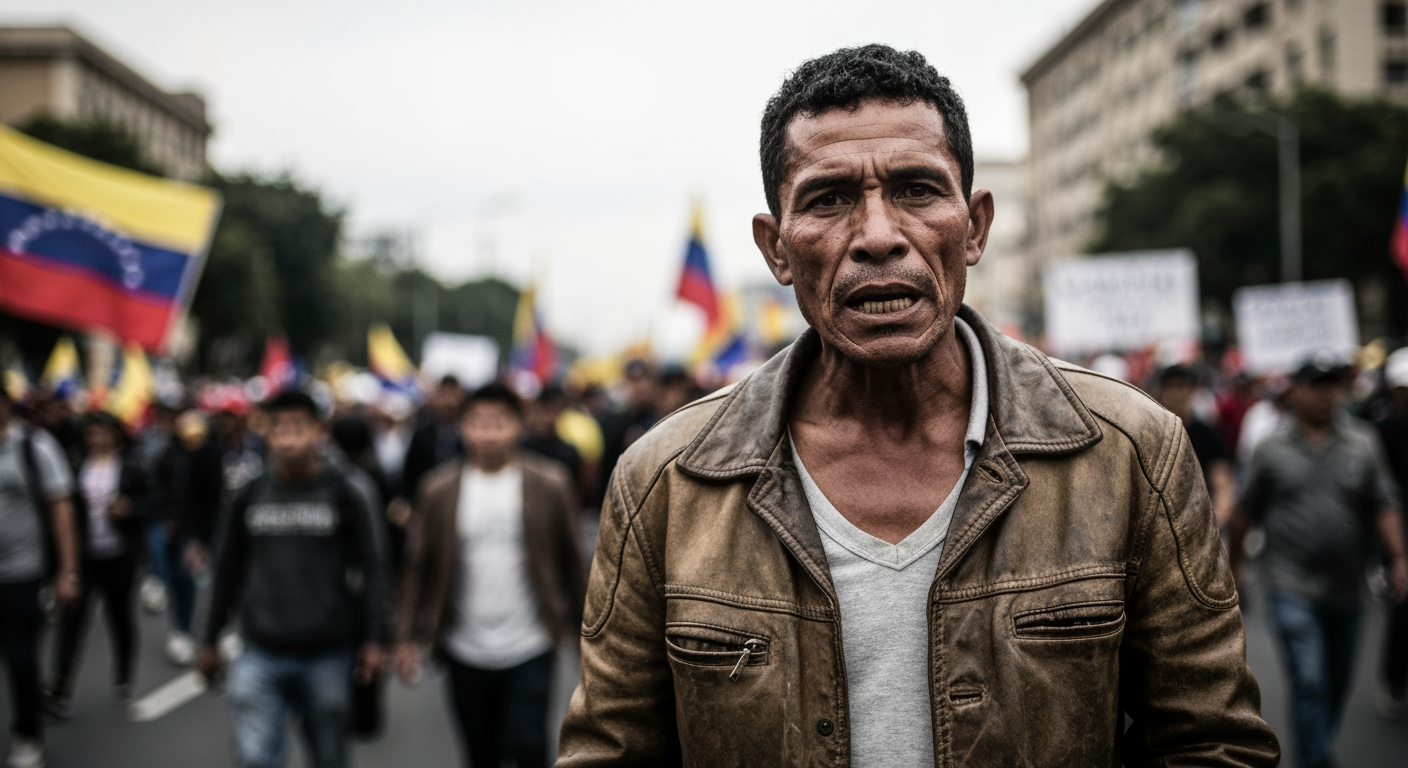
CARACAS, VENEZUELA – The long-standing animosity between the United States and Venezuela has intensified into a complex geopolitical struggle, marked by crippling sanctions, a deepening humanitarian crisis, and recent military posturing. What began as a strained diplomatic relationship has evolved into a high-stakes standoff with profound implications for regional stability and the lives of millions of Venezuelans. At its core, the conflict revolves around fundamental disagreements over political legitimacy, economic policy, and allegations of corruption and human rights abuses against the Nicolás Maduro government.
A Deepening Divide: Roots of the Conflict
The relationship between the United States and Venezuela, historically characterized by close economic ties, particularly in the oil sector, began its marked deterioration with the rise of Hugo Chávez in 1999. Chávez's socialist "Bolivarian Revolution" and his vocal opposition to US foreign policy, coupled with the nationalization of industries including oil, set the stage for increasing friction. Tensions escalated further under Nicolás Maduro, who assumed the presidency following Chávez's death in 2013. The US government's concerns mounted due to what it described as Maduro's increasingly authoritarian rule, suppression of opposition, and engagement in drug trafficking and corruption.
Early US sanctions, initially introduced by the George W. Bush administration in 2005-2006 over alleged non-cooperation on anti-drug and counter-terrorism efforts, broadened significantly under subsequent administrations. In March 2015, the Obama administration declared Venezuela a "threat to U.S. national security" and imposed targeted sanctions on officials accused of human rights abuses during anti-government protests. This marked a pivotal shift, moving beyond mere criticism to direct punitive measures against individuals within the Venezuelan government.
The Weight of Sanctions and Economic Collapse
The economic crisis gripping Venezuela is multifaceted, stemming from a combination of economic mismanagement, over-reliance on oil revenues, corruption, and international sanctions. Venezuela's economy, heavily dependent on oil exports, suffered dramatically from declining global oil prices and a lack of investment and maintenance in its state-owned oil company, PDVSA. This led to a significant drop in oil production, from 1,500 thousand barrels per day (kbpd) before primary sanctions to a low of 337 kbpd in June 2020, though it has since recovered to 850 kbpd.
The United States has systematically ramped up economic pressure, imposing broad financial sanctions in August 2017 that prohibited Venezuela's access to US financial markets and blocked the purchase of Venezuelan debt. Further measures in January 2019 targeted PDVSA, freezing $7 billion of its US assets and preventing payments for petroleum exports to the US, aiming to pressure the Maduro government. These sanctions, along with internal economic policies, contributed to hyperinflation, which peaked at an astronomical 9,500% in 2019, decimating the financial stability of millions.
The economic downturn triggered a severe humanitarian crisis. Living standards plummeted by an estimated 74% between 2013 and 2023, one of the largest declines globally outside of war or state collapse. Millions of Venezuelans face food insecurity, and public services like healthcare and electricity have severely deteriorated. The crisis has led to an unprecedented exodus, with over 7.7 million Venezuelans having fled the country since 2014, making it one of the largest displacement crises in the world. Many of these migrants sought refuge in neighboring Latin American countries, straining regional resources.
Political Legitimacy and International Standoff
The US position hardened significantly in January 2019, when it ceased to recognize Nicolás Maduro as Venezuela's legitimate president, following what it deemed a fraudulent 2018 election. Instead, the Trump administration, along with nearly 60 other nations, recognized Juan Guaidó, then president of the opposition-controlled National Assembly, as the interim president of Venezuela. This move intensified a political standoff, with the US seeking to compel Maduro to cede power through diplomatic, economic, and legal pressure. Guaidó received significant US support, including meetings with high-level officials and recognition as the legitimate leader. However, Maduro retained the backing of several key countries, including China, Cuba, and Russia. The US continued to recognize the 2015 democratically elected National Assembly as the only legitimate branch of the Venezuelan government, even after it stopped recognizing Guaidó's presidential claim in 2023 when the opposition voted to dissolve his interim government.
The 2024 Venezuelan presidential election further exacerbated tensions. Despite the signing of the Barbados Agreement on Electoral Conditions in October 2023, which aimed for free and fair elections, the electoral process was widely criticized for lacking transparency. The Maduro government banned prominent opposition candidates, including María Corina Machado, from participating. While the government-controlled National Electoral Council declared Maduro the winner, the US and independent observers, citing evidence from opposition-collected tally sheets, stated that opposition candidate Edmundo González Urrutia had won by a significant margin. The US has since recognized González as the winner and has called for a peaceful transition.
Escalating Tensions: Military Posturing and Drug Trafficking Allegations
In recent months, the conflict has entered a more precarious phase with increased US military activity in the Caribbean. The Trump administration, in its second term, has intensified its "maximum pressure" campaign against Venezuela, focusing heavily on allegations of drug trafficking. The US has designated the "Cartel de los Soles" (Cartel of the Suns), which it alleges is led by President Maduro, as a foreign terrorist organization. This designation carries significant geopolitical implications, directly linking the Maduro regime to terrorism and drug networks and providing a potential legal basis for further US actions.
US military forces, including naval warships and a nuclear submarine, have been deployed to the waters of Latin America and the Caribbean, ostensibly to combat drug trafficking. In September, the US initiated military strikes against suspected drug shipments at sea, resulting in dozens of fatalities. These actions have drawn criticism and questions regarding their legality under international law, with some observers suggesting they are part of a broader strategy for regime change. The US has also increased the bounty on Maduro's arrest to $50 million, asserting he poses a threat to US national security.
Despite the escalating rhetoric and military presence, there have also been indications of potential dialogue. Recent reports suggest President Trump held discussions with Maduro regarding a possible departure from power, though terms were reportedly rejected. While the US reimposed some sanctions that were temporarily lifted in October 2023 in exchange for electoral promises, significant oil exports from Venezuela to both China and, via carve-outs for US energy majors like Chevron, to the United States, have continued. This ongoing trade, despite sanctions, highlights the complex economic realities intertwined with the political conflict.
An Uncertain Future
The multifaceted conflict between the US and Venezuela reflects a complex interplay of political, economic, and humanitarian factors. The long-term implications for Venezuela's recovery and regional stability remain uncertain. The US continues to advocate for a democratic transition, providing humanitarian aid to Venezuelans both inside the country and in host nations. From FY2017 to FY2024, the US provided over $3.5 billion in humanitarian aid to Venezuela and countries sheltering Venezuelans.
However, the hardening of US policy, coupled with Maduro's continued grip on power and support from allies like Russia and China, creates a volatile environment. The ongoing economic and humanitarian crisis within Venezuela, coupled with the potential for further military escalation or sustained covert operations, underscores the critical and dangerous phase the relationship has entered. The path forward is fraught with challenges, as both sides navigate a complex landscape of diplomatic pressure, economic leverage, and the shadow of military confrontation, all while the Venezuelan people continue to grapple with profound hardships.
Related Articles


Mounting Frustration Grips Russia as Economic Hardship and War's Toll Deepen
Moscow, Russia – A palpable shift in public sentiment is emerging across Russia, with growing frustration among citizens fueled by a confluence of economic pressures, increasing internet restrictions, and the undeniable...

Germany's Strategic Calculus: Ukraine Aid is an Investment in European Security, Not Charity
Berlin – The ongoing provision of substantial aid to Ukraine by Germany and its allies is increasingly being framed not as an act of altruism, but as a crucial investment in European security and stability. This...