US Vice President Vance Arrives in Hungary Amidst Contentious Election, Boosting Orbán's Re-election Efforts
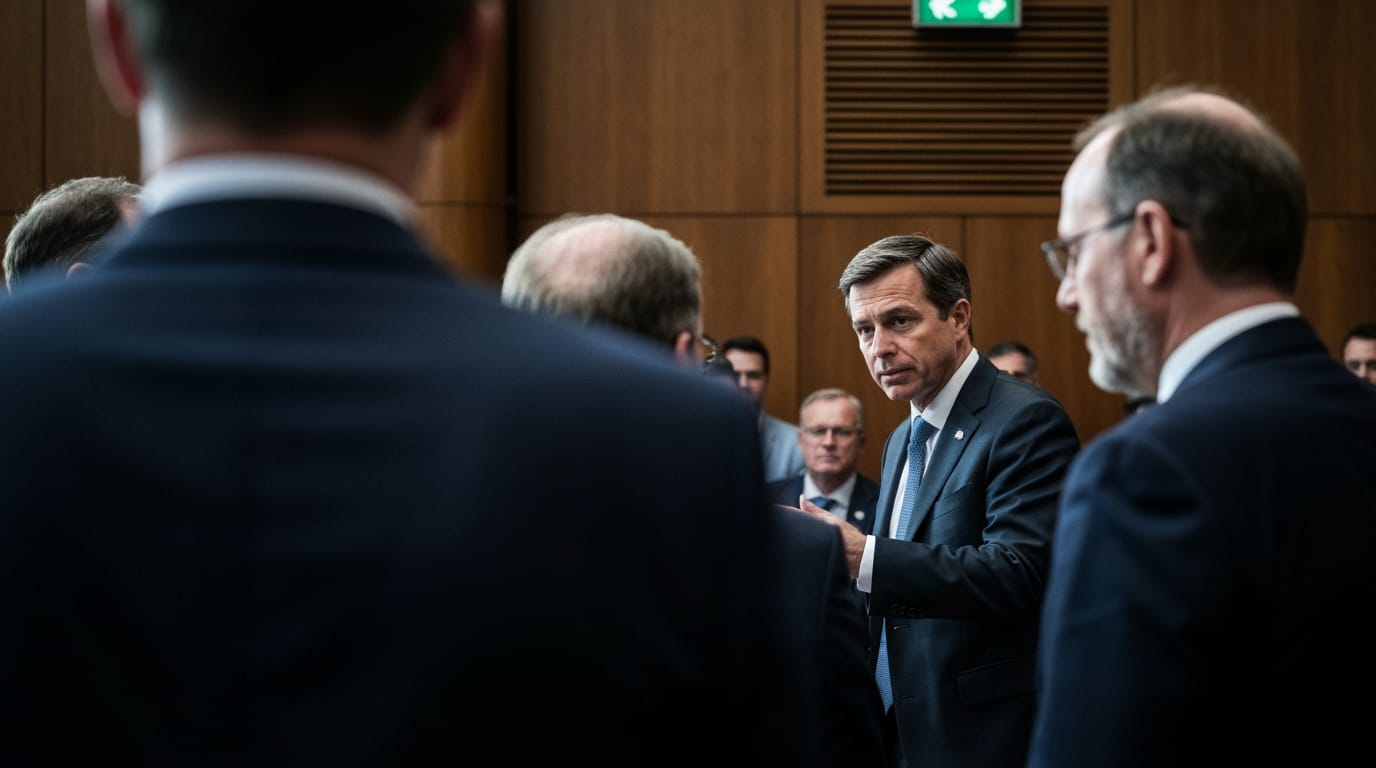
Budapest, Hungary – In a highly unusual move that underscores the Trump administration's deep alignment with European nationalist movements, U.S. Vice President JD Vance arrived in Budapest on Tuesday for a two-day visit aimed at bolstering Hungarian Prime Minister Viktor Orbán's re-election campaign. With parliamentary elections slated for April 12, Orbán, a figurehead of the global far-right, faces his most formidable challenge in two decades, making Vance's direct intervention a significant development in Hungarian and international politics.
The visit by the second-highest-ranking U.S. official, just days before Hungarians head to the polls, marks a clear and overt endorsement by the Trump administration. Vice President Vance, accompanied by his wife, is scheduled to engage in bilateral meetings with Prime Minister Orbán and participate in a joint campaign rally, further signaling Washington's "all-in" commitment to an Orbán victory. This high-profile support follows a pattern set by President Donald Trump, who has repeatedly endorsed Orbán, describing him as a "truly strong and powerful leader," and a February visit by U.S. Secretary of State Marco Rubio, who also publicly lauded the Hungarian leader.
An Unprecedented Intervention in a Tight Race
Prime Minister Orbán, who has led Hungary since 2010 and is seeking his fifth consecutive term, is contending with an unexpectedly strong challenge from Péter Magyar, a former Fidesz insider turned opposition leader. Magyar, heading the center-right Tisza party, has garnered significant momentum by focusing on domestic concerns such as corruption, inflation, and deteriorating public services, issues that resonate deeply with Hungarian voters. Independent polls indicate Fidesz is trailing Tisza by a substantial margin, often between 10 to 20 percentage points, marking this election as Orbán's toughest contest in his nearly 40-year political career.
Vance's appearance at an Orbán rally, described by analysts as an "unusual step" for a foreign leader, directly contrasts with typical diplomatic practice where politicians generally refrain from actively participating in the electoral campaigns of other nations. Orbán himself has previously criticized any external commentary on Hungarian elections as "meddling" and a breach of sovereignty. The significance of this visit is underscored by the Hungarian Foreign Minister Péter Szijjártó, who hailed it as historic, noting it is the first visit by a U.S. Vice President since 1991 and the highest-level U.S. visit since George W. Bush in 2006.
Ideological Kinship and the "Illiberal Democracy" Model
The Trump administration's staunch support for Orbán stems from a deep ideological affinity. Orbán has cultivated an image as a champion of "illiberal democracy," advocating for national sovereignty, restrictive immigration policies, and traditional values, while simultaneously curtailing LGBTQ+ rights and exerting control over media and academia. These stances have made him an inspirational figure for a segment of American conservatives and the "Make America Great Again" (MAGA) movement.
The shared worldview extends to foreign policy, particularly regarding Europe and Russia. Orbán has maintained cordial ties with Moscow, notably refusing to send weapons to Ukraine and asserting that Kyiv should never join the European Union. This position has frequently put Hungary at odds with the European Union, which has, in turn, suspended significant cohesion and recovery funds due to concerns over Hungary's judicial independence and democratic freedoms. Conversely, the Trump administration's approach has often been characterized by a skepticism towards traditional European alliances, with some analysts suggesting Vance's visit aligns U.S. interests more closely with Russia's in Europe.
Domestic Concerns vs. International Endorsement
Despite the high-profile international backing, political analysts express skepticism about whether Vance's visit will significantly sway Hungarian voters. Domestic issues, particularly the cost of living, inflation, and perceived corruption, are dominating the electoral discourse and appear to be the primary drivers of voter sentiment. Orbán's campaign has strategically emphasized hostility towards Ukraine and President Volodymyr Zelensky, attempting to frame this as a strategy to appeal to Hungarian voters by promising to keep the country out of international conflicts.
However, the opposition Tisza party, led by Péter Magyar, has successfully capitalized on widespread discontent with the current government's handling of the economy and its perceived democratic backsliding. Magyar's rise from within Fidesz has presented Orbán with a challenge unlike any he has faced, despite Fidesz's historical advantage from an electoral system designed to favor the largest party.
Broader Implications for Transatlantic Relations
Vance's visit is occurring against a complex geopolitical backdrop, including the ongoing six-week-long war in Iran, which has reportedly impacted global energy prices and President Trump's approval ratings. This context adds another layer of scrutiny to a visit already seen as a departure from diplomatic norms. The open support for Orbán is viewed by some as an effort by the Trump administration to solidify an "illiberal bloc" within Europe, further distancing the U.S. from its traditional European allies.
Should Orbán lose, it would be considered a significant setback for the global conservative movement and the MAGA agenda. Conversely, a victory, particularly after such direct U.S. intervention, could embolden leaders who advocate for "illiberal democracy" and further strain Hungary's already contentious relationship with the European Union, potentially impacting the bloc's unity and its response to critical challenges like the war in Ukraine. The outcome of the April 12 election will therefore have repercussions far beyond Hungary's borders, shaping the future of transatlantic relations and the trajectory of conservative movements worldwide.


