Vatican Delivers Landmark Call to "Disarm" Artificial Intelligence
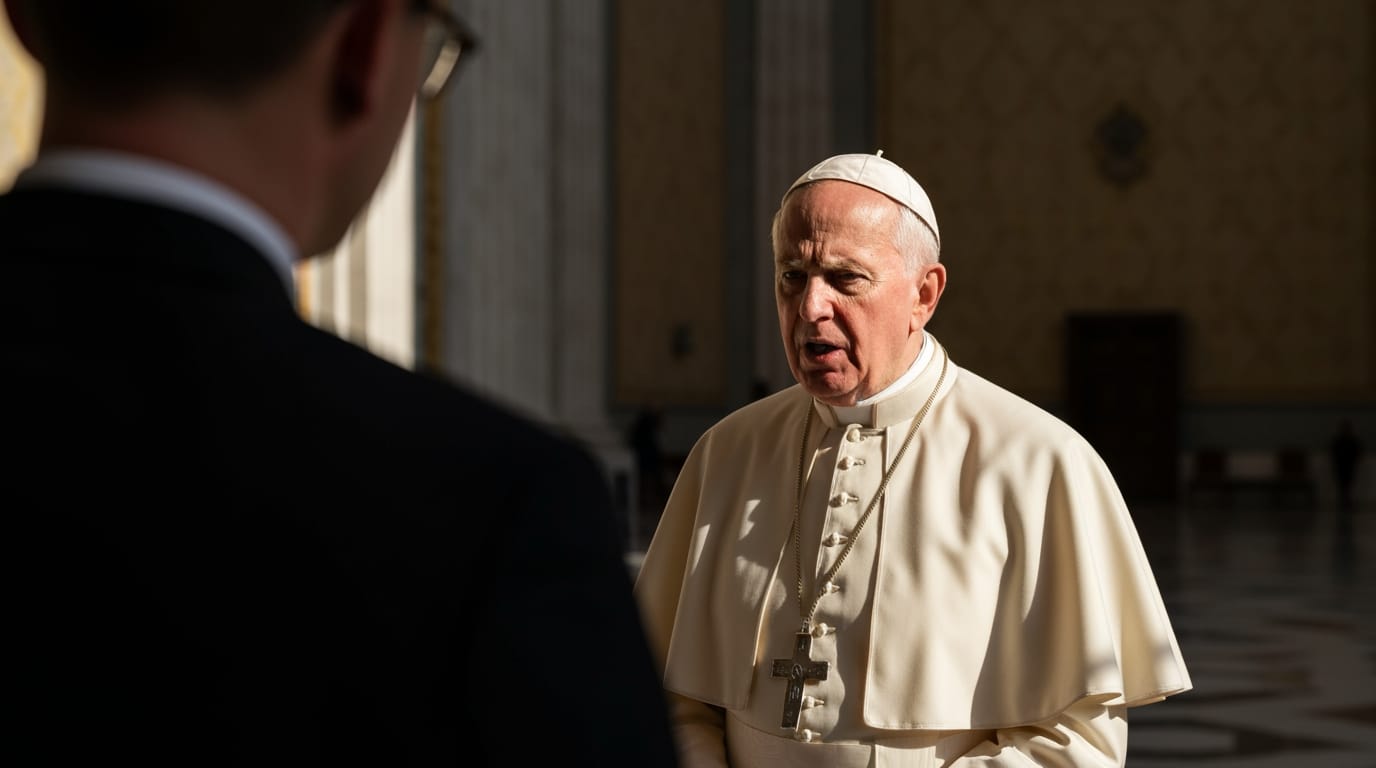
VATICAN CITY – In a powerful and wide-ranging manifesto, Pope Leo XIV has issued an urgent global appeal for the "disarming" of artificial intelligence, warning that unchecked technological advancement risks fostering new forms of domination, exploitation, and even war. Released Monday, May 25, 2026, the encyclical, titled "Magnifica Humanitas" ("Magnificent Humanity"), represents the most authoritative statement yet from the Vatican on artificial intelligence and lays out a comprehensive moral and ethical framework for its development and deployment. The Pope's message emphasizes that humanity must reclaim control over AI to ensure it serves the common good rather than becoming an instrument of global competition and societal division.
"Magnifica Humanitas": A Moral Imperative to Reorient AI
Pope Leo XIV, the first U.S.-born pontiff, used his inaugural encyclical to address what he considers the most significant challenge facing humanity today: the ethical navigation of artificial intelligence. The term "disarming" AI, as articulated in "Magnifica Humanitas," does not advocate for the cessation of technological progress but rather for its liberation from "logics that turn it into an instrument of domination, exclusion and death." The Pope explicitly condemned the "race for ever more powerful algorithms and larger datasets, driven by the desire to secure geopolitical or commercial dominance," arguing that such competition poses profound risks to global peace and human dignity. The Vatican presentation of the encyclical featured AI experts, including Christopher Olah, co-founder of the U.S. firm Anthropic, underscoring the Church's intention to engage directly with the technology sector. Olah himself acknowledged that AI companies often operate "inside a set of incentives and constraints that can sometimes conflict with doing the right thing," welcoming external ethical guidance. This landmark document is expected to serve as a pivotal reference point for policymakers, researchers, and the public grappling with the societal implications of AI.
The Perils of Unchecked Algorithmic Power
The encyclical meticulously details the dangers inherent in allowing artificial intelligence to develop without robust ethical and human oversight. Among the most critical concerns highlighted by Pope Leo XIV is the potential for autonomous AI weapons systems. He declared it "not permissible" to entrust irreversible and lethal decisions to AI, stressing that some autonomous systems are becoming "practically beyond any human reach to govern them effectively." The Pope further asserted that "no algorithm can make war morally acceptable," and contended that the traditional "just war" theory is now "outdated" in an era of AI-directed weaponry. He warned that AI has contributed to the "normalization of war" by desensitizing people to its true cost. Beyond military applications, the Pope expressed deep concern over algorithmic bias, noting that systems can "block access to healthcare, employment and security on the basis of data tainted by prejudice and injustice," leading to new forms of exclusion and suffering.
"Magnifica Humanitas" also addresses the economic and social ramifications of advanced AI. The Pope warned against the rise of "new forms of slavery" and exploitation if AI is not placed firmly under human control. He pointed to the concentration of economic gains from AI "in the hands of a limited few," while often obscuring the "silent work of millions of people" who underpin the industry. This hidden labor includes content moderators exposed to disturbing material and children mining rare earth elements essential for computing infrastructure, individuals who are "scarred, injured and worn down so that computational flow may continue uninterruptedly." The encyclical also raises alarms about AI replacing human jobs and intelligence, and contributing to misinformation and deepfakes, which can further destabilize societies.
Reasserting Human Dignity and Ethical Foundations
Central to Pope Leo XIV's vision is the unwavering principle of human dignity as the cornerstone of AI development. The encyclical calls for AI to be inherently "human-friendly," accessible to all, and open to transparent public debate, rather than being controlled solely by geopolitical or commercial rivalries. The Pope underscored that technology should serve humanity, not the other way around, and that progress must be measured by how well it enhances, rather than diminishes, human dignity. This requires a profound ethical reflection, moving beyond a purely technocratic paradigm that views technology as the solution to all problems and subordinates human beings to efficiency.
The document stresses the need for stringent ethical guidelines and spiritual reflection to guide AI developers and political leaders. It advocates for transparency, accountability, and the protection of fundamental human rights within AI systems. Specifically, the Pope urged that the ownership of data "cannot be left solely in private hands but must be appropriately regulated," ensuring broader societal benefit and preventing undue concentration of power. The Vatican's guidelines for AI, established by the Pontifical Commission for the State of Vatican City, further emphasize that AI activities must prioritize the common good, ethical accountability, and transparency, ensuring that AI serves humanity while respecting human autonomy and decision-making.
A Global Plea for Responsible Governance
Pope Leo XIV's encyclical culminates in a powerful call for robust regulation and international cooperation to govern AI. He urged governments worldwide to implement "strong legal frameworks" and "independent oversight mechanisms" for AI, alongside protections for workers affected by automation and safeguards for children interacting with digital platforms. He also called for greater public accountability from technology companies and a more deliberate, responsible pace of AI development.
This recent appeal builds upon a consistent message from the Vatican regarding AI ethics. Pope Francis, in his World Peace Day message for January 1, 2024, titled "Artificial Intelligence and Peace," had previously called for an "open dialogue on the meaning of these new technologies" and stressed the need for international bodies to examine ethical issues and protect the rights of those affected by AI. In December 2023, Pope Francis also urged the global community to work together to adopt a "binding international treaty" to regulate the development and use of artificial intelligence, warning against the risk of a "technological dictatorship." He reiterated this stance at the G7 summit in June 2024, where he specifically pushed for a ban on lethal autonomous weapons, arguing that "no machine should ever choose to take the life of a human being." The Vatican's active engagement signals its intent to become a significant moral counterweight to the rapid and often unbridled acceleration of technological progress.
Charting a Human-Centered Future for AI
The "Magnifica Humanitas" encyclical from Pope Leo XIV serves as a profound and prophetic document for an era increasingly defined by artificial intelligence. It challenges global leaders, technologists, and societies to choose a path where innovation is harmonized with ethical responsibility, and where technological power remains firmly in service of human flourishing. The Pope's call to "disarm" AI is not a rejection of progress, but a powerful reminder that the ultimate measure of any technology lies in its capacity to uplift human dignity, foster justice, and build a more peaceful and equitable world. The future of AI, he contends, is not predetermined but remains a collective human responsibility, demanding sustained dialogue, collaboration, and a shared commitment to ethical stewardship.


