Venezuela Grapples with Deluge of Disinformation as Fake News Shapes Perception
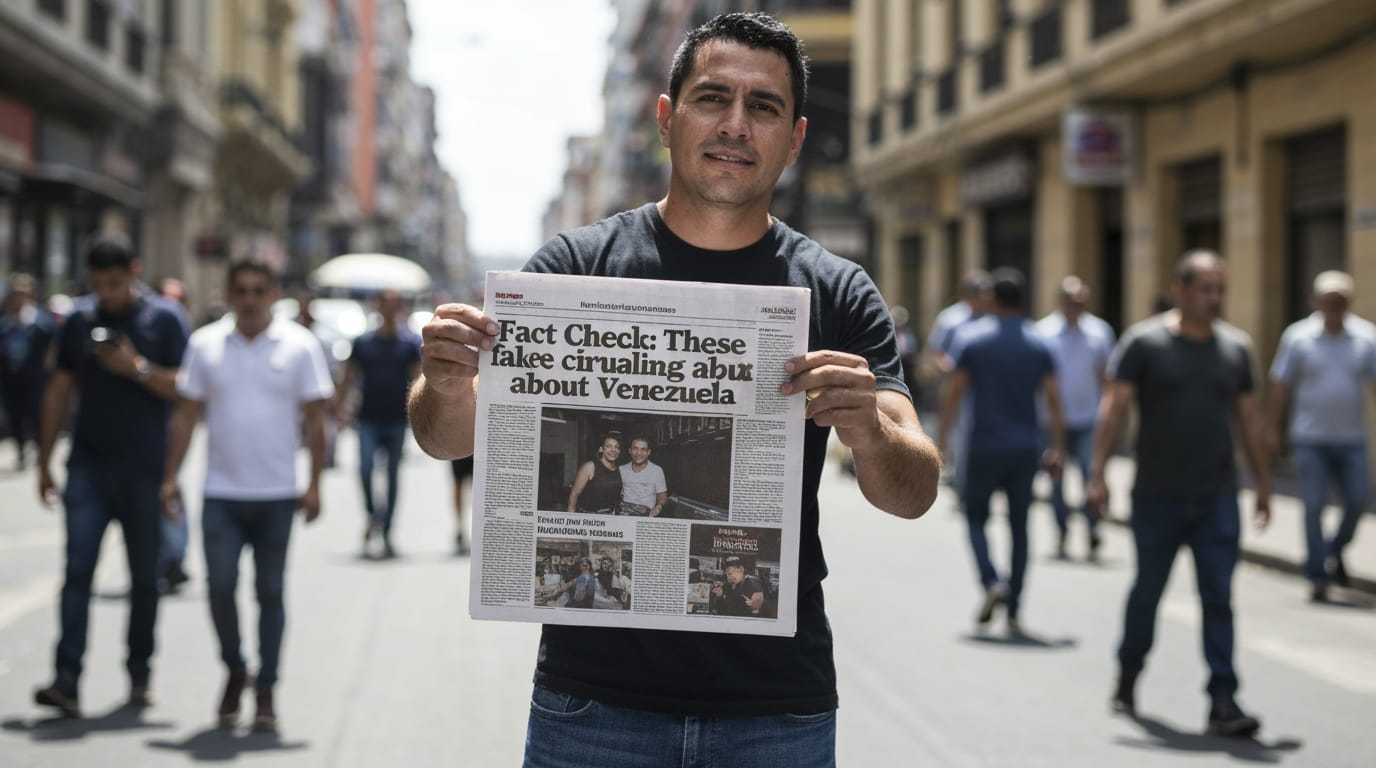
CARACAS, Venezuela – In a nation marked by profound political and economic instability, Venezuela has become a critical battleground in the global fight against misinformation. A pervasive fog of false narratives, manipulated images, and decontextualized videos consistently clouds public understanding, making it increasingly difficult for citizens to discern truth from fiction. This information crisis, exacerbated by a constrained media landscape and the rapid proliferation of digital content, impacts everything from political discourse to public safety.
The Fog of Deception: Venezuela's Information Crisis Deepens
Venezuela's information sphere is uniquely vulnerable to manipulation. Years of government control over traditional media, coupled with economic pressures and censorship, have created an "information desert" where independent reporting struggles to reach the populace. This void often forces Venezuelans to rely on social media platforms like WhatsApp, Facebook, and X (formerly Twitter) for news, ironically making them more susceptible to the very disinformation campaigns they seek to avoid. Organizations like Medianálisis, Provea, IPyS, and Espacio Público have extensively profiled and studied the issue, highlighting how government secrecy and obstruction of information access intensify the reach of disinformation.
Disinformation in Venezuela takes multiple forms, ranging from outright fabrications (hoaxes or "bulos") to omissions, information saturation, and other manipulative tactics. The motivations behind these campaigns are varied, including fueling fear, creating distraction, causing confusion, and validating existing beliefs or outrage. Propagandists often blend a single true detail with several false additions to create plausible but deceptive stories, or they overwhelm the information space with multiple conflicting versions of events, leading many to abandon the pursuit of truth entirely.
Recent Turmoil Fuels a Wave of Fabricated Content
The recent alleged capture of Venezuelan leader Nicolás Maduro by U.S. forces on January 3, 2026, served as a stark illustration of how quickly and widely fake news can spread during moments of high tension. Social media platforms were inundated with AI-generated images, outdated videos, and falsely re-contextualized content purporting to show the operation and its aftermath.
For instance, an AI-generated image depicting Maduro in white pajamas aboard a military aircraft quickly went viral, presented as evidence of his humiliation, despite inconsistencies. Another widely shared photo, allegedly showing a U.S. soldier posing with a hooded Maduro, was later confirmed by NewsGuard to be an image from Saddam Hussein's 2003 capture, not related to Venezuela. Similarly, videos claiming to show widespread public celebrations in Venezuela following Maduro's capture were debunked as either AI-generated or old footage from 2024 protests against election results or in support of opposition figures. Even a video of an overnight bombing, falsely linked to the operation in Venezuela, was identified as footage from an Iran-Israel conflict in October 2024.
These instances demonstrate a deliberate strategy to exploit breaking news with manipulated visuals, blurring the lines between actual events and engineered narratives. The rapid dissemination of such content, often amplified by prominent social media accounts, highlights the sophisticated nature of modern disinformation tactics.
State-Sponsored Narratives: A Tool of Control
The Venezuelan government has been identified as a significant perpetrator of disinformation. Reports indicate that "Chavismo," the government's left-wing populist ideology, has pioneered the use of bots and trolls as propaganda operatives on platforms like X. Investigations by Probox revealed that nearly 90% of over 200 million political tweets were boosted by the Ministry of Communication and Information (MinCI). These automated and human-operated accounts actively promote pro-regime narratives, attack and discredit dissent, and manipulate online trends.
The government's media ecosystem is characterized by "communicational hegemony," where state resources are used to censor and manipulate information, often leaving critical data, such as the national budget and health indicators, undisclosed. This opacity further fuels an environment where false news can thrive, undermining public trust and hindering journalistic efforts. Examples of state-sponsored misinformation include the use of generative AI in February 2023 to create fake English-language newscasts promoting the country's supposed economic recovery and touting a tourism boom, while dismissing claims of widespread impoverishment.
Beyond internal control, the Maduro government has been accused of using information operations to interfere with elections in other Latin American countries, influence judicial decisions in Africa, and undermine sanctions against human rights violators.
The Digital Battlefield: Social Media's Dual Role
Social media platforms, while being primary conduits for the spread of disinformation, also serve as crucial avenues for independent news and resistance. With traditional media outlets facing severe restrictions, many Venezuelans turn to platforms like WhatsApp (46.5%) and Facebook (15.1%) as their main sources of news. This dual role creates a complex dynamic where individuals are exposed to both validated, fact-checked information and sophisticated disinformation campaigns.
The government's strategy includes blocking access to independent news websites, which are often the only sources providing critical perspectives. When the presidential campaign officially began on July 4, two fact-checking websites were immediately blocked by the government, with another following shortly after. This pattern of censorship is further compounded by state-controlled television and radio stations being flooded with propaganda favorable to the ruling party.
Despite these challenges, social media allows for the rapid sharing of genuine testimonies and alternative viewpoints, often through private chat groups. However, this also means that citizens frequently encounter a mix of authentic information, edited videos, anonymous audio messages, and government narratives within the same digital spaces, complicating verification efforts.
Battling the Tide: Fact-Checkers on the Front Lines
Amidst this turbulent information landscape, dedicated fact-checking organizations and collaborative journalism initiatives are working tirelessly to combat disinformation. Groups like C-Informa, a coalition formed in November 2022 by Medianálisis, Efecto Cocuyo, El Estímulo, Cazadores de Fake News, and Probox, are producing content to explain how disinformation operates in Venezuela. They investigate and expose organized disinformation networks, with support from international partners. For example, one investigation by C-Informa led to Twitter closing nearly 150 accounts dedicated to distributing pro-regime propaganda related to the 27th UN Climate Change Conference.
EsPaja.com, another prominent fact-checking initiative launched in October 2019, conducts investigations, training, and offers a Citizens' Action Manual against Disinformation. Their work has prompted shifts in Venezuelan political discourse, such as instances where a Minister of Information's account ceased issuing misleading COVID-19 information after consistent debunking. Between July 2024 and February 2025 alone, over 400 instances of misinformation were reported, with Facebook, X, and WhatsApp being the most common platforms for their spread. These efforts underscore the ongoing struggle to provide accurate information to a public often left in the dark.
Conclusion: The Enduring Search for Truth
The proliferation of fake news in Venezuela is more than an inconvenience; it is a critical threat to civic discourse, democratic processes, and public trust. The combination of government-orchestrated propaganda, a restricted media environment, and the rapid spread of manipulated content through social media creates an intricate web of deception. While the country faces deep-seated challenges in accessing reliable information, the tenacious efforts of independent journalists and fact-checking organizations offer a crucial counter-narrative, striving to pierce through the fog and bring clarity to a population yearning for truth. In a world where every headline can become a weapon and every viral post can sway emotions, the ongoing battle against disinformation in Venezuela remains a testament to the enduring importance of journalistic integrity and critical thinking.


