Venezuela Plunges into Uncertainty Following U.S. Military Operation, Maduro's Capture
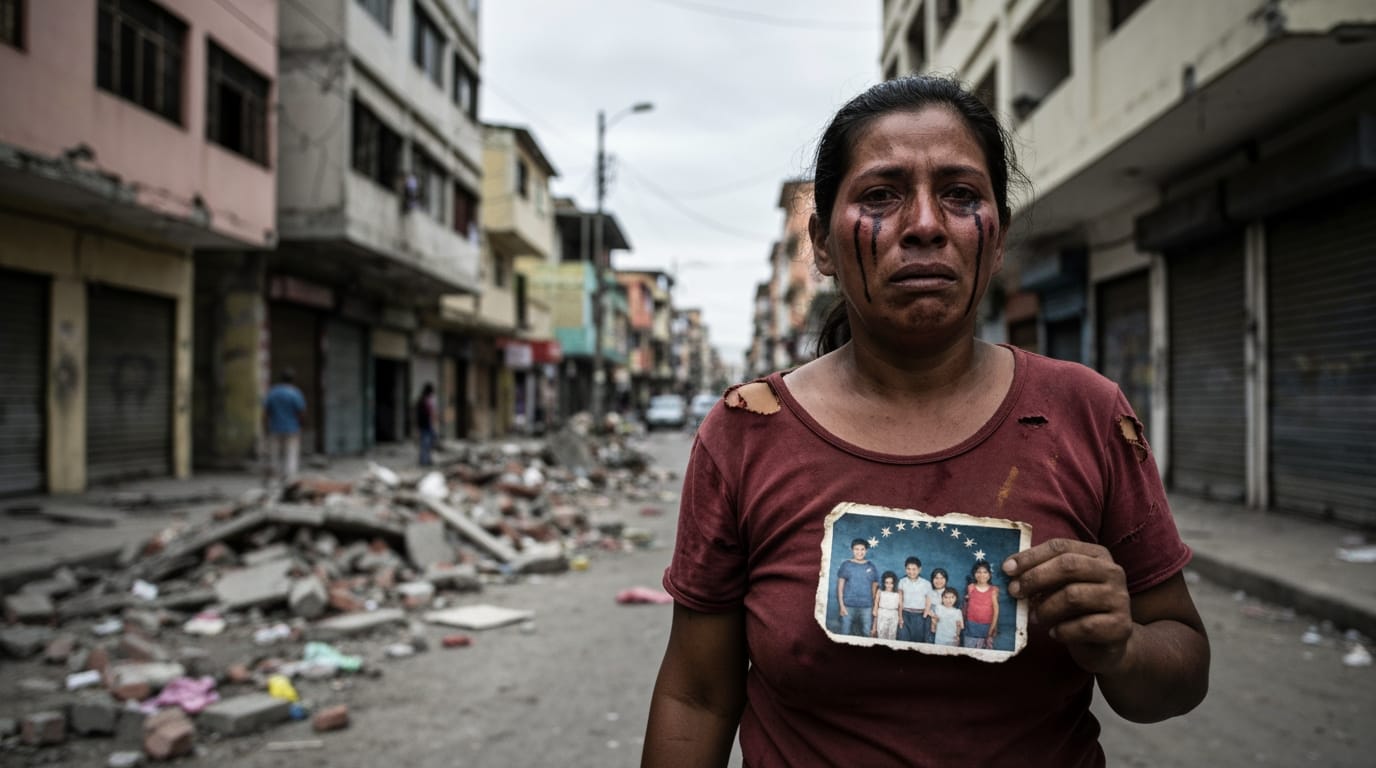
CARACAS, VENEZUELA – Venezuela stands at a critical juncture following a dramatic and unprecedented U.S. military operation that resulted in the capture of President Nicolás Maduro and his wife, Cilia Flores, in the early hours of January 3, 2026. The audacious strike, announced by U.S. President Donald Trump, has plunged the oil-rich South American nation into an acute state of limbo, triggering immediate international condemnation and support, and raising profound questions about the country's immediate future and the adherence to international law.
The unexpected turn of events, culminating in Maduro's transport to New York to face long-standing narco-terrorism charges, marks a drastic escalation in Washington's protracted campaign against the socialist leader. While some celebrate the removal of a figure accused of authoritarian rule and economic devastation, others warn of the dangerous precedent set by a unilateral military intervention and the potential for heightened instability in a nation already grappling with a severe humanitarian crisis.
Audacious Strike: The Capture of a Sitting President
The operation, dubbed "Operation Absolute Resolve," involved elite U.S. Army Delta Force units and more than 150 aircraft, according to General Dan Caine, Chairman of the Joint Chiefs of Staff. Caine stated the mission was meticulously planned for months, leveraging extensive intelligence on Maduro's movements and daily habits. Reports indicate the U.S. military launched strikes on various targets across Venezuela, including military installations, and allegedly managed to "turn off almost all the lights in Caracas" to facilitate the raid on Maduro's location. Maduro and Flores were reportedly seized from their home on a military base and offered no resistance during the capture.
President Trump, speaking from Mar-a-Lago, confirmed the capture and declared the United States would temporarily "run the country" to ensure a "safe, proper, and judicious transition." The stated rationale for the operation included addressing long-standing accusations of narco-terrorism against Maduro, who, along with 14 others, was first indicted in March 2020 by the U.S. Justice Department. The U.S. government has long maintained that Maduro is not the legitimate leader of Venezuela, citing widely disputed elections in 2018 and 2024.
A Nation in Tumult: Power Vacuum and Internal Reactions
The immediate aftermath of Maduro's capture has thrown Venezuela's political landscape into disarray. Vice President Delcy Rodríguez swiftly condemned the U.S. action as a "barbaric," "illegal and illegitimate kidnapping," and a blatant attack on Venezuela's sovereignty. Rodríguez asserted that Maduro remains the country's rightful leader and demanded his release, a sentiment echoed by top regime figures. Reports from Caracas indicated a Supreme Court directive for Rodríguez to assume the presidency in an acting capacity, creating a constitutional crisis and conflicting claims of authority.
This sudden power vacuum exacerbates an already fragile political environment. Maduro's third term, which began in January 2025, was largely considered fraudulent by international observers and the Venezuelan opposition after a 2024 election where strong evidence suggested opposition candidate Edmundo González Urrutia was the true victor. The country has been deeply polarized, with Maduro relying on the loyalty of the military and key international allies to maintain power amidst widespread protests and a severe erosion of democratic institutions. The opposition, which had seen its interim government led by Juan Guaidó dissolve in late 2022 due to lack of progress and waning international support, now faces a complex challenge in unifying and charting a credible path forward.
Global Repercussions and International Divide
The U.S. operation has ignited a firestorm of international reactions, revealing deep divisions on the global stage. Adversaries of Washington, including Russia, China, Cuba, Iran, and several Latin American nations, swiftly and vociferously condemned the intervention, characterizing it as a clear violation of international law and Venezuela's national sovereignty. Countries like Mexico and Colombia called for urgent de-escalation, emphasizing the importance of peaceful dispute resolution and respect for the UN Charter. The UN Secretary-General expressed deep alarm over the escalation and voiced concern that international law had not been respected.
Conversely, some U.S. allies offered tacit or explicit support, with French President Emmanuel Macron stating that the Venezuelan people were "rid of Nicolás Maduro's dictatorship" and calling for a peaceful transition. Israel's Prime Minister Benjamin Netanyahu congratulated President Trump for his "bold and historic leadership." However, even among allies, concerns about the legality and implications of such a unilateral military action were evident, with European nations prioritizing the safety of their citizens and calling for restraint. Legal experts in the U.S. and abroad have also raised serious questions about the lawfulness of the operation under both U.S. and international statutes.
The Path Forward: Economic Crisis, Humanitarian Concerns, and Future Scenarios
Venezuela's prolonged socioeconomic and political crisis, marked by hyperinflation, chronic shortages of food and medicine, and a mass exodus of over 7.7 million people, forms the backdrop to this latest development. Years of U.S. sanctions, targeting Venezuela's financial and petroleum sectors, have been widely cited by critics as exacerbating the humanitarian situation, though the Maduro government's economic mismanagement and corruption are also recognized as primary drivers of the collapse.
President Trump's declaration that the U.S. intends to "run the country" and tap its vast oil reserves signals a profound shift in potential foreign policy, reminiscent of past interventions in Latin America. The implications for Venezuela's populace are immense and uncertain. While some Venezuelans may harbor hopes for democratic change and economic recovery, the immediate risk of heightened internal conflict, further economic disruption, and continued humanitarian challenges looms large. The ability of any transitional government to restore stability, address the deep-seated poverty (affecting 86.9% of the population), and rebuild trust will be paramount, yet immensely difficult under the shadow of foreign intervention and internal fragmentation.
Conclusion
The capture of Nicolás Maduro by U.S. forces has irrevocably altered Venezuela's trajectory, ending one chapter of its protracted crisis but immediately opening another defined by profound uncertainty. The dramatic intervention underscores the high-stakes geopolitical dynamics at play, while simultaneously deepening the humanitarian challenges faced by ordinary Venezuelans. As the world watches, the country remains in a precarious limbo, awaiting clarity on its leadership, its sovereignty, and the long-term consequences of an action that has reverberated across the globe and raised fundamental questions about international norms and the future of interventionism.


