Venezuela Reels from Devastating Twin Earthquakes as Death Toll Surpasses 6,100
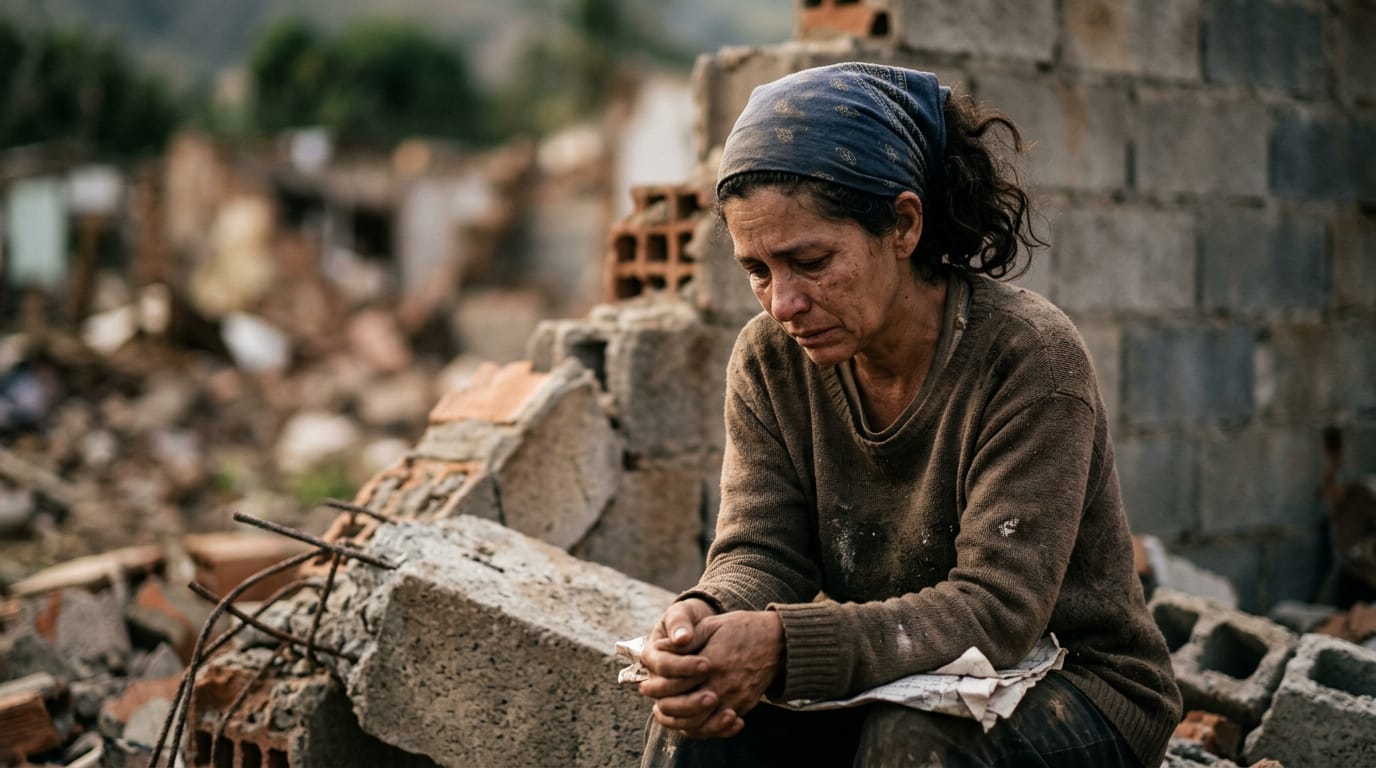
CARACAS, Venezuela – Venezuela is grappling with the catastrophic aftermath of a pair of powerful earthquakes that struck in June, leaving a trail of widespread destruction and a staggering human cost. Official figures released Monday confirm that the death toll has tragically risen to 6,125, making it one of the deadliest seismic events of the 21st century. Beyond the confirmed fatalities, nearly 61,000 people have been hospitalized, approximately 17,000 sustained injuries, and tens of thousands remain missing, igniting a desperate search for loved ones amidst the rubble. The twin tremors have brought immense suffering and have severely tested the nation's infrastructure and its capacity for response.
Dual Tremors Unleash Unprecedented Devastation
The calamitous events unfolded on June 24, 2026, when Venezuela was struck by a seismic doublet: a magnitude 7.2 earthquake with its epicenter near Yaracuy state, followed just 39 seconds later by an even stronger magnitude 7.5 tremor near Vargas state, close to the capital Caracas. The proximity of the second, more powerful quake to densely populated areas, particularly the coastal state of La Guaira, amplified the catastrophe. Initial assessments revealed widespread damage, with nearly 200 buildings collapsing outright. In La Guaira, the devastation was particularly severe, with reports indicating that 80% of buildings were destroyed, turning vibrant communities into scenes of ruin.
The immediate aftermath saw rescue teams and ordinary citizens scrambling to pull survivors from collapsed structures. The death toll began to climb rapidly from an initial count of 5,546, reaching the grim milestone of 6,125 weeks later. The sheer scale of the disaster prompted the U.S. Geological Survey's (USGS) Prompt Assessment of Global Earthquakes for Response (PAGER) system to predict a high probability of extensive damage and casualties, with early estimates suggesting the death toll could significantly exceed initial reports. For the magnitude 7.5 earthquake, PAGER estimated an 18% probability of 1,000 to 10,000 deaths and a 43% probability of 10,000 to 100,000 deaths, underscoring the severe potential of the event.
A Nation Grieves: The Rising Human Toll and Displacement Crisis
As rescue efforts continue, the human cost of the earthquakes extends far beyond the confirmed fatalities. Beyond the 6,125 confirmed deaths, nearly 61,000 individuals have required hospital treatment, and approximately 17,000 people sustained injuries. The number of missing persons remains a critical and agonizing concern, with local media and expert projections estimating the figure could be as high as 10,000. Governor José Alejandro Terán of La Guaira alone reported around 1,400 people still unaccounted for in his hard-hit state.
The seismic activity has also triggered a profound displacement crisis. Over 16,300 people have lost their homes entirely, while an additional 28,300 homes have been rendered uninhabitable. Consequently, almost 24,000 residents in La Guaira and Caracas are now living in makeshift shelters, facing uncertain futures. The structural damage is not limited to residential buildings; authorities have classified over 16,200 structures as unsafe, signaling a monumental reconstruction challenge ahead. Reports from survivors have highlighted frustrations over the perceived slow pace of aid delivery and recovery efforts, leading to public criticism directed at the government's handling of the crisis.
Coordinated Response and Long Road to Recovery
In the immediate aftermath, emergency teams rapidly mobilized, successfully rescuing 6,462 individuals from the rubble, with the total number of rescued individuals later confirmed at 6,642. The international community and various humanitarian organizations swiftly responded to the unfolding crisis. Organizations such as the International Federation of Red Cross (IFRC), the Venezuelan Red Cross, United Way, All Hands & Hearts, Global Empowerment Mission, Americares, CARE, World Vision, and SOS Children's Villages launched extensive relief operations. Their efforts focused on providing critical aid including water, food, hygiene supplies, emergency shelter materials, medical support, and psychological counseling for affected communities. The U.S. State Department pledged $150 million in humanitarian assistance, and the U.N.'s International Organization for Migration estimated that as many as 6.8 million people could be impacted by the twin quakes.
The Venezuelan government, through National Assembly Chief Jorge Rodriguez, provided updates on the disaster, noting that nearly 61,000 people were treated in hospitals and that 16.5% of the estimated 382,230 tons of debris generated by the quakes had been removed. Venezuelan lawmakers also unanimously approved a new law designed to ease property rentals, aiming to assist displaced quake victims. Interim leader Delcy Rodriguez pledged to provide 4,000 homes to quake victims by the end of the year, with an ambitious target of exceeding 10,000 homes in 2027. These efforts signify the beginning of what is expected to be a prolonged and complex recovery process.
Venezuela's Enduring Seismic Vulnerability
These recent earthquakes underscore Venezuela's inherent seismic vulnerability. The country lies along the volatile Caribbean-South American plate boundary, a region known for accumulating significant tectonic strain. This geological setting has historically subjected Venezuela to numerous powerful tremors. The 1812 earthquake, estimated between magnitude 7.5 and 7.7, remains the deadliest in Venezuelan history, claiming an estimated 15,000 to 30,000 lives and devastating Caracas during the War of Independence. Scientists have warned that parts of the San Sebastián and related fault systems have not experienced a major earthquake in centuries, suggesting that the region may be overdue for large seismic events. The June 2026 twin quakes represent the strongest to hit Venezuela since the 1900 San Narciso earthquake. The scale of the current disaster positions it as the 10th deadliest earthquake globally in the 21st century.
The June 2026 earthquakes represent a profound tragedy for Venezuela, inflicting immense loss of life, widespread destruction, and significant humanitarian challenges. The nation faces an arduous journey of recovery and reconstruction, demanding sustained domestic and international support to rebuild communities, restore livelihoods, and provide long-term care for the traumatized population. The ongoing efforts by national and international bodies will be crucial in navigating the complex path toward healing and resilience in the face of this devastating natural disaster.