Venezuelan Interim Leader Defends Earthquake Response Amid Mounting Criticism
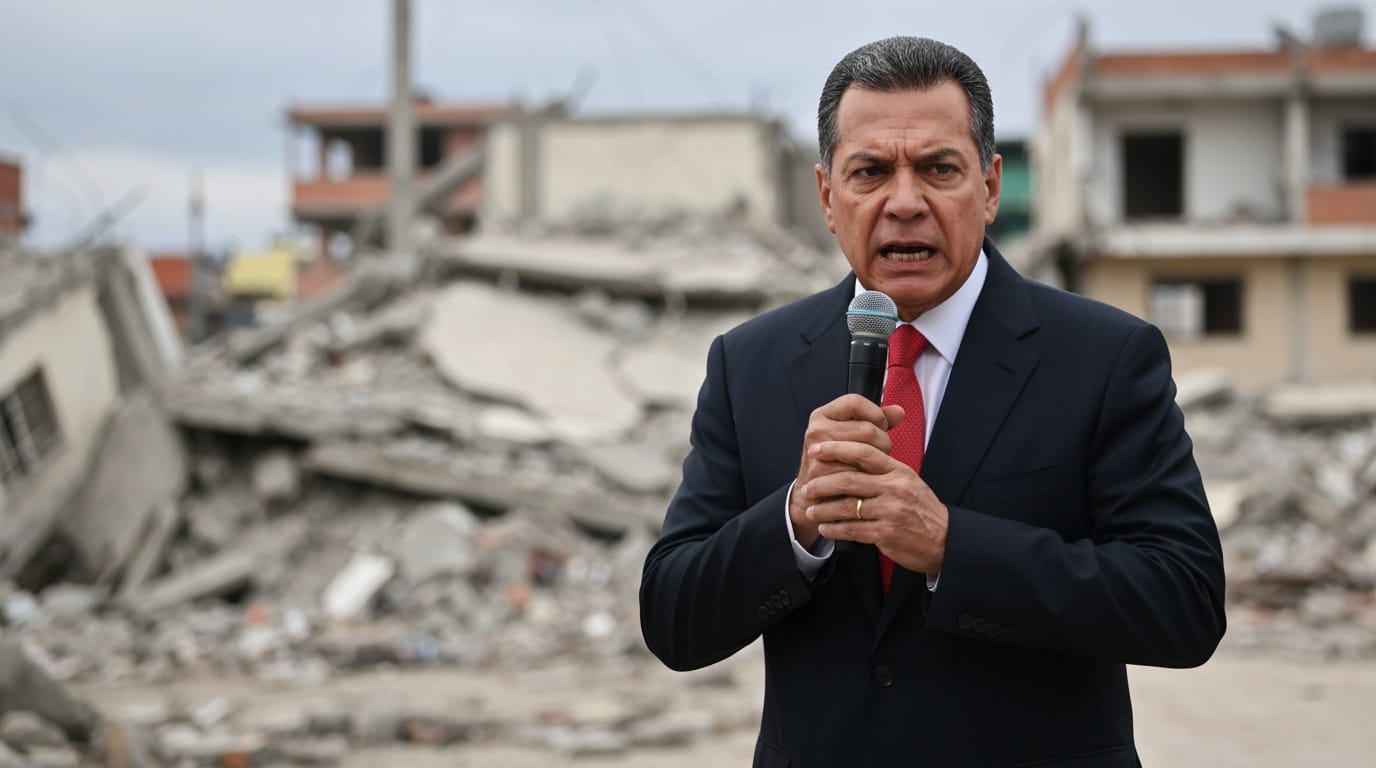
Caracas, Venezuela – Venezuela's interim President, Delcy Rodriguez, has fiercely defended her government's response to the devastating twin earthquakes that struck the nation's northern coast on June 24, 2026, rejecting widespread accusations of a slow and inadequate emergency effort. The powerful seismic event, the strongest to hit Venezuela in over 125 years, has left a trail of destruction, with thousands dead, tens of thousands injured or displaced, and critical infrastructure severely compromised, exacerbating the country's pre-existing humanitarian challenges.
The interim administration, which assumed power in January following the U.S. ouster of former President Nicolás Maduro, faces intense scrutiny as rescue operations continue and the full scope of the catastrophe becomes clearer. Critics, ranging from affected citizens and opposition figures to international aid organizations, contend that the government's initial reaction was disorganized and failed to provide timely assistance to those in desperate need. President Rodriguez, however, has vehemently denied these claims, asserting that her government activated emergency protocols immediately and has deployed significant resources to the affected areas.
The Unprecedented Calamity
On Wednesday, June 24, 2026, a pair of shallow earthquakes, measuring magnitudes 7.2 and 7.5, struck in quick succession, approximately 39 seconds apart, west of Caracas in northern Venezuela. The tremors generated violent ground shaking across densely populated northern states, including La Guaira and Catia La Mar, causing widespread structural failure and triggering landslides. The scale of the disaster quickly overwhelmed local capacities.
Initial reports confirm a rapidly escalating death toll, with over 2,000 fatalities, a figure that climbed to 2,595 by July 3. More than 5,000 people have been reported injured, and tens of thousands remain missing, underscoring the immense human cost. The physical damage is extensive; over 100 buildings collapsed immediately, and subsequent assessments have identified 855 damaged structures, with 189 completely destroyed. Infrastructure supporting vital services such as health facilities, schools, transport networks, water supply, electricity, and telecommunications has also sustained severe damage, further complicating relief efforts. It is estimated that up to 6.8 million people have been affected, with 1.8 million in urgent need of humanitarian assistance.
Allegations of a Flawed Response
In the immediate aftermath of the earthquakes, a wave of criticism emerged concerning the government's handling of the crisis. Many affected residents in states like La Guaira reported a significant delay in official search and rescue operations, leading civilians and volunteers to begin digging through rubble with their bare hands in a desperate bid to find loved ones. International aid organizations and local rescuers also highlighted a severe shortage of essential resources, including heavy machinery to clear debris and specialized equipment crucial for complex rescue missions.
Opposition groups seized on these perceived shortcomings, portraying the government's response as "sluggish and haphazard." Reports surfaced of humanitarian aid, including medical supplies and food, being stalled or seized, raising concerns about transparency and equitable distribution. Experts also pointed to the vulnerability of certain neighborhoods built with substandard materials under previous social housing projects, suggesting that years of underinvestment and mismanagement contributed to the high casualty figures. The crisis unfolded against a backdrop of Venezuela's already fragile healthcare system and economic woes, further compounding the challenges faced by the population.
President Rodriguez's Forceful Rebuttal
Interim President Delcy Rodriguez convened a press conference on Thursday, July 2, 2026, where she issued a robust defense of her government's actions, directly confronting the growing criticism. She emphatically denied any delay in the response, stating, "We did not wait one, two or three days. We acted immediately." Rodriguez asserted that an emergency decree was activated within hours of the initial tremors, allowing for the rapid deployment of civil protection and emergency protocols. She detailed that 4,000 officials were deployed immediately, a number that swelled to 19,000 in the days following the disaster, showcasing the government's commitment.
Addressing accusations of political opportunism, President Rodriguez condemned those who she claimed were "politicizing a humanitarian tragedy," accusing media outlets of spreading misinformation. She underscored the unprecedented magnitude of the natural disaster, suggesting it presented an unimaginable challenge even for a nation aware of its seismic risks. The interim leader also highlighted a grim detail: nearly all regional officials in La Guaira, one of the hardest-hit states, perished in the collapses, implicitly signaling the immense difficulty in coordinating an immediate, centralized response. Despite the rising death toll, Rodriguez affirmed that search and rescue efforts were continuing, maintaining a public stance of hope for finding more survivors.
International Assistance and Broader Context
Amidst the domestic debate, the international community has rallied to provide support. Organizations such as UNICEF, the Pan American Health Organization (PAHO), Direct Relief, World Vision, International Medical Corps, and Global Empowerment Mission are on the ground, delivering critical humanitarian aid, including medical supplies, shelter materials, and technical assistance. The United Nations has also coordinated dozens of international rescue teams and launched an urgent funding appeal, recognizing the extensive needs.
Notably, the United States, a key backer of the interim government, has committed substantial aid, pledging $300 million and deploying 900 military personnel to assist with relief and rescue operations. U.S. officials have openly rebuffed criticisms of President Rodriguez's government, with the U.S. chargé d'affaires to Venezuela, John M. Barrett, stating that local authorities "have fully complied with our requests and have accelerated this massive humanitarian response." This strong U.S. endorsement comes as President Rodriguez's own mandate as interim leader was set to expire, adding a layer of political complexity to the humanitarian crisis. The European Union has also contributed 5 million euros in support.
An Arduous Path to Recovery
As of early July 2026, the focus of emergency teams is increasingly shifting from live rescue to the grim task of body recovery, although isolated instances of miraculous survival continue to inspire. The region continues to experience aftershocks, hindering recovery efforts and prolonging the state of anxiety for millions. Hospitals remain overwhelmed, operating under extreme pressure due to the influx of injured people and pre-existing shortages.
The path to recovery for Venezuela will be arduous, complicated by the deep-seated political divisions and economic fragility that predated the disaster. The debate over the effectiveness of the government's response highlights the severe challenges in providing coordinated and transparent aid in a country with complex governance issues. While international assistance pours in, the long-term rebuilding efforts will require sustained commitment and a unified approach to address not only the immediate devastation but also the underlying vulnerabilities that made this natural disaster so catastrophic.


