Venezuela's Oil Crossroads: A New Dawn or a Prolonged Struggle Post-Maduro?
CARACAS, VENEZUELA – Following the reported ouster of President Nicolás Maduro and an asserted new U.S. posture towards the nation, the future of Venezuela's vast yet crippled oil industry stands at a critical juncture, promising both immense opportunity and daunting challenges. With President Donald Trump reportedly announcing plans for major U.S. oil companies to invest and revitalize the sector, the world watches closely to see if the nation with the largest proven crude reserves can reclaim its former energy prominence, a journey experts predict will be protracted and capital-intensive.
A Legacy of Riches, Decades of Decline
Venezuela possesses an estimated 303 billion barrels of proven crude oil, representing approximately 17% of global reserves, surpassing even Saudi Arabia. This staggering wealth once positioned the nation as a founding member of OPEC and a global energy powerhouse, producing over 3 million barrels per day (bpd) in the early 2000s. However, years of political upheaval, chronic mismanagement, nationalization policies, and a severe exodus of skilled personnel under successive administrations led to a precipitous decline. Production plummeted to around 1 million bpd, providing less than 1% of global output in recent years.
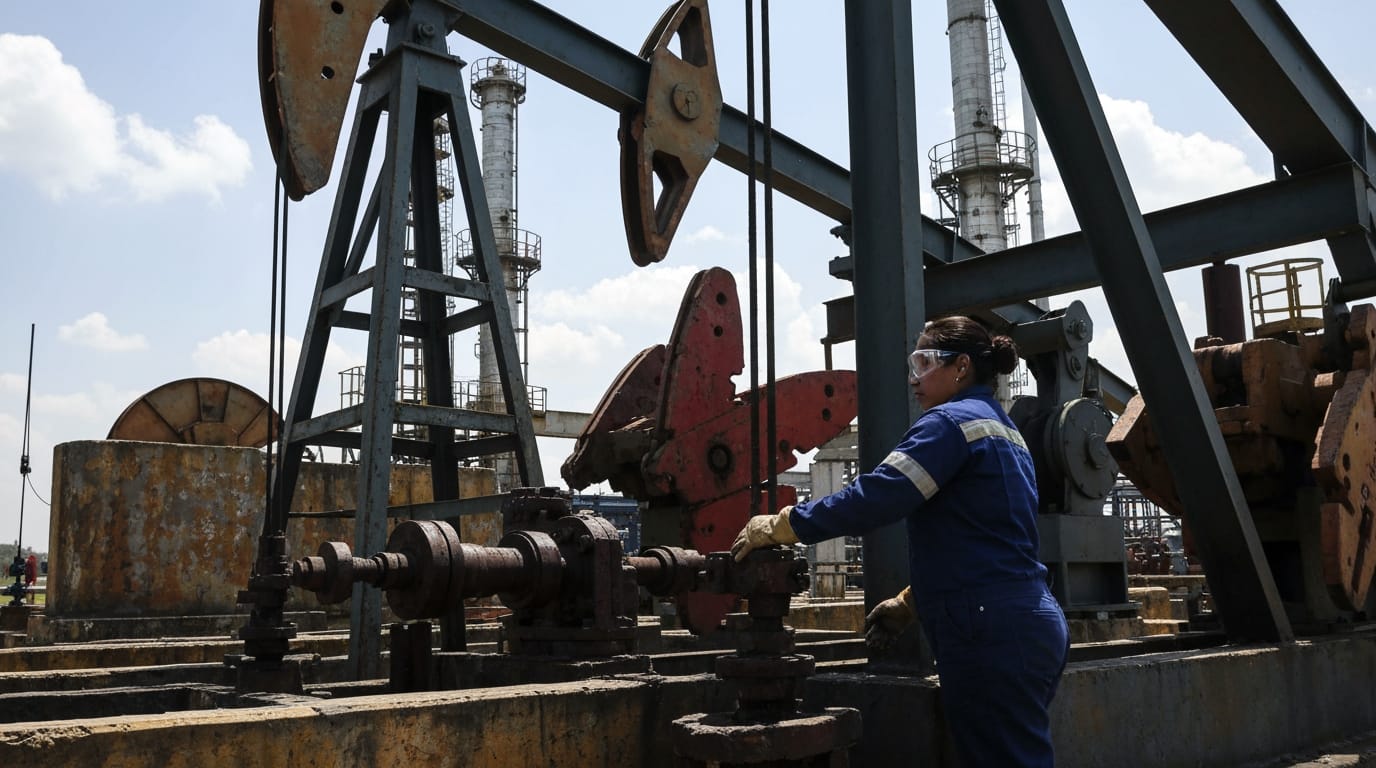
The situation was exacerbated by stringent U.S. sanctions imposed on state-owned Petróleos de Venezuela S.A. (PDVSA) beginning in 2019. These measures, aimed at pressuring the Maduro government, significantly restricted Venezuela's access to international financial systems, critical technology, and key export markets, particularly the lucrative U.S. Gulf Coast refineries optimized for its heavy crude. While some sanctions were temporarily eased in October 2023 in exchange for electoral guarantees, most were reimposed by April 2024, highlighting the volatile nature of the regulatory environment. The cumulative impact has left PDVSA's infrastructure in disrepair, refineries operating well below capacity, and a desperate need for external investment and technical expertise.
The Long Road to Recovery: Infrastructure and Investment
The prospect of a post-Maduro Venezuela has ignited discussions about the potential for revitalizing its oil sector, yet experts are quick to temper expectations regarding a rapid rebound. The challenges are monumental, requiring an overhaul of dilapidated infrastructure, significant capital injection, and a stable political and legal framework. Industry estimates for full production restoration range from $100 billion to $300 billion, with a timeline extending 5 to 10 years for meaningful production increases under optimal conditions.
Key infrastructure, such as upgraders needed to process the Orinoco Belt's extra-heavy crude, went offline between 2019 and 2021 and require substantial investment to restart. The country also faces a shortage of skilled labor, as many engineers and technicians left during the economic crisis. Furthermore, the state oil company, PDVSA, would need fundamental reforms to improve accountability and attract foreign partners. The successful reconstruction efforts witnessed in countries like Iraq post-conflict offer a parallel, albeit with a recognition that such processes are often complex and extended.
U.S. Interests and the Return of Foreign Capital
The hypothetical shift in Venezuela's leadership has immediately drawn attention from the United States, with reports indicating President Trump's intent to bring major U.S. oil companies back into the country to spearhead reconstruction efforts. Chevron remains the sole significant American operator in Venezuela, having maintained a presence through waivers during sanctions. Other former players, such as ExxonMobil and ConocoPhillips, which saw their operations nationalized nearly two decades ago, are closely monitoring the situation. ConocoPhillips, owed over $10 billion in compensation, might consider re-entry to recoup losses.
However, the return of foreign investment hinges on several critical conditions: the lifting of U.S. sanctions, a clear and favorable regulatory and fiscal framework, and, crucially, a stable security situation. International companies, having endured bruising experiences in the past, will demand reassurances of political stability and long-term regulatory certainty before committing billions. The U.S. government's approach to managing oil revenues and the specifics of a new sanctions regime will also be pivotal in shaping investor confidence.
Global Market Implications
From a global oil market perspective, the immediate impact of a change in Venezuelan leadership and potential production disruptions is expected to be limited due to the country's current low output (less than 1% of global supply) and a prevailing global surplus. However, some analysts foresee short-term volatility and potential price spikes, especially for heavy-sour crude and diesel, which Venezuela is uniquely positioned to supply. U.S. Gulf Coast refineries, designed to process this type of crude, would benefit significantly from increased Venezuelan supply.
In the medium to long term, a successful revitalization of Venezuela's oil industry could add substantial supply to the global market, potentially exerting downward pressure on oil prices. This prospect could provide a strategic advantage for the U.S., offering an alternative source of heavy crude and potentially reducing reliance on OPEC nations or other geopolitical rivals. Yet, this is a distant scenario, as even optimistic estimates suggest it would take years for Venezuela to significantly boost output, and even longer to return to historical production levels.
Conclusion
The hypothetical ouster of Nicolás Maduro marks a potential turning point for Venezuela, particularly its oil sector, which remains the lynchpin of its economy. The path forward is fraught with challenges, from repairing years of neglect and underinvestment to attracting cautious foreign capital and establishing a stable political environment. While the prospect of unlocking the world's largest oil reserves is enticing for both Venezuela and global energy markets, experts universally agree that any meaningful recovery will be a hard and drawn-out process, demanding sustained commitment and billions in investment over many years. The narrative of Venezuela's oil future remains an evolving story, blending immense potential with the stark realities of its recent past.