Violent Clashes Erupt in Nagpur Amidst Controversy Over Mughal Emperor's Tomb
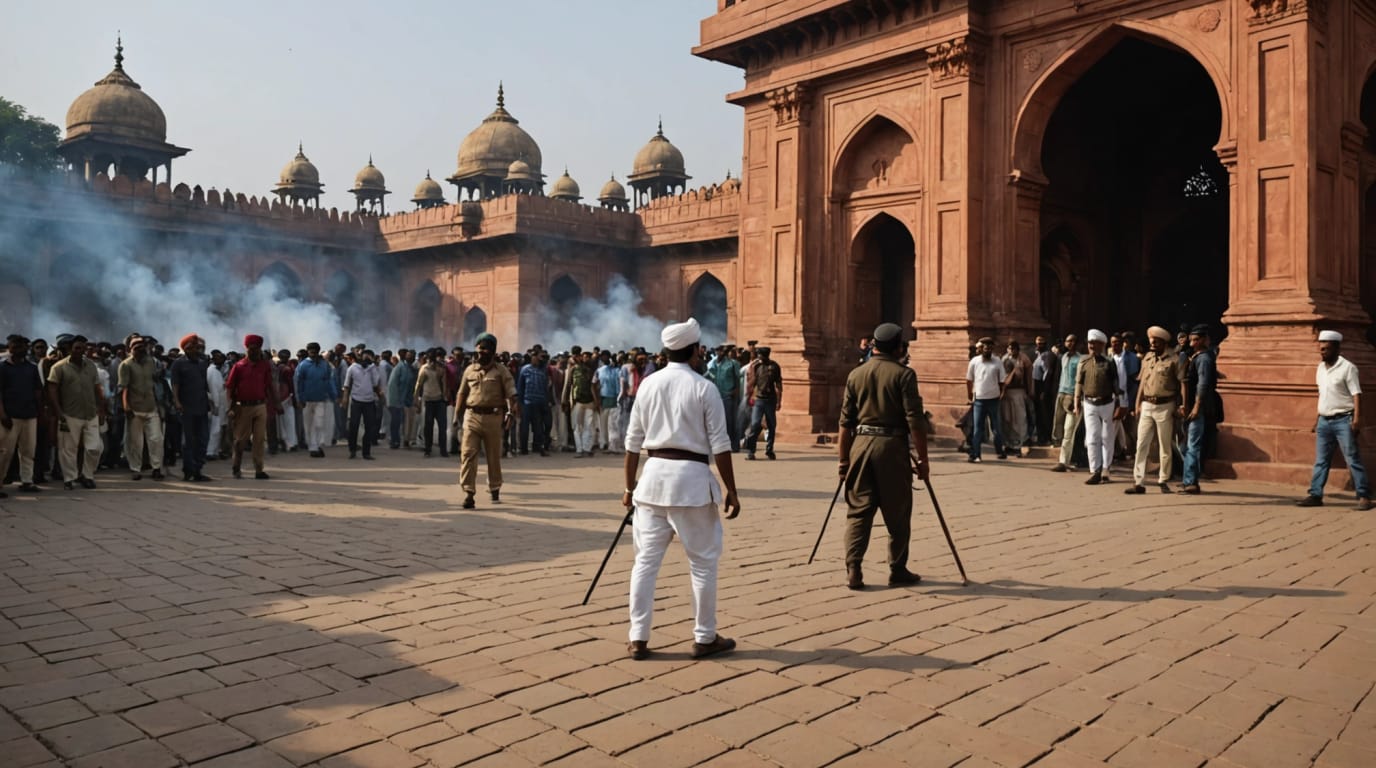
Nagpur, India – A wave of violence has swept through parts of Nagpur, Maharashtra, following protests demanding the removal of Mughal Emperor Aurangzeb's tomb, located in Chhatrapati Sambhajinagar (formerly Aurangabad) district. The unrest, fueled by rumors and historical grievances, has prompted authorities to impose curfews and prohibitory orders in affected areas, leaving residents on edge.
Protests and Arson Spark Chaos
The immediate trigger for the clashes was a demonstration organized by right-wing Hindu groups, including the Vishva Hindu Parishad (VHP) and Bajrang Dal, near a statue of Chhatrapati Shivaji Maharaj in the Mahal area of Nagpur. The protesters called for the removal of Aurangzeb's tomb, citing his controversial legacy and conflicts with the Marathas. During the demonstration, an effigy of Aurangzeb was burned, and reports circulated that a cloth inscribed with Islamic verses and a holy book were also set ablaze, sparking outrage among members of the Muslim community.
The rumors quickly spread through social media, leading to a gathering of Muslim community members in various parts of the city, including Mahal, Kotwali, Ganeshpeth, and Chitnis Park. Tensions escalated rapidly, resulting in stone-pelting, vandalism, and arson. Several vehicles were set on fire, and homes and shops were damaged, particularly in the Mahal and Hansapuri areas. The violence also extended to police personnel, with multiple officers injured in the clashes.
Authorities Respond with Curfews and Detentions
In response to the escalating violence, Nagpur police imposed a curfew in several areas under Zone 3 and Zone 4, including Kotwali, Ganeshpeth, Tehsil, Lakadganj, Pachpaoli, Shanti Nagar, Sakkardara, Nandanvan, Imambada, Yashodhara Nagar, and Kapil Nagar police station limits. Section 144 of the Criminal Procedure Code, which prohibits large gatherings, was also enforced to prevent further unrest.
Police Commissioner Ravinder Singal assured residents that the situation was under control and peaceful, urging them to cooperate with law enforcement and not believe in rumors. Authorities are reviewing CCTV footage and video clips to identify those involved in the violence, and an FIR is being registered. As of Tuesday, March 18, 2025, at least 47 people have been detained in connection with the rioting.
Political Reactions and Accusations
The Nagpur violence has drawn strong reactions from political leaders across the spectrum. Maharashtra Chief Minister Devendra Fadnavis, who hails from Nagpur, described the clashes as a pre-planned attack, attributing heightened emotions to the release of the movie "Chhava," which depicts the brutal atrocities committed by Aurangzeb against Sambhaji Maharaj. He condemned any glorification of Aurangzeb and urged citizens to remain calm.
Opposition leaders have criticized the state government's handling of the situation. AIMIM chief Asaduddin Owaisi accused the government of making provocative statements and failing in its responsibility to maintain law and order. Congress leader Vijay Wadettiwar alleged that deliberate efforts were being made to incite conflict between communities and blamed the ruling party for the unrest. Shiv Sena MLA Manisha Kayande condemned the violence and demanded strict action against those spreading rumors.
The Aurangzeb Tomb Controversy
The demand for the removal of Aurangzeb's tomb is not new. Right-wing Hindu groups have long argued that the tomb is a symbol of oppression and that its presence is offensive to the sentiments of the majority community. The VHP has submitted a memorandum to Chief Minister Fadnavis, seeking the removal of the tomb and citing Aurangzeb's controversial history, including his conflicts with the Marathas and alleged destruction of temples.
Aurangzeb, the sixth Mughal emperor, ruled India from 1658 to 1707. His reign was marked by religious conservatism and expansionist policies, which led to conflicts with various groups, including the Marathas. Aurangzeb's tomb is located in Khuldabad, Chhatrapati Sambhajinagar district, Maharashtra. In contrast to other Mughal tombs, it is an unmarked grave at the complex of the dargah or shrine of Sheikh Zainuddin.
Historical Context of Nagpur
Nagpur has a rich and diverse history, with influences from various dynasties and empires. In the 4th century, the Vakataka Dynasty ruled over the Nagpur region, followed by the Badami Chalukyas, the Rashtrakutas, and the Yadavas. In the 17th century, the Mughal Empire conquered the region, but regional administration was carried out by the Gond kingdom of Deogarh-Nagpur.
The city of Nagpur was founded by Bakht Buland, a prince of the Gond kingdom of Deogarh-Nagpur. In the 18th and 19th centuries, Nagpur was the capital of the Kingdom of Nagpur, a Maratha Bhonsle dynasty. After the Third Anglo-Maratha War in 1818, it became a princely state of the British Empire and was annexed to British India in 1853, becoming Nagpur Province.
A City on Edge
The recent violence in Nagpur has shaken the city's reputation for peace and harmony. The imposition of curfews and prohibitory orders has disrupted daily life, and residents are living in fear of further clashes. The incident has also raised concerns about the growing polarization of Indian society and the exploitation of historical grievances for political gain.
As authorities work to restore order and investigate the causes of the violence, it is crucial for all stakeholders to promote dialogue and understanding. Nagpur, with its diverse history and cultural heritage, has the potential to be a model of peaceful coexistence. However, this potential can only be realized if all communities are committed to respecting each other's sentiments and working together to build a more inclusive and harmonious society.


