Virtual Reality: A Transformative Tool for Achieving Personal and Professional Goals

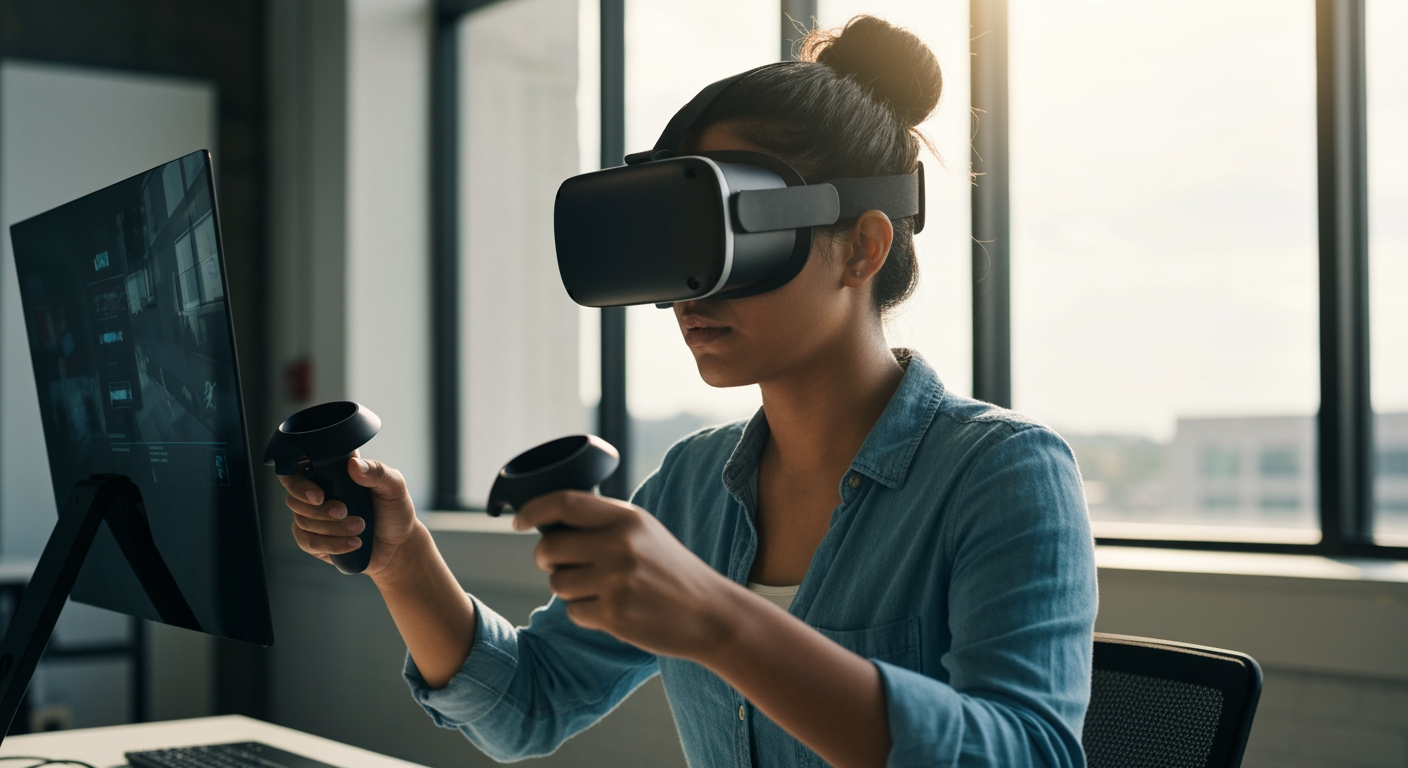
Virtual reality (VR), once primarily a niche in entertainment, is rapidly emerging as a powerful and versatile tool for individuals seeking to achieve a diverse array of personal and professional goals. Beyond immersive gaming, this technology is now fundamentally reshaping approaches to learning, training, therapy, and even physical and cognitive development by providing realistic, interactive, and safe simulated environments. As VR hardware becomes more sophisticated and accessible, its potential to accelerate skill acquisition, enhance mental well-being, and boost physical performance is drawing significant attention from educators, clinicians, and industries alike.
Immersive Learning and Accelerated Skill Development
The educational and professional training sectors are experiencing a profound transformation through the integration of virtual reality. VR's ability to immerse users in simulated environments significantly enhances engagement and knowledge retention, surpassing traditional learning methods. Studies indicate that VR training can increase learning effectiveness by as much as 76% compared to conventional approaches, with learners showing up to four times greater focus during training sessions. This deep connection makes the learning process more enjoyable and efficient, allowing individuals to remember approximately 75% of what they learn, a stark contrast to the mere 5% typically retained from lectures.
In professional settings, VR offers a safe and cost-effective means to practice complex and high-stakes tasks. For instance, in fields like healthcare, VR simulations improve clinical performance and can reduce training time by 40-60%. One study demonstrated that VR-trained learners were 275% more confident in applying new skills after training, a 40% improvement over classroom-based instruction. This translates into better outcomes in areas such as aviation maintenance, where VR allows personnel to maintain critical skills at a fraction of the cost and risk of real-world practice. Beyond technical skills, VR is also effective for soft skills training, including inclusive leadership and resilience, with learners completing VR modules four times faster than classroom learners while being four times more focused.
In academic environments, VR facilitates personalized and collaborative learning experiences. Students can embark on virtual field trips to ancient civilizations or explore the human body in 3D, making abstract concepts tangible and fostering a deeper understanding. VR also supports language acquisition by offering immersive practice with native speakers in virtual settings and promotes empathy by allowing students to experience different cultural perspectives. The technology has demonstrated significant improvements in student attainment and confidence, with one pilot study showing VR class students performing notably better in assessments (75% vs. 53.46%) and achieving 100% employment post-training, compared to 69% in traditional labs.
Therapeutic Applications and Mental Well-being Enhancement
Virtual reality is also making significant inroads into mental health treatment and personal growth, offering innovative solutions for various psychological challenges. Often referred to as "fear therapy," VR is highly effective in treating conditions such as phobias, Post-Traumatic Stress Disorder (PTSD), and social anxiety by providing controlled and gradual exposure to anxiety-provoking situations.
One prominent application is in public speaking training, where VR environments simulate realistic audiences, helping individuals overcome anxiety and enhance their presentation skills. Users can practice in front of virtual crowds that react to their speech, thereby building confidence and reducing fear without the pressure of a real-life audience. Research indicates that VR public speaking training can lead to enhanced presentation skills, reduced anxiety, higher motivation, and increased self-confidence.
Beyond phobias, VR is utilized for mindfulness, stress management, and even depression. Immersive virtual environments can guide individuals through relaxing scenarios, helping them practice coping mechanisms, reframe negative thoughts, and engage in motivating activities. Combining VR with established therapeutic approaches like Cognitive Behavioral Therapy (CBT) can create more effective interventions, allowing patients to safely test and apply learned skills in simulated scenarios.
Boosting Physical and Cognitive Performance
The utility of virtual reality extends to physical rehabilitation, fitness, and cognitive training, offering engaging and effective pathways to improved bodily and mental function. In physical therapy, VR transforms what can often be monotonous exercises into interactive experiences, enhancing patient motivation and adherence. This is particularly beneficial for individuals recovering from injuries, stroke, or neurological conditions, as VR simulations can help regain mobility, strengthen muscles, improve balance, and refine coordination. VR platforms allow therapists to tailor programs to individual needs, adjust difficulty levels, and provide a safe environment for practicing real-world tasks like walking on uneven terrain or navigating obstacles. The immersive nature of VR can even aid in pain management by distracting patients from discomfort.
For general fitness, VR workout applications integrate features like goal setting and streak tracking to maintain user motivation. These apps can recommend exercise frequencies and track progress, providing a structured approach to building consistent routines and making physical activity more engaging through gamified experiences.
Furthermore, VR is proving to be a valuable tool for cognitive enhancement. Specialized training apps leverage immersive scenarios to boost mental abilities such as reaction time, attention, problem-solving, and coordination. These platforms are used by athletes for neuro training and by individuals seeking to maintain or sharpen their cognitive functions, offering personalized drills and real-time feedback on performance.
Navigating the Virtual Landscape: Challenges and Considerations
Despite its numerous advantages, the widespread adoption of VR for goal achievement still faces several challenges. One significant barrier remains the cost of equipment, with high-end VR headsets typically ranging from $500 to $1,000. While prices have seen a reduction of over 50% since 2016 and standalone headsets under $600 dominate over 80% of the market, the initial investment can still be substantial for many.
Other practical challenges include potential motion sickness or discomfort for some users, caused by the mismatch between virtual visuals and bodily movements. Concerns also exist regarding content quality, accessibility, and the potential for excessive VR use to lead to social isolation or a disconnect from real-world interactions. Users must also adapt to the new digital interaction, which can sometimes involve sensory overload. Addressing these limitations through technological advancements, improved content design, and mindful usage practices will be crucial for VR to fully realize its potential.
A Future of Enhanced Achievement
Virtual reality is rapidly transitioning from a futuristic concept to a practical tool that augments human capabilities across education, therapy, fitness, and professional development. By creating immersive, interactive, and customizable environments, VR empowers individuals to learn faster, train more effectively, overcome psychological barriers, and enhance physical and cognitive performance. While the technology continues to evolve and overcome challenges related to cost and accessibility, its proven ability to foster engagement, build confidence, and provide safe spaces for practice positions it as an increasingly integral component in the pursuit of personal and professional goals. As development continues, VR is poised to unlock new dimensions of achievement, making aspirational objectives more tangible and attainable for a broader population.
Sources
- zoetalentsolutions.com
- pwc.com
- magicedtech.com
- victoryxr.com
- deloitte.com
- vrowl.io
- cornerstoneondemand.com
- hqsoftwarelab.com
- bodyswaps.co
- cbhs.edu
- transfrinc.com
- elliementalhealth.com
- neurorehabvr.com
- psychiatry.org
- cornell.edu
- frontiersin.org
- github.io
- speakcalmhq.com
- nii.ac.jp
- virtualspeech.com
- nih.gov
- nih.gov
- bushco.co.uk
- nih.gov
- neurorehabvr.com
- benchmarkpt.com
- zocdoc.com
- engadget.com
- reflexion.co
- onix-systems.com
- patentpc.com
- varwin.com
- zerolatencysouthaustin.com
- inairspace.com
- atomisystems.com
- skywell.software
- inairspace.com
Related Articles


Skull Bone Marrow Reveals Hidden 'Immune Hubs,' Reshaping Brain Defense Paradigm
ST. LOUIS, MO – In a discovery poised to fundamentally alter our understanding of brain immunity, scientists at Washington University School of Medicine in St. Louis have identified previously unrecognized lymph...


Unpacking the Link: How Dietary Fats Influence Colorectal Cancer Risk
Colorectal cancer, a significant global health concern, is increasingly linked to modern dietary habits, with particular attention turning to the role of fatty foods. While the relationship is complex and nuanced,...