Volcanic Cataclysm Preceded Black Death: New Research Links Mid-14th Century Eruption to Europe's Scourge
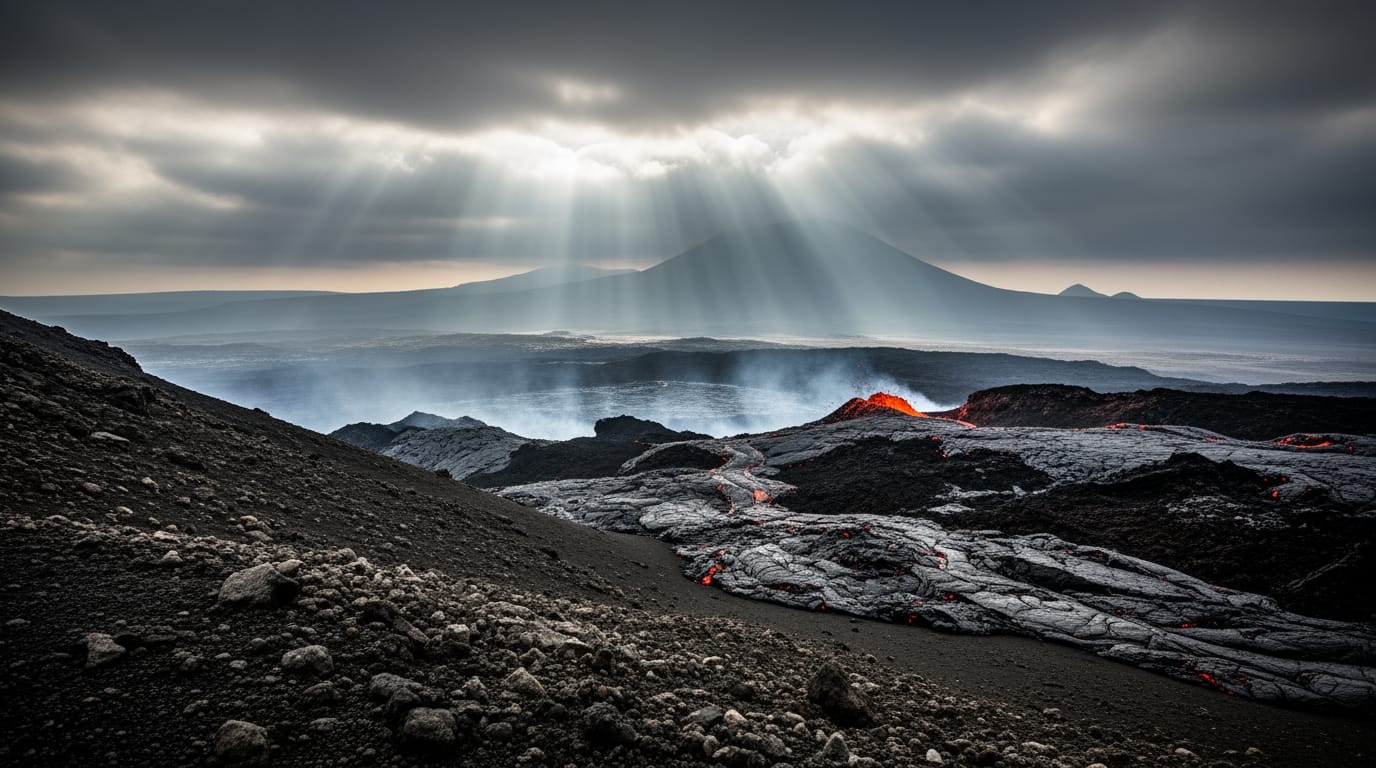
Cambridge, UK – New scientific research is dramatically reshaping our understanding of the Black Death, the deadliest pandemic in human history, suggesting that an unknown volcanic eruption in the mid-14th century may have set in motion a catastrophic chain of events leading to its devastating spread across Europe. A collaborative study, drawing on environmental archives and historical records, posits that a significant volcanic event around 1345 CE triggered a climatic shock, leading to widespread famine, and inadvertently opening the door for the plague bacterium Yersinia pestis to decimate populations already weakened and desperately importing food.
For centuries, the arrival of the Black Death in Europe has been shrouded in historical narratives, from biological warfare at the siege of Caffa to the omnipresent threat of rats and fleas. While the bacterium Yersinia pestis and its rodent and flea vectors remain central to the plague’s transmission, this new interdisciplinary research highlights the critical, previously underestimated role of environmental factors in precipitating the European catastrophe of 1347-1353.
Unearthing a Climatic Catalyst
The groundbreaking study, published in the journal Communications Earth & Environment, was spearheaded by an international team including environmental systems scientist Ulf Büntgen from the University of Cambridge and medieval historian Martin Bauch from the Leibniz Institute for the History and Culture of Eastern Europe. Their investigation meticulously pieced together diverse lines of evidence, focusing on the years immediately preceding the plague's European outbreak.
A key component of their evidence comes from ice cores extracted from Antarctica and Greenland. These ancient ice layers serve as natural time capsules, preserving atmospheric conditions from millennia past. Analysis revealed a significant spike in sulfate aerosols and sooty particles deposited around 1345 CE, indicating a massive volcanic eruption. Scientists suggest this was likely one or a cluster of eruptions, probably located in the tropics, given the wide dispersal of aerosols across both hemispheres. The 1345 sulfate spike recorded in ice cores ranks among the largest of the last 2,000 years, underscoring the magnitude of the event.
This geophysical data is corroborated by dendrochronology, the study of tree rings. Paleoclimatologists examined tree rings from across Europe, particularly striking "blue rings" found in ancient trees from the Pyrenees Mountains. These blue rings, along with patterns of stunted growth in other European tree ring data, are clear indicators of unusually cold and wet summers in 1345, 1346, and 1347. Further historical corroboration comes from medieval chronicles and documents, which recount strange meteorological phenomena during this period, including persistent hazy skies, reduced sunshine, increased cloudiness, and even dark lunar eclipses – all consistent with a sky veiled by volcanic ash and gases.
The Domino Effect: From Ash to Famine
The impact of this volcanic eruption was a dramatic and widespread climatic shock. The aerosols ejected into the stratosphere reflected sunlight, leading to a period of global cooling often referred to as a "volcanic winter." For Europe, this translated into severely cool and excessively wet summers for multiple consecutive years.
Such abrupt and sustained shifts in weather had devastating consequences for agriculture across the continent. Crop failures became rampant, particularly in the Mediterranean basin, a region heavily reliant on stable weather for its agricultural yields. The scarcity of food led to widespread famine, exacerbating existing social and economic strains and weakening populations. Medieval physicians themselves noted the unusual weather, with chroniclers reporting "for a long time the seasons have not been marked by their proper weather... summer has been much less warm," and "an abundance of rain has been present to a high degree for three years" between 1343 and 1351. This period of climatic cooling and subsequent agricultural collapse formed a critical precursor to the pandemic, as malnourished populations would have been significantly more vulnerable to disease.
Trade Routes and Unintended Consequences
Facing impending starvation and potential social unrest due to agricultural collapse, the powerful Italian maritime city-states, such as Venice, Genoa, and Pisa, took decisive action. These republics had long established extensive trade networks across the Mediterranean and Black Sea. To stave off famine, they activated these networks, importing massive quantities of grain from the regions around the Black Sea, specifically from the Mongols of the Golden Horde.
Ironically, this crucial response to a climate-induced crisis created the perfect conduit for the plague. The Yersinia pestis bacterium, endemic in wild rodent populations in Central Asia, was known to travel along trade routes. Infected fleas, often harbored by rats and other rodents, would have stowed away on these grain-laden ships and caravans. As these vessels reached European ports, they inadvertently brought with them the deadly bacterium, facilitating its jump from animal hosts to humans. Venice, for instance, reported its first cases of plague just weeks after the arrival of emergency grain shipments in 1347. This mechanism explains how the disease, which had been present in Central Asia, suddenly found a rapid and efficient pathway into densely populated European cities.
The Black Death subsequently swept through Europe from 1347 to 1353, claiming the lives of an estimated 30% to 60% of the continent's population, profoundly altering its demographic, economic, and cultural landscape.
Rewriting History and Modern Relevance
This new research significantly enriches our understanding of the Black Death's emergence in Europe. While the historical siege of Caffa often served as a focal point for the plague's introduction, this interdisciplinary study posits a more complex and environmentally driven "perfect storm" scenario. It demonstrates that the plague's devastating impact was not merely a consequence of the bacterium's presence, but rather the culmination of interconnected environmental, social, and economic factors. The volcanic eruption acted as the initial domino, triggering a cascade that weakened human resilience and created an ideal pathway for the pathogen.
The study also underscores the often-overlooked influence of climate on historical events and provides a stark reminder for the modern world. Researchers involved in the study, such as Professor Büntgen, emphasize that "the probability of zoonotic diseases emerging under climate change and translating into pandemics is likely to increase in a globalized world." This perspective highlights the critical link between climate stability, environmental health, and human well-being, suggesting that past pandemics offer valuable lessons for anticipating and mitigating future global health crises in an increasingly interconnected and climate-impacted world.
Conclusion
The Black Death remains one of history's most compelling and tragic events, forever etched into the collective memory of humanity. This latest research, by integrating paleoclimatic evidence with historical scholarship, provides a more nuanced and comprehensive explanation for its devastating arrival in Europe. It reveals that a distant volcanic eruption, by altering global climate, creating famine, and influencing human trade patterns, played a pivotal, albeit indirect, role in shaping one of history's greatest demographic catastrophes. The insights gained from this complex interplay of natural phenomena and human response serve as a potent reminder of the intricate connections between our environment, our societies, and the constant threat of emerging diseases, offering crucial perspectives for navigating similar challenges in the centuries to come.


