Volkswagen's Defining Moment: Restructuring Talks Poise to Reshape German Automotive Landscape
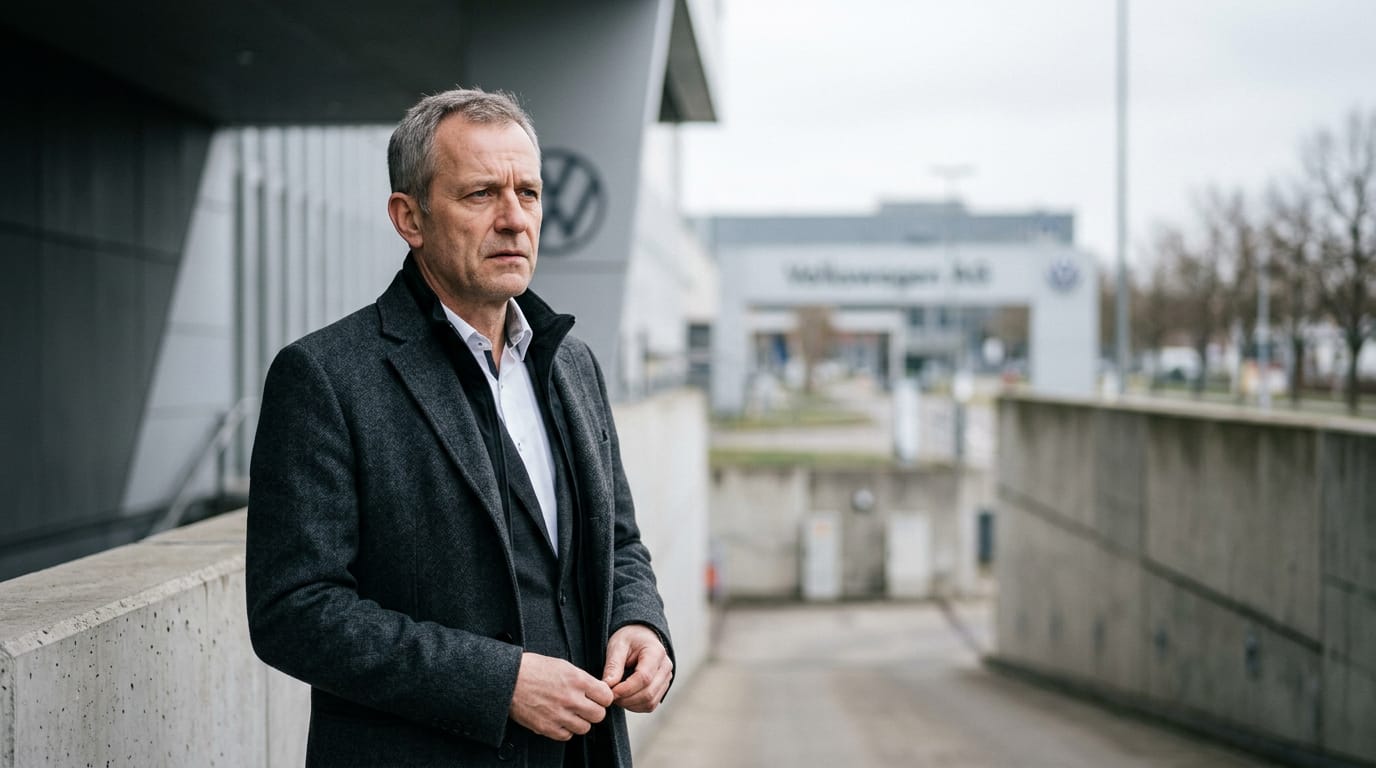
Wolfsburg, Germany – Europe's largest automaker, Volkswagen, stands at a critical juncture, facing what its CEO, Oliver Blume, has termed a "more than critical" situation. Intense internal discussions, dubbed "crunch talks," are underway, threatening to fundamentally reshape the company's decades-old business model and carry profound implications for Germany's industrial future. With aggressive cost-cutting measures, potential widespread job reductions, and the viability of several German plants hanging in the balance, the decisions made in the coming weeks and months are set to define Volkswagen's trajectory for the next era and send ripples across the nation's economy.
The Perfect Storm: Global Headwinds and Homefront Pressures
Volkswagen’s current predicament is a confluence of formidable global headwinds and persistent structural challenges at home. Intensifying competition from Chinese manufacturers, particularly in the burgeoning electric vehicle (EV) segment, has significantly eroded market share and profitability. Chinese EV makers are not only challenging established players on their home turf but are rapidly expanding into European markets. This competitive pressure, coupled with weak demand across key international markets and the lingering impact of U.S. tariff measures, has squeezed Volkswagen's margins dramatically, reportedly halving them between 2021 and 2025.
Domestically, the company grapples with persistently high operating costs in its German plants, a significant concern for management. CEO Oliver Blume noted in an internal memo that Volkswagen's overhead costs remain more than 30% higher than those of comparable firms, an unsustainable differential that undermines competitiveness. The company also faces substantial overcapacity, estimated at approximately 500,000 vehicles annually in Europe. This excess capacity, combined with rising energy costs and increasing regulatory burdens, paints a stark picture for a company that has long been a symbol of German industrial prowess.
Drastic Measures on the Table: Job Cuts and Plant Rationalization
In response to these mounting pressures, Volkswagen is embarking on its most significant restructuring effort to date. The proposed measures are far-reaching and are expected to be the subject of intense debate during supervisory board meetings, including one scheduled for September 4, 2026. Central to the plan are substantial job cuts. While a previous agreement with unions outlined 35,000 future job reductions, new proposals under consideration could see up to 100,000 positions eliminated, a figure twice the previously planned amount. Already, approximately 20,000 employees have agreed to voluntary departure by 2030 as part of an earlier restructuring push.
Beyond workforce reductions, the viability of several German manufacturing sites is under intense scrutiny. Blume has explicitly warned that four plants – Hanover, Emden, Zwickau, and Audi’s Neckarsulm site – may not achieve competitive capacity utilization into the 2030s under existing conditions. Data indicates that the group’s German car plants are projected to operate at 81% of standard capacity in 2026, a figure expected to decline to 73% by the end of the decade, even after the potential removal of the Osnabrück facility from the network. Zwickau, a key electric vehicle production hub, is particularly vulnerable, with its utilization rate forecast to plummet from 88% in 2026 to a mere 42% by 2030. The automaker also aims to reduce its global annual production capacity from 10 million to 9 million vehicles, having already scaled back by 2 million from a peak of 12 million units. Financially, the company seeks to trim $18 billion from its budget and achieve €1.5 billion in annual labor cost savings by 2030. Furthermore, Volkswagen plans to drastically streamline its model lineup by up to 50% and reduce equipment options by as much as 75%, concentrating resources on the most attractive market segments.
The Double-Edged Sword of Electrification and Digitalization
Volkswagen's push into electric vehicles and digital technologies, though strategically imperative, has presented its own set of formidable challenges. Following the diesel-emissions scandal, the company made significant investments in electric mobility, launching its "Accelerate" strategy in 2021 and aiming to become "The Global Automotive Tech Driver" by 2035. However, this transition has proven costly and complex. Investment in EVs and software development has been "enormous" and "slower and more difficult than expected."
Software issues, in particular, have plagued the automaker, leading to multiple recalls. Volkswagen has faced recalls for its ID.4 electric vehicles due to infotainment systems and gauge clusters that unexpectedly reset or fail to start, potentially compromising active safety systems. Similar software defects have led to recalls for Audi and Porsche models, affecting tens of thousands of vehicles due to instrument panel malfunctions, faulty rearview cameras, and issues with passenger airbags. These persistent software glitches not only tarnish the brand's reputation but also necessitate costly fixes and impede the seamless integration of new digital features essential for modern EVs. The challenges have been significant enough that Volkswagen has adjusted its EV strategy, even ending the production of its ID.4 crossover in the U.S. to focus on higher-volume gasoline-powered SUVs, citing market "unpredictability."
A Nation Holds Its Breath: Labor, Politics, and Germany's Future
The sweeping changes proposed by Volkswagen have ignited significant concern among its workforce and powerful labor unions. Christiane Benner, head of Germany's influential IG Metall union, has vehemently criticized management's proposals, pledging resistance to any factory closure plans. Benner argues that workers have already accepted significant concessions and should not face additional sacrifices. This strong union opposition underscores the delicate balance Volkswagen must strike between achieving necessary cost reductions and navigating the political and social sensitivities inherent in its home market.
The scale of Volkswagen's restructuring, with its potential for widespread job losses and plant closures, resonates far beyond the company's gates. It has become a potent symbol of the broader challenges facing Germany's economy, which is struggling with weak growth and high labor and energy costs. Conservative political figures are promising reforms to boost competitiveness, while the far-right Alternative for Germany (AfD) party has seized upon Volkswagen's troubles as a line of attack against the government. As one of Germany's most iconic companies, founded nearly nine decades ago, Volkswagen's fate is intrinsically linked to the nation's industrial identity and economic stability.
The "crunch talks" at Volkswagen are more than just corporate strategy sessions; they are a defining moment for Germany’s automotive future. The outcomes will not only determine the longevity and competitiveness of Europe’s largest carmaker but will also serve as a critical barometer for the adaptability and resilience of the entire German industrial landscape in an increasingly volatile global economy. The balancing act between embracing necessary transformation and preserving a proud industrial heritage will require unprecedented collaboration and difficult compromises from all stakeholders.