Voting Rights Gap Grows in Cosmopolitan Berlin as Hundreds of Thousands Remain Excluded
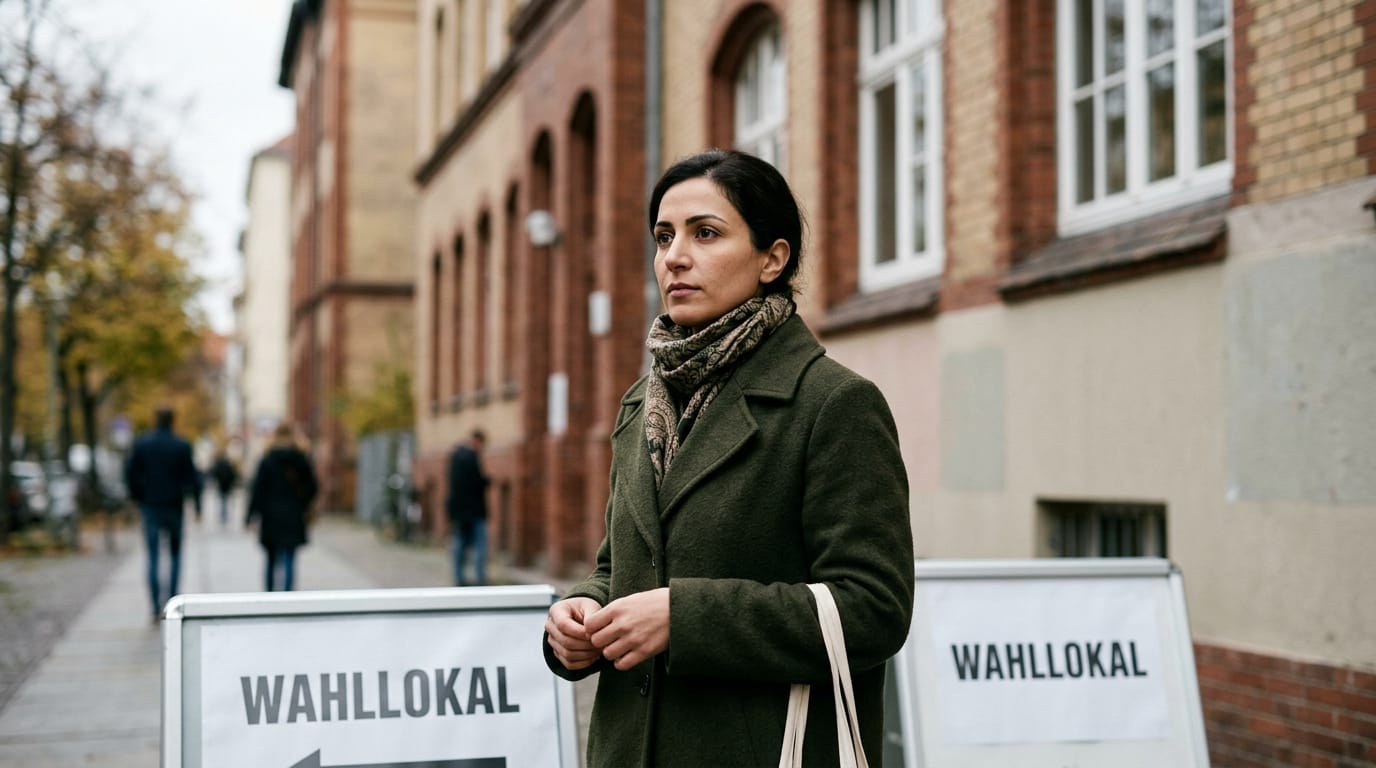
BERLIN — In a capital celebrated globally for its vibrant multicultural identity, nearly a quarter of Berlin’s adult population has no voice at the ballot box. With roughly 851,000 adult foreign residents lacking German citizenship, election day routinely sidelines a massive share of the taxpayers, workers, and community members who keep the metropolis running.
The exclusion highlights a growing tension between Berlin’s international reality and Germany’s strict electoral laws. While the city’s population now stands at roughly 3.9 million people, election officials registered about 2.5 million eligible voters for state parliamentary races. This gap represents the highest proportion of disenfranchised residents in the city-state's modern history, fueling an intensifying political debate over democratic legitimacy and civic belonging.
A Tiered Electoral System
Germany’s voting regulations create a multi-tiered hierarchy of political participation based entirely on nationality. Under federal constitutional standards, only German citizens can cast ballots in federal elections and state parliament contests, known as the Abgeordnetenhaus. Because Berlin functions as both a city and one of Germany’s 16 federal states, major civic decisions—from school funding to municipal policing and statewide housing initiatives—fall directly under state jurisdiction.
Citizens of other European Union member states residing in Berlin do have limited access to the ballot. Approximately 250,000 EU passport holders are permitted to vote and run for office in local district assemblies, known as the Bezirksverordnetenversammlung. Yet these borough councils hold restricted powers, mainly handling localized administrative tasks rather than drafting legislation.
For third-country nationals—including long-established Turkish families, British expatriates, Ukrainian refugees, and tens of thousands of technology workers from around the globe—electoral participation remains nonexistent. These residents cannot vote at either the district or the state level, regardless of how long they have lived in the city or how much they pay in taxes.
Daily Realities and Policy Disconnects
The political divide has tangible consequences for municipal governance. Key campaign issues across Berlin frequently center on rising rental prices, public transit services, and the maintenance of public spaces, parks, and schools. In a city where roughly 85 percent of households live in rented homes, housing affordability stands at the center of everyday life.
Advocacy groups argue that excluding hundreds of thousands of tenants from legislative elections skews policy priorities. Decisions directly impacting urban infrastructure and public housing often proceed without input from the diverse communities most affected by them.
To highlight this democratic deficit, local initiatives have organized non-binding mock elections. In one symbolic vote arranged in the central district of Mitte for foreign residents without a German passport, the left-wing Die Linke gathered 39 percent of the votes, followed by the Greens with 19.5 percent and the Social Democrats with 15.9 percent. The conservative Christian Democratic Union trailed at 8.5 percent. Although these exercises carry no legal weight, organizers point to them as proof of clear political engagement among non-citizen communities.
Political Divisions Over Enfranchisement
Reforming the system faces formidable legal and political barriers. Progressive parties, including Die Linke and the Greens, have consistently pushed to decouple voting rights from nationality, arguing that long-term permanent residents deserve a direct say in local governance. They advocate lowering bureaucratic hurdles to citizenship and extending municipal voting rights to all registered residents who have lived in the city for a continuous period.
Conservative and right-wing parties strongly oppose any expansion of voting rights for foreign nationals. The Christian Democratic Union maintains that the right to vote must remain tied to the obligations of full citizenship, arguing that easing access to ballots diminishes the incentive for newcomers to fully integrate. The anti-immigration Alternative for Germany has taken an even harder line, rejecting non-citizen enfranchisement as an erosion of national sovereignty.
Complicating the matter is the German Basic Law. Past rulings by the Federal Constitutional Court have established that democratic sovereignty resides with the German people, making any unilateral attempt by the state of Berlin to expand state-level voting rights subject to immediate judicial challenge.
The Path Toward Reform
With legislative changes to voting rights stalled at the constitutional level, current efforts have largely shifted toward naturalization reforms and advisory councils.
Federal changes to Germany's citizenship laws have reduced the standard residency requirement for naturalization from eight years to five, and permitted dual citizenship for non-EU applicants. Officials hope this pathway will encourage more foreign residents to take up German passports and join the electorate permanently. However, local administrative backlogs have slowed naturalization processing across Berlin, leaving tens of thousands of applicants waiting months or years for their paperwork to finish.
In the interim, the city has utilized institutional bodies like the State Advisory Council for Participation, known as the Landesbeirat für Partizipation. The council offers immigrant communities and refugees a platform to make policy recommendations directly to the city government. While these advisory panels help convey concerns to lawmakers, they carry no formal legislative power.
As Berlin’s foreign-born population continues to grow, the democratic contradiction between the city’s inclusive, international reputation and its restrictive polling booths remains an unresolved challenge at the core of German urban politics.


