Warhead-Laden Ukrainian Drone Crashes in Finland, Raising Regional Tensions
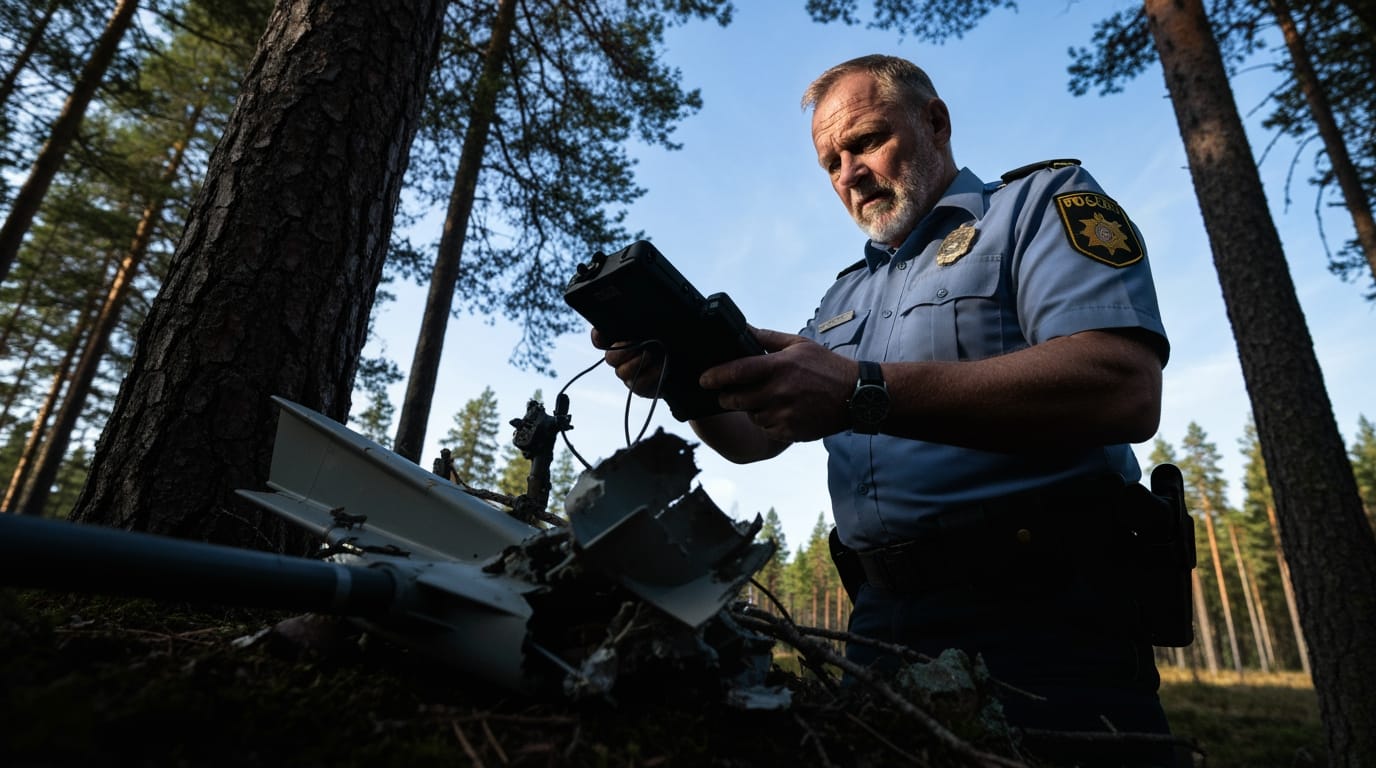
HELSINKI, Finland – The ongoing conflict in Ukraine spilled directly onto Finnish soil this week as authorities confirmed a Ukrainian drone carrying an unexploded warhead crashed in southeastern Finland. The incident, which prompted an immediate apology from Kyiv, marks a significant escalation, highlighting the unpredictable trajectory of modern warfare and the potent effects of electronic countermeasures in the region. Finnish police announced Monday that the unmanned aerial vehicle (UAV), which went down near Kouvola on Sunday, March 29, was equipped with a live explosive. This development has underscored the broader security challenges facing Nordic and Baltic states bordering Russia, as stray drones from the Ukraine war increasingly impact their territories.
Unwanted Ordnance Lands Near Finnish Border
The drama unfolded early Sunday morning when Finnish defense systems detected several slow-moving, low-altitude objects violating national airspace in the southeastern region of Kymenlaakso. One of these objects, later identified as a Ukrainian AN196 drone with a wingspan of 6.7 meters, crashed north of the city of Kouvola, approximately 50 kilometers from the Russian border. A second drone, also believed to be Ukrainian, was discovered as debris in the nearby municipality of Luumaki. The presence of a warhead on the drone found near Kouvola sent immediate ripples of concern through Finnish authorities. Police, border guards, and military personnel swiftly secured the crash site, leading to a controlled detonation of the unexploded ordnance late Sunday night. Local residents reported hearing a significant explosion, and while some were evacuated as a precaution, no injuries or property damage were reported from the initial crash or the subsequent detonation. The investigation into the second drone is ongoing, with authorities determining if it detonated upon impact. Finnish Air Force F/A-18 Hornet fighter jets were scrambled to identify the aerial objects but did not engage, prioritizing the avoidance of potential collateral damage.
Kyiv Expresses Regret, Blames Russian Jamming
Following the incident, Ukraine's Ministry of Foreign Affairs promptly issued an apology to Finland, attributing the errant flight path of its drones to sophisticated Russian electronic warfare systems. Heorhii Tykhyi, a spokesman for the Ukrainian Foreign Ministry, firmly stated that the drones were "under no circumstances" intentionally directed toward Finland. Tykhyi emphasized that the most probable cause for the drones straying so far off course was the disruptive effect of Russian electronic countermeasures. Ukrainian President Volodymyr Zelenskyy reportedly discussed the incident with Finnish President Alexander Stubb, with both leaders acknowledging a shared understanding of the situation. Ukraine has been increasingly employing drones in long-range strikes against Russian military infrastructure, particularly oil refineries and export facilities. These attacks, aimed at weakening Moscow's war economy, have intensified in recent weeks, with some targets located close to the Finnish border. Kyiv's explanation points to the complex and often unpredictable nature of modern electronic warfare, where GPS signals and drone control systems can be severely disrupted, causing UAVs to lose orientation and deviate significantly from their intended trajectories.
Finland's Grave Concern Amidst Heightened Vigilance
Finnish officials have unequivocally stated that they are treating the territorial violation with utmost seriousness. Prime Minister Petteri Orpo underscored the gravity of the situation, reiterating that while the drones were likely Ukrainian, their deviation was a direct consequence of Russian interference. Defense Minister Antti Hakkanen echoed these sentiments, highlighting the continuous need for vigilance along Finland's extensive 1,300-kilometer border with Russia. The incident marks a poignant moment for Finland, a nation that historically maintained neutrality but chose to join NATO in response to Russia's full-scale invasion of Ukraine. The country has since increased surveillance in the Gulf of Finland and along its eastern frontier. While acknowledging the absence of a direct military threat to Finland itself, the presence of an armed drone underscored the indirect risks associated with the ongoing conflict. The meticulous investigation by Finnish authorities is expected to provide further clarity on the drones' exact origins and flight paths, reinforcing the nation's commitment to protecting its sovereignty and security.
Regional Echoes: A Pattern of Stray Drones
This recent incident in Finland is not an isolated event but rather part of a troubling pattern observed across the Baltic region. In the weeks preceding the Finnish crashes, several Ukrainian drones reportedly went astray and impacted the territories of Estonia, Latvia, and Lithuania. These nations, also concerned by the proximity of the conflict, have voiced similar explanations involving Russian electronic warfare disrupting Ukrainian drone operations targeting Russian oil export facilities on the Baltic Sea coast. The increasing frequency of such occurrences highlights the expanding geographical footprint of the war and the inadvertent risks it poses to neighboring countries. As Ukraine continues to employ drones to degrade Russia's military capabilities and economic infrastructure, the potential for unintended incursions into neutral or allied airspace remains a significant concern. The sophisticated electronic jamming capabilities employed by Russia serve as a constant variable, making the precise control of long-range drones a formidable challenge, especially near heavily contested areas. Finnish military officials revealed that over 100 drone flights have been detected within 10 kilometers of the Finnish border in the past week alone, illustrating the intense aerial activity in the region.
The discovery of a warhead-laden Ukrainian drone in Finland is a stark reminder of the volatile nature of the ongoing conflict and its potential to impact beyond the immediate battlefields. While both Finland and Ukraine have acted swiftly to address the situation through diplomatic channels and shared information, the incident underscores the persistent dangers posed by electronic warfare and the complex realities of modern drone operations. As investigations continue and both nations reinforce their commitment to regional security, the event serves as a critical juncture, emphasizing the need for continued vigilance and international cooperation in managing the far-reaching consequences of the war.


