Warner Bros. Discovery Board Unanimously Endorses Netflix Bid, Rejects Paramount Skydance Offer
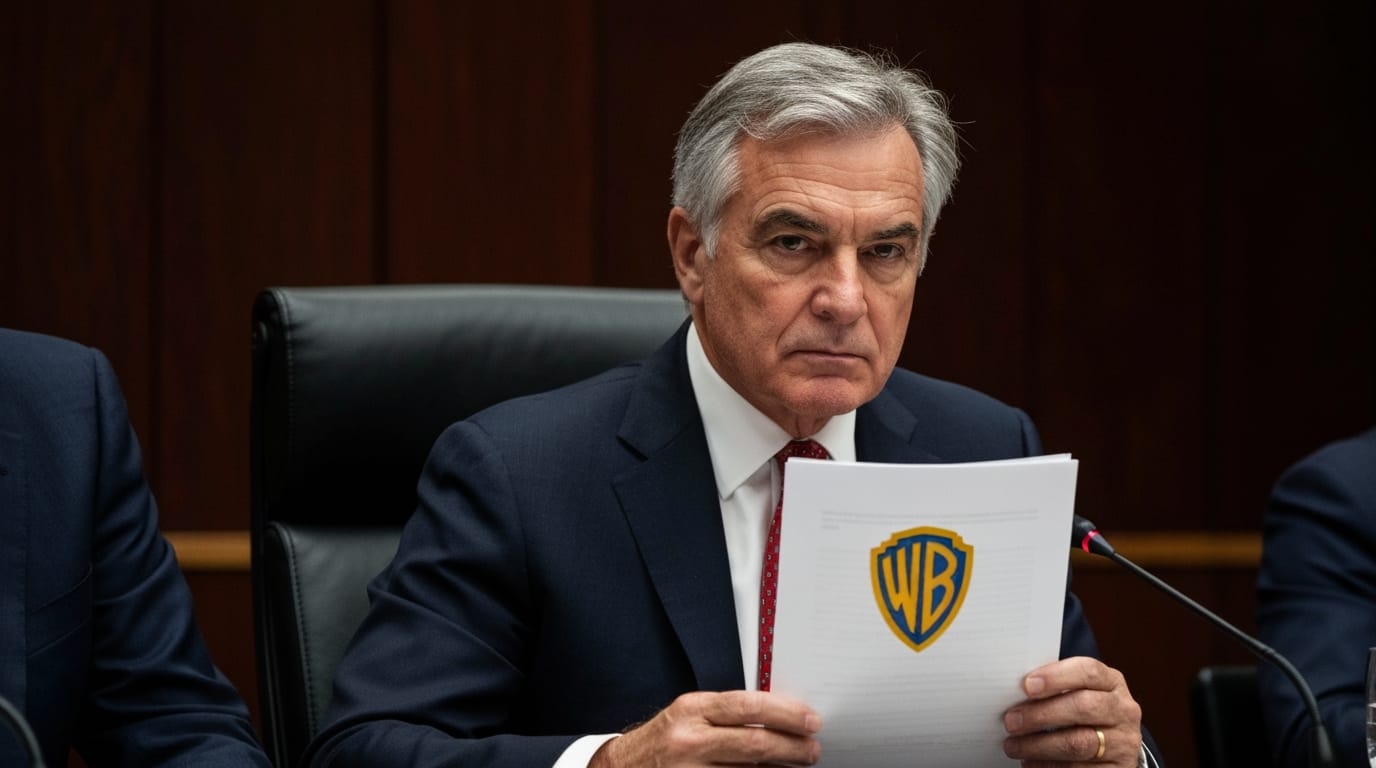
Hollywood, CA – In a pivotal move set to redefine the global entertainment landscape, the Board of Directors of Warner Bros. Discovery (WBD) has unequivocally recommended that its shareholders approve Netflix's $82.7 billion acquisition offer for its studio and streaming assets, while simultaneously urging rejection of a competing, higher-value hostile bid from Paramount Skydance. The decision, announced today, December 17, 2025, culminates a competitive bidding war and signals a strategic realignment for one of Hollywood's most storied institutions.
The board's endorsement of the Netflix proposal underscores a preference for a deal structure that it believes offers greater certainty and long-term value for shareholders, despite Paramount Skydance's all-cash bid for the entire company. This landmark agreement, if approved by shareholders and regulators, promises to merge Netflix's vast global reach and technological prowess with Warner Bros.' century-long legacy of iconic franchises and content creation, establishing a new titan in the fiercely competitive streaming era.
The Netflix Proposal: A Strategic Alignment for a New Era
Netflix's agreement, first announced on December 5, 2025, focuses on acquiring WBD's core streaming and studio divisions. This includes the venerable Warner Bros. film and television studios, HBO, HBO Max, DC Studios, DC Entertainment, and WBD's extensive media library. The transaction values these assets at an equity value of $72 billion and an enterprise value of $82.7 billion, translating to $27.75 per WBD share.
Under the terms of the deal, WBD shareholders are set to receive a combination of cash and Netflix stock, specifically $23.25 per share in cash and $4.50 per share in Netflix common stock, subject to a pre-defined collar mechanism. A crucial component of this strategic maneuver is the planned spin-off of WBD's Global Linear Networks division, branded "Discovery Global," into a new publicly traded company. This separate entity, expected to materialize in Q3 2026, will encompass valuable assets such as CNN, TNT Sports in the U.S., Discovery channels, and various free-to-air networks across Europe. This separation is intended to provide WBD stockholders with incremental value and streamline the remaining Warner Bros. Discovery into a more focused content engine.
For Netflix, this acquisition marks a significant departure from its long-standing "builders, not buyers" philosophy, signaling a strategic shift towards inorganic growth to further solidify its market position. The combination would bring together beloved franchises like "Harry Potter," "DC Universe," "The Sopranos," and "Game of Thrones" with Netflix originals such as "Stranger Things" and "Wednesday," creating an unparalleled content library designed to attract and retain global subscribers. Netflix has also affirmed its commitment to maintaining traditional theatrical release windows for Warner Bros. films, addressing industry concerns about cinema's future.
Paramount Skydance's Counter-Bid and Board's Firm Rejection
Just three days after Netflix's initial announcement, on December 8, 2025, Paramount Skydance launched a hostile all-cash counter-bid for the entire Warner Bros. Discovery conglomerate, offering $30 per share for a total value of $108.4 billion. While nominally a higher offer, WBD's board, following a thorough review with independent financial and legal advisors, unanimously deemed Paramount Skydance's proposal to be inferior and not in the best interests of its shareholders.
The WBD board cited several critical deficiencies in the Paramount Skydance offer. Primarily, concerns were raised regarding the financing of the bid, which reportedly relied on an "unknown and opaque revocable trust" and raised questions about Paramount's overall creditworthiness. The board highlighted that while the bid was presented as having the backing of the Ellison family, including Oracle founder Larry Ellison, the actual equity commitment from the Ellison Revocable Trust was capped and its assets subject to change, lacking a secured, unconditional commitment. This contrasts sharply with Netflix's offer, which the board described as "fully backed by a public company with a market cap in excess of $400 billion with an investment grade balance sheet."
Furthermore, WBD's board pointed out that accepting Paramount Skydance's bid would trigger a $2.8 billion termination fee payable to Netflix, a substantial cost that would be borne by WBD. They also criticized Paramount Skydance for consistently failing to address key concerns raised throughout multiple prior proposals. The board concluded that Paramount Skydance's offer presented "significant risks and costs" and was an "illusory" proposal, lacking the certainty and favorable financial terms of the Netflix agreement. The withdrawal of Jared Kushner's Affinity Partners, a financial backer of Paramount's bid, further complicated the rival offer.
Industry Shake-Up and Regulatory Scrutiny
This proposed merger carries immense implications for the broader entertainment industry, promising to reshape competition and content distribution paradigms. The consolidation of such vast content libraries and streaming capabilities under one roof is expected to attract significant attention from regulatory bodies. While Paramount Skydance had argued its bid would face an easier path through government regulatory processes due to combining different asset classes, WBD's board concluded that the regulatory risks for both offers were equally material.
Netflix has anticipated regulatory scrutiny, offering a substantial $5.8 billion breakup fee if the deal fails to gain clearance, a figure indicative of their confidence in securing approval. The regulatory review process has already commenced, with Warner Bros. Discovery CEO David Zaslav confirming its start in a memo to staff. The deal will be a major test for antitrust authorities, particularly concerning market dominance in the streaming sector. Critics and some analysts have voiced concerns that the combination of two major streaming powerhouses could lead to reduced competition and choices for consumers, although Netflix executives maintain the deal is "pro-consumer, pro-innovation, pro-creator and pro-growth."
Looking Ahead: The Future of Entertainment
The WBD board's recommendation marks a critical juncture for both companies and the future of media. With significant debt burdens stemming from its previous merger, Warner Bros. Discovery has been actively streamlining its operations. This deal provides a clear strategic direction, allowing the company to shed its streaming and studio debt and focus on its remaining assets, particularly the spun-off Discovery Global.
For Netflix, the acquisition represents an ambitious leap, bolstering its content arsenal with some of the most valuable intellectual properties in entertainment history. As the deal moves forward to shareholder votes and intense regulatory scrutiny, the industry will watch closely to see how this consolidation reshapes content creation, distribution, and consumption habits globally. The finalization of this agreement, expected in 12-18 months, could herald a new chapter in the ongoing evolution of the entertainment landscape, with profound effects on creators, consumers, and shareholders alike.


