Wave of Violence Engulfs West Bank as Settlers Torch Homes, Assault Palestinians
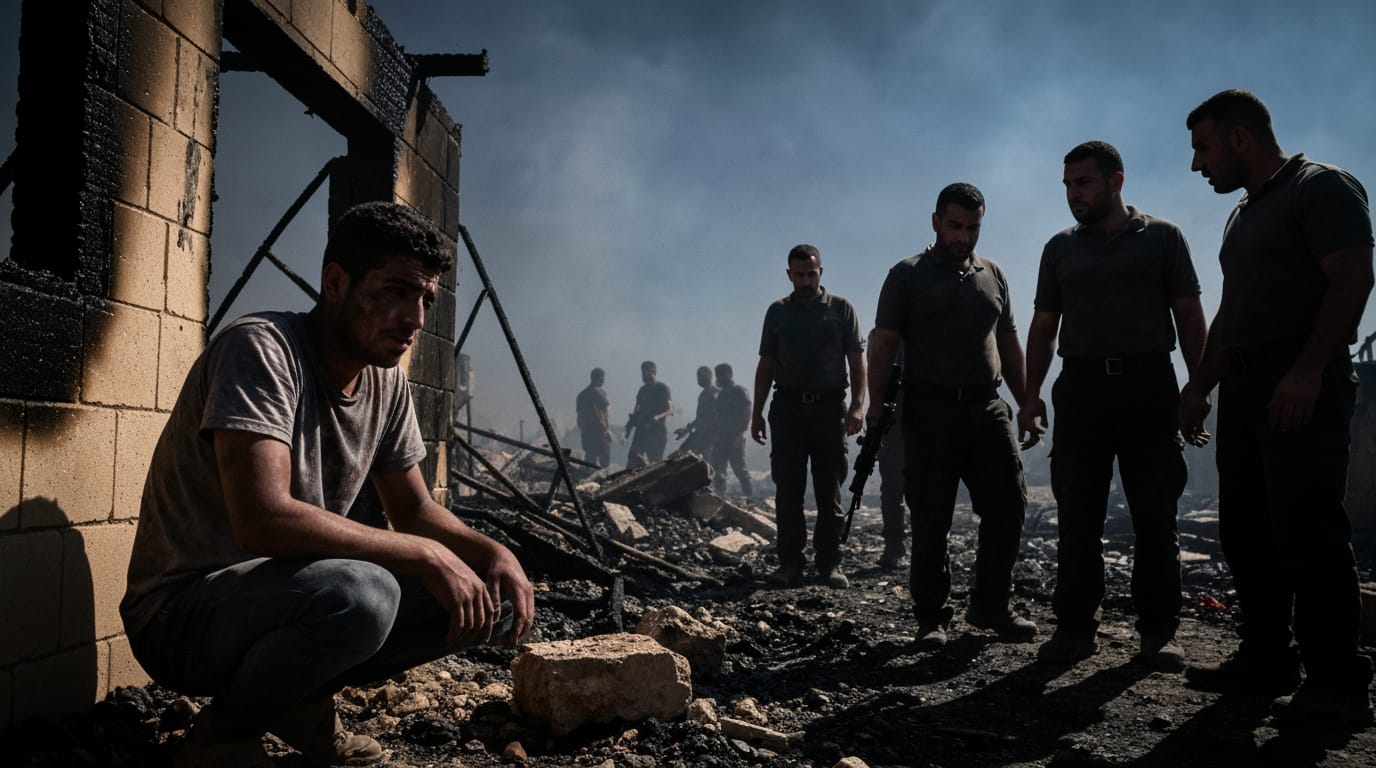
Occupied West Bank – A wave of coordinated and destructive attacks by Israeli settlers swept across numerous Palestinian communities in the occupied West Bank this past weekend, leaving a trail of torched homes, destroyed vehicles, and injured residents. The incidents, which unfolded during the Muslim holiday of Eid al-Fitr, mark a significant escalation in an already volatile region, with witnesses describing organized raids and a troubling lack of intervention from Israeli security forces in many instances. The widespread violence has drawn sharp condemnation and intensified calls for international accountability amid a worsening humanitarian crisis.
Coordinated Assaults Ignite Palestinian Villages
The latest surge of violence began late Saturday, March 22, 2026, and continued into Sunday morning, targeting at least a dozen locations across the West Bank. Villages south of Jenin, Nablus, Hebron, and in the Ramallah area bore the brunt of the attacks. In al-Fandaqumiya, south of Jenin, settlers reportedly set fire to multiple houses and cars, smashing windows as residents attempted to confront them and extinguish the blazes. Hussam al-Zu'bi, a homeowner in al-Fandaqumiya, described his house being completely burned, with everything inside consumed by fire after Molotov cocktails were thrown through windows. Reports indicated that up to 200 assailants, some from the nearby Homesh settlement, participated in the attack on al-Fandaqumiya.
Similar scenes of destruction were reported in other areas. In Seilat al-Dahr, several homes were targeted, and one resident was beaten and injured. The villages of Qaryout and Jaloud, south of Nablus, saw vehicles burned and residents injured during comparable raids, with images showing charred car shells. Activist Bashar al-Qaryuti noted that in Jaloud, settlers burned five vehicles and part of a medical relief society building, attempted to ignite a house and a mosque, and vandalized over ten homes. Four young men were injured in Jaloud while attempting to resist the attacks. In Masafer Yatta, south of Hebron, two Palestinians were wounded, and three were arrested after settlers entered the area, reportedly under the protection of Israeli forces. Near Salfit and Ramallah, settlers threw stones at passing Palestinian vehicles. The Palestinian Red Crescent Society reported that in Deir al-Hatab, near Nablus, ten people were injured, including a 45-year-old man shot in the foot and a woman suffering from smoke inhalation. Palestinian officials and witnesses described these as coordinated attacks, with some graffiti at the sites indicating retaliation for the death of an 18-year-old settler in a suspected car incident.
A Deepening Crisis: Escalating Violence and Displacement
This recent eruption of violence is not an isolated incident but part of a broader, alarming trend of escalating settler attacks in the West Bank, which has intensified significantly since the conflict in Gaza began in October 2023. According to UN reports, Israeli forces and settlers have killed more than 1,000 Palestinians in the West Bank since October 2023. Data from the UN Office for the Coordination of Humanitarian Affairs (OCHA) indicates that settler attacks have been increasing for years, with 1,828 incidents recorded in 2025, averaging five attacks per day—the highest daily average since OCHA began recording such incidents in 2006. The Israeli military and Shin Bet security agency also reported a 27 percent rise in settler attacks in 2025 compared to the previous year, totaling 867 incidents of "nationalistic crime," with severe incidents like arson and shootings increasing by over 50 percent.
Human rights organizations, including the Israeli group B'Tselem, have accused the Israeli government of enabling settler violence as a strategy to consolidate control over Palestinian land. A UN Human Rights Office report covering the period up to October 2025 documented 1,732 incidents of settler violence resulting in casualties or property damage, noting that this violence continued in a "coordinated, strategic and largely unchallenged manner." The report highlighted that Israeli authorities played a central role in directing, participating in, or enabling this conduct, making it difficult to distinguish between state and settler violence. Amnesty International also warned that the accelerating expansion of unlawful settlements and the rise in state-backed settler violence are making the annexation of the territory an irreversible reality.
The Human Toll and Forced Displacement
The impact on Palestinian communities has been devastating. Beyond the physical injuries, which amounted to over 830 Palestinians injured by settlers in 2025 alone, the violence leads to property destruction, loss of livelihoods, and profound psychological trauma. The attacks frequently target homes, agricultural land, and infrastructure, with reports of schools and clinics being burned or vandalized.
A critical consequence of this escalating violence is the forced displacement of Palestinian populations. More than 36,000 Palestinians were forcibly displaced in the occupied West Bank, including East Jerusalem, in the 12-month period ending October 31, 2025, amid intensified settlement activity and growing attacks. This displacement is described by the UN human rights office as a "concerted Israeli policy of mass forcible transfer throughout the occupied territory, aimed at permanent displacement, raising concerns of ethnic cleansing." Since October 2023, at least seven communities have been entirely uprooted, and thousands of Palestinians have been displaced under threats, often with settlers issuing ultimatums to leave their lands. The UN has warned that Israeli policies in the West Bank risk forcibly displacing Palestinian communities.
International Condemnation and Calls for Accountability
The response from Israeli security forces to these settler attacks has frequently drawn criticism. Witnesses to the recent weekend's violence reported that Israeli troops and police were present on the outskirts of some villages but did not stop the attacks, which continued into the night. Human rights groups consistently point to a pattern of impunity, with prosecutions for settler violence being rare despite the scale of incidents. The Israeli military, while condemning "violence of any kind," has often failed to report arrests in connection with such events.
The international community has voiced increasing alarm. The UN Human Rights Office has repeatedly condemned the expansion of Israeli settlements and the accompanying settler violence, reiterating that settlements in occupied territory are illegal under international law. Diplomats from 13 European nations and Canada have decried "increasing settler terror," stating that violent attempts to seize Palestinian land must end. These international bodies and human rights organizations continue to call for an immediate halt to settlement expansion and for accountability for those perpetrating violence.
The ongoing cycle of settler violence in the West Bank, characterized by recent coordinated attacks, systematic displacement, and perceived impunity, underscores a deepening humanitarian crisis. The escalating tensions and the profound impact on Palestinian communities necessitate urgent and decisive action to protect civilians, enforce the rule of law, and address the underlying drivers of conflict to foster any prospects for long-term stability in the region.


