West Bengal Ushers in New Political Era as BJP Secures Historic Mandate
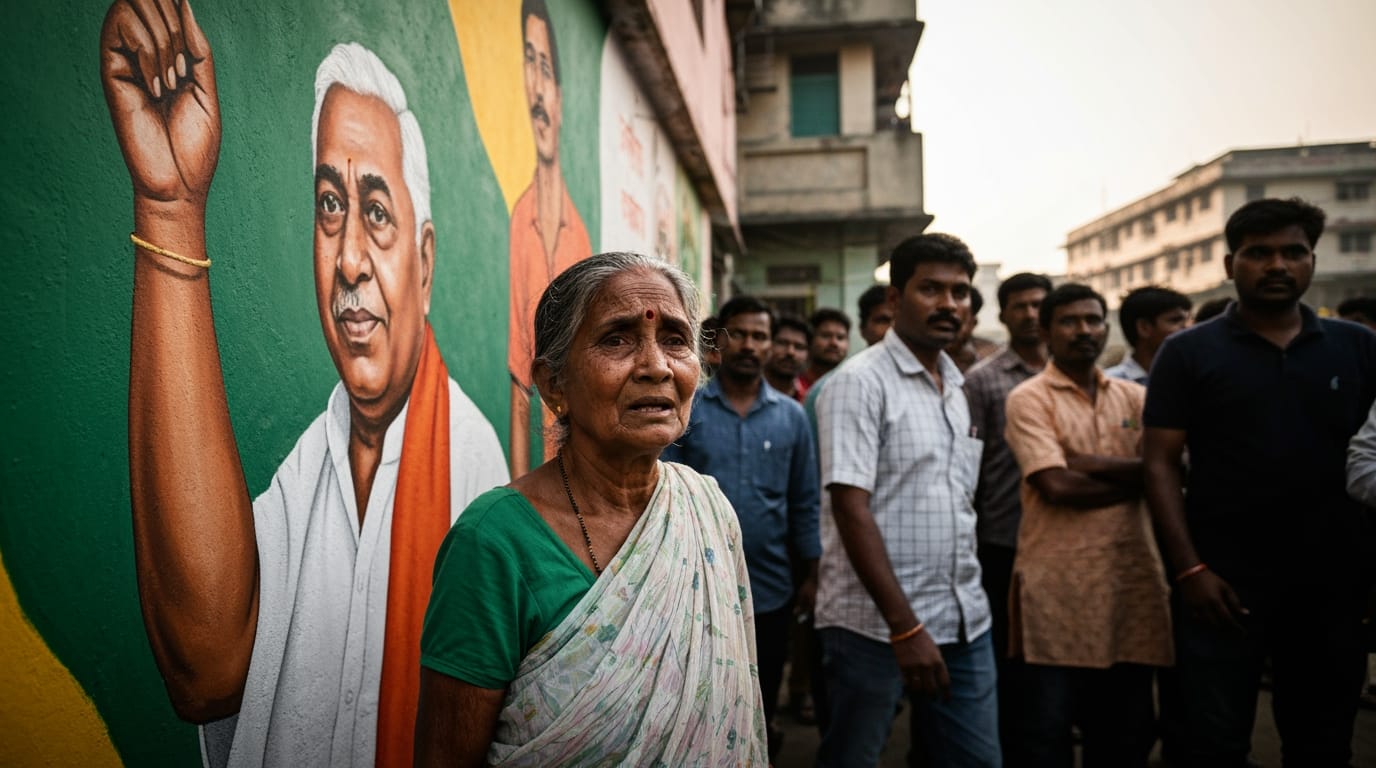
KOLKATA, India – West Bengal has witnessed a profound political upheaval, as the Bharatiya Janata Party (BJP) achieved an unprecedented victory in the 2026 Assembly elections, wresting control of the state from the Trinamool Congress (TMC) after 15 years of uninterrupted rule. The outcome marks a significant realignment of political power in the eastern Indian state, delivering a decisive blow to Chief Minister Mamata Banerjee and signaling a substantial expansion of the BJP's influence across the nation. This historic mandate not only reshapes West Bengal's immediate future but also carries considerable ramifications for the broader Indian political landscape.
The results, declared on May 4, 2026, saw the BJP cross the majority mark with a commanding lead, securing 206 seats out of the 294-member legislative assembly and a vote share of 45.84 percent. This performance represents a dramatic surge for the BJP, whose previous best in the state assembly was 77 seats in 2021. In stark contrast, the Trinamool Congress, led by the charismatic Mamata Banerjee, saw its tally plummet to 81 seats with 40.8 percent of the vote, a significant reduction from its 48 percent share in 2021. The magnitude of this defeat was further underscored by Chief Minister Banerjee's personal loss in the Bhabanipur constituency, where she was defeated by BJP candidate Suvendu Adhikari by over 15,000 votes. Adhikari also secured a victory in Nandigram, another keenly watched constituency. The Communist Party of India (Marxist) managed to secure one seat, while the Congress and the regional Aam Janata Unnayan Party (AJUP) each won two seats. The election witnessed a record voter turnout of 92.47 percent, the highest since India's independence, reflecting the intense political engagement and desire for change among the electorate.
The comprehensive nature of the BJP's victory can be attributed to a confluence of factors, foremost among them a palpable anti-incumbency sentiment against the TMC government that had governed the state since 2011. Voters expressed concerns regarding governance, economic security, and accountability, leading to a shift in their preferences. Prime Minister Narendra Modi and other BJP leaders repeatedly highlighted issues such as alleged corruption, political violence, and a perceived breakdown of law and order under the TMC's administration, coining the term "maha jungle raj" to describe the state of affairs. These accusations resonated with a segment of the populace, contributing to the demand for change. The BJP's well-organized and aggressive campaign machinery also played a pivotal role, leveraging an extensive grassroots network, targeted outreach, and digital mobilization efforts. Union Home Minister Amit Shah notably camped in Bengal for weeks, orchestrating booth-level operations and addressing numerous rallies. Furthermore, the BJP's strategy of religious polarization, coupled with accusations that the TMC engaged in "Muslim appeasement," appears to have influenced a portion of the Hindu vote. This narrative, combined with a perceived split in the Muslim vote among multiple parties, including the Left-ISF alliance and other regional players, impacted the TMC's traditional support base. Significantly, traditional "Bhadralok" heartlands in regions like Hooghly, Howrah, and South Kolkata, historically averse to the BJP, showed a tilt towards the party, driven by concerns over governance failures. Marginalized communities such as the Namasudra, Matua, and Kanjawara also reportedly shifted their allegiance to the BJP.
The electoral outcome is poised to usher in significant changes within West Bengal. For the first time, the state will be governed by a BJP administration, signifying a major ideological and policy shift. The new government is expected to prioritize issues of governance, rule of law, and economic development, fulfilling Prime Minister Modi's promise of "politics of good governance." The focus may turn towards addressing alleged corruption, improving administrative efficiency, and fostering economic growth, areas that were central to the BJP's campaign. The victory also implies a potential re-evaluation of the state's social fabric and cultural identity. The BJP's emphasis on cultural nationalism and its right-wing populist ideology are likely to influence policy decisions and public discourse. This political transformation could lead to new dynamics in state-center relations, with a BJP government in Kolkata potentially aligning more closely with the federal government's agenda. The defeat of several TMC cabinet ministers also indicates a significant reshuffling of political leadership within the state.
Beyond West Bengal, the BJP's victory holds substantial national implications. This success strengthens Prime Minister Narendra Modi's assertion of nationwide electoral dominance and consolidates the BJP's footprint in eastern India. The party now governs 20 out of 28 states, further enhancing its control over state and central governments. The win in West Bengal, along with victories in Assam and Puducherry, provides the BJP with renewed political momentum, particularly significant after the party fell short of an outright majority in the 2024 national elections. Analysts suggest this outcome substantially increases Modi's national standing and the BJP's capacity to govern India. Conversely, the defeat is a severe blow to Mamata Banerjee, diminishing her aspirations of emerging as a significant national challenger to Modi. The weakening of the TMC's political stature also recalibrates the internal balance within the INDIA bloc, a coalition of opposition parties, where Banerjee had sought a prominent leadership role. The results in West Bengal underscore a broader narrative of shifting voter sentiment across India, prioritizing governance and credibility.
The 2026 West Bengal Assembly elections represent a pivotal moment in the state's political history, marking the end of one era and the beginning of another. The BJP's historic breakthrough, driven by anti-incumbency, strategic campaigning, and appeals to governance and identity, has fundamentally altered the political map of West Bengal. This shift will inevitably lead to new policy directions and a revised political discourse within the state, while simultaneously bolstering the BJP's national dominance and reshaping the dynamics of opposition politics in India. The coming years will reveal the full extent of this new political reality and its long-term impact on West Bengal and the country.


