Western Europe Reels as Storm Nils Claims Three Lives, Plunges Hundreds of Thousands into Darkness
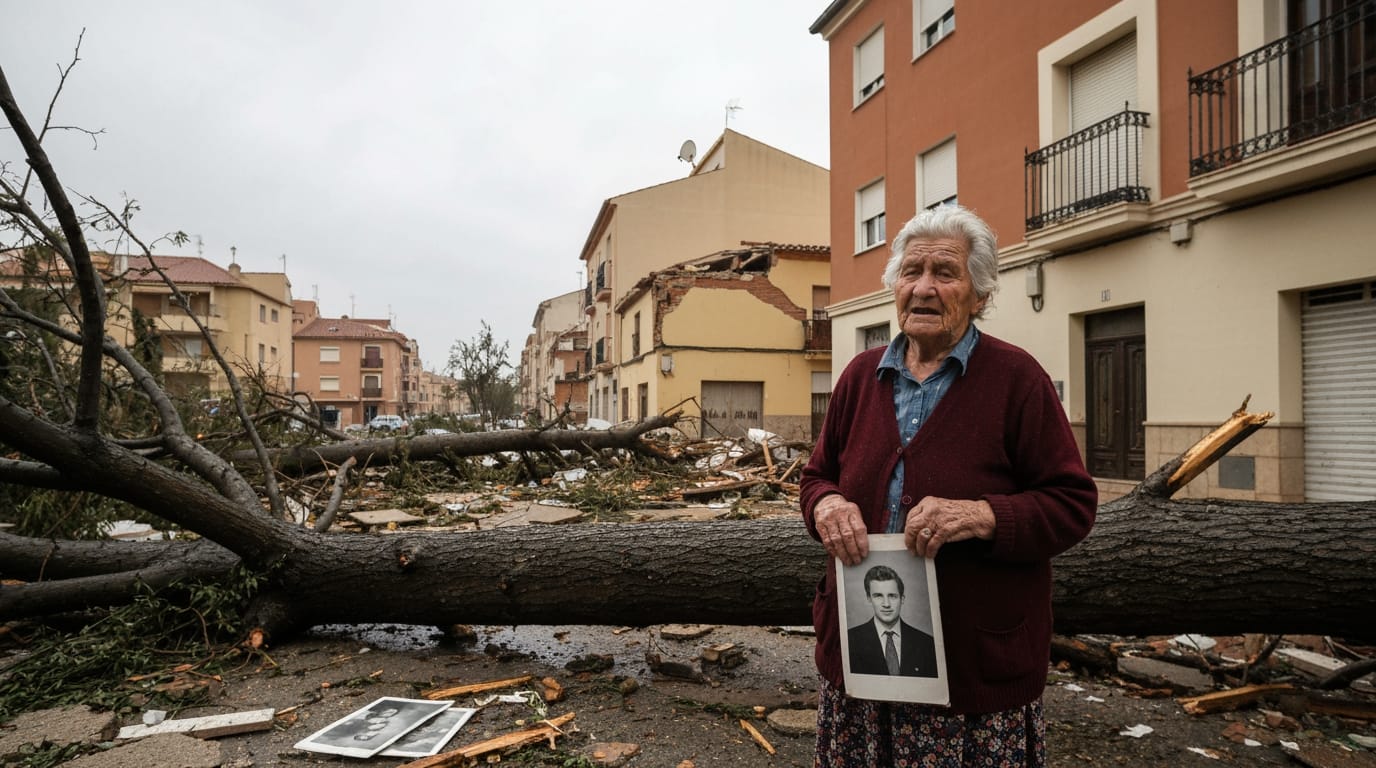
PARIS, FRANCE – A ferocious Storm Nils has torn across Western Europe, leaving a trail of devastation that includes three confirmed fatalities, widespread power outages affecting nearly a million households, and unprecedented disruptions to travel and daily life across France, Spain, and Portugal. The powerful Atlantic weather system, packing winds equivalent to a Category 1 hurricane, struck the region from February 11-13, exacerbating an already challenging winter marked by a relentless succession of extreme weather events.
The storm's fury unfolded with alarming speed, triggering red and orange weather alerts across multiple nations and forcing emergency services into round-the-clock operations. As communities grapple with the immediate aftermath of fallen trees, collapsed infrastructure, and surging floodwaters, the broader implications of these increasingly frequent and intense weather phenomena are coming into sharp focus.
France Under Siege: Fatalities and Widespread Blackouts
France bore a significant brunt of Storm Nils' wrath, experiencing two of the three reported fatalities and the vast majority of power disruptions. A truck driver tragically lost his life in the Nouvelle-Aquitaine region when a tree branch, uprooted by the ferocious winds, fell onto his vehicle. In a separate incident, a person died after falling from a ladder in their garden, an event attributed to the storm's conditions.
The storm's powerful gusts, reaching speeds of up to 162 kilometers per hour (approximately 100 mph) in some areas, ripped through the French landscape, particularly impacting the Nouvelle-Aquitaine and Occitanie regions. This resulted in an astounding 900,000 households being plunged into darkness as electricity networks buckled under the strain. French electricity distributor Enedis rapidly mobilized between 1,400 and 3,000 technicians to address the outages, but repair efforts were significantly hampered by extensive flooding, which left fields waterlogged and roads impassable.
Météo-France, the national weather agency, had placed five regions—Savoie, Aude, Gironde, Pyrénées-Orientales, and Lot-et-Garonne—under red alert for avalanche risks, violent winds, and flooding, with an additional 30 departments under orange alert. Rivers such as the Blavet, Lay, Seugne, and Charente were identified as being at heightened risk of overflowing, leading to road closures and the evacuation of schools in affected areas. Sébastien Léas, a French forecaster, described the storm's impact as "critical," drawing parallels to the destructive Storm Goretti that had caused significant damage just a month prior.
Iberian Peninsula Battered: Floods, Evacuations, and Infrastructure Damage
The Iberian Peninsula, encompassing Spain and Portugal, also endured a severe battering from Storm Nils. In Spain, a woman tragically died following the collapse of an industrial warehouse roof, a direct consequence of the storm's destructive force. The region experienced some of its most intense weather in decades, with Catalonia particularly hard hit by winds reaching 100 mph, described by officials as the strongest in 20 years.
Across Spain, the national meteorological agency AEMET issued severe weather warnings, including red alerts for coastal areas in Galicia, Cantabria, and the Basque Country, where waves were forecast to reach staggering heights of up to 10 meters (32 feet). Orange alerts were also in effect for strong winds and dangerous sea conditions in southern regions like Almeria and Granada, and extended to the Balearic Islands of Mallorca and Menorca.
The storm led to widespread disruption, with schools closed, flights canceled, and public transport services suspended across multiple regions. Emergency services in Andalusia were overwhelmed by dozens of flood-related incidents as rivers burst their banks. Authorities in Castilla-La Mancha were forced to open dam floodgates to mitigate downstream flood risks, while thousands of residents in areas including Andalusia were evacuated overnight as floodwaters rose following weeks of extreme weather.
Portugal, already reeling from previous storms, also suffered significant infrastructure damage. A critical section of the A1 motorway, a vital link between Lisbon and Porto, partially collapsed when the Mondego River overflowed its banks near Coimbra. This incident underscored the cumulative impact of an "unusually relentless string of atmospheric rivers" that has been affecting the region.
Europe-Wide Disruption and the Persistent Storm Cycle
Beyond the immediate damage and tragic losses, Storm Nils triggered widespread aviation chaos across Western Europe. From February 11-13, the storm resulted in a staggering 2,354 total flight disruptions, including 153 cancellations and 2,201 delays, affecting tens of thousands of travelers across Spain, Portugal, France, the UK, and Turkey. Major hubs like Barcelona-El Prat, Paris Charles de Gaulle, and Istanbul saw significant operational challenges, with crosswinds exceeding safe landing and takeoff limits. Airlines such as Vueling, easyJet, and Iberia faced impossible conditions, leading to stranded passengers and a backlog of rebooking requests.
Storm Nils is not an isolated event but rather the latest in a "long series" of intense weather systems that have been battering Europe since late December. It followed in the wake of Storm Marta and was itself immediately succeeded by the anticipated arrival of Storm Oriana, expected to hit on February 13-14. This continuous onslaught has placed immense strain on power grids, transportation networks, and emergency services across the continent. Portugal, in particular, has seen a tragic toll of 16 deaths since the start of these successive storms. Meteorologists attribute this persistent pattern to a southerly jet stream funneling warm, moist air from the Atlantic, creating an "unusually relentless string of atmospheric rivers" impacting the Iberian Peninsula and central Europe.
Conclusion: A Continent Under Pressure
The passage of Storm Nils serves as a stark reminder of Western Europe's vulnerability to extreme weather. The storm's impact—three lives lost, nearly a million homes without power, widespread travel chaos, and critical infrastructure damage—highlights the immediate and devastating consequences of such events. As regions brace for yet more severe weather, the challenges of recovery are immense, complicated by saturated ground and ongoing disruptions. The "unusually strong" nature of Storm Nils and its place within a protracted series of powerful weather systems point to a growing need for enhanced resilience and adaptation strategies across the continent to mitigate the human and economic toll of a changing climate. The task ahead is not merely to rebuild, but to prepare for what may become a new, more intense normal.


