White House Ballroom Construction Halted: Trump to Appeal to Supreme Court
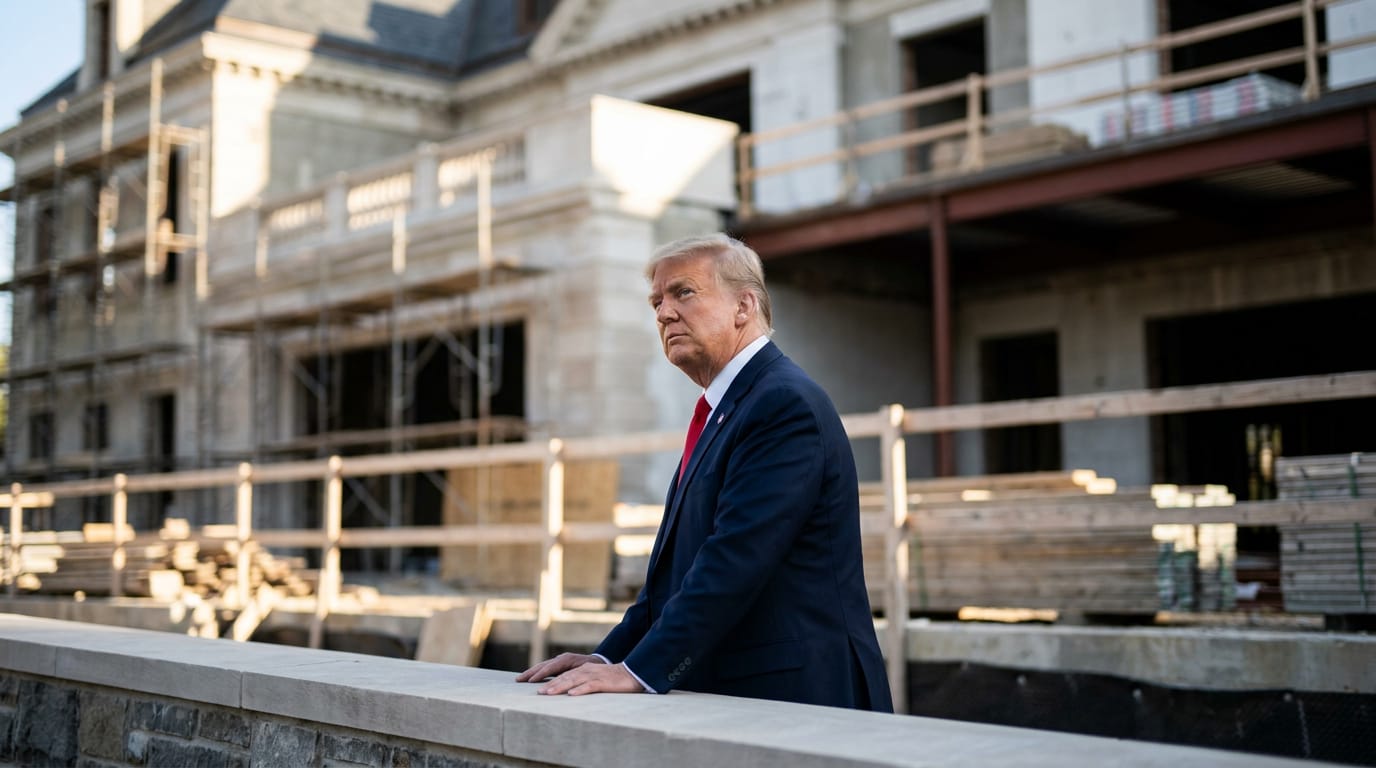
WASHINGTON – President Donald Trump announced Friday his intention to appeal to the U.S. Supreme Court following a federal appeals court ruling that immediately halted construction of a controversial 90,000-square-foot ballroom at the White House. The decision by the U.S. Court of Appeals for the D.C. Circuit marks a significant legal setback for the administration, asserting that such a monumental project requires express congressional authorization, despite claims of private funding. The long-running dispute pits presidential executive authority against the constitutional role of Congress and historic preservation efforts, setting the stage for a potential high-stakes showdown at the nation's highest court.
The Road to the High Court: A Legal Labyrinth
President Trump, through a post on his Truth Social platform, declared his administration would be "immediately appealing to the United States Supreme Court," lambasting the appeals court's decision as "unjust" and demanding its complete reversal. This move comes after the D.C. Circuit Court of Appeals, in a 2-1 decision, upheld an earlier federal judge's ruling that construction on the proposed $400 million ballroom must cease. The appeals court judges stayed their ruling for 14 days, specifically to allow the White House to prepare its appeal to the Supreme Court.
The legal saga began in December 2025 when the National Trust for Historic Preservation filed a lawsuit to halt the project, arguing that the administration had proceeded without legally required approvals and reviews. This followed the rapid demolition of the White House's East Wing in October 2025 to make way for the new structure. U.S. District Judge Richard Leon initially sided with the preservationists in March 2026, ordering a halt to all above-ground construction. Judge Leon, an appointee of former President George W. Bush, emphasized that the President acts as a "steward" of the White House, not its "owner," and therefore lacks unilateral authority for such extensive alterations without congressional consent. While Judge Leon's ruling permitted continued underground work related to a presidential bunker and other national security facilities, it explicitly prohibited further above-ground development of the ballroom.
Presidential Authority Versus Congressional Prerogative
The core of the legal contention revolves around the scope of presidential authority concerning modifications to the White House complex. The Trump administration has consistently argued that the President possesses broad inherent powers to make necessary changes to the executive residence. A central component of this argument has been the claim that the $400 million project, financed through private donations from corporations and wealthy individuals, does not necessitate congressional appropriation or approval, thereby bypassing traditional oversight mechanisms. President Trump himself stated in March, after Judge Leon's initial ruling, that congressional approval was "so wrong" because the project was "being financed privately."
However, both the District Court and the D.C. Circuit Court of Appeals have emphatically rejected this interpretation. The appellate court's majority opinion, penned by Judges Patricia A. Millett and Bradley N. Garcia, underscored that "Each President is a temporary tenant, not the owner, of the White House and its Executive Residence." They further asserted that the President "has no — and claims no — constitutionally assigned authority over that property," which is held in trust for all future presidents and the American people. The judges explicitly stated that the private funding mechanism does not exempt the project from the requirement for congressional authorization, a mandate they found firmly rooted in constitutional and statutory law. Judge Neomi Rao, a Trump appointee, issued a dissenting opinion, though details of her argument have not been fully released.
Historical Context and Broader Implications
The White House, designated a National Historic Landmark, has seen numerous modifications throughout its history, but none have been undertaken with the scale and speed of the proposed ballroom without significant public and congressional review, according to historic preservation advocates. The National Trust for Historic Preservation, the plaintiff in the case, has maintained that the project infringes upon federal preservation and planning laws, including the National Historic Preservation Act of 1966. Their lawsuit sought not only to halt construction but also to ensure that such extensive changes undergo a proper public review process and adhere to established legal frameworks.
The appeals court clarified that its ruling was not a judgment on the desirability or policy merits of a "massive ballroom." Instead, the court's focus was solely on the legal requirement for congressional consent, stating, "Whether or not a massive ballroom should be constructed is for Congress to decide and is not a matter for Executive self-help." This legal battle thus transcends the specific construction project, touching upon fundamental questions of checks and balances within the U.S. government and the limits of executive power over federal property. The administration's argument for national security implications, previously raised during appeals to allow construction to continue, was ultimately not persuasive enough to override the core legal requirement for congressional approval.
Conclusion: Awaiting Supreme Court Review
The impending Supreme Court appeal ensures that the fate of the White House ballroom will continue to be a subject of intense legal and political scrutiny. The case presents the Supreme Court with an opportunity to clarify the boundaries of presidential authority regarding federal property, particularly historic landmarks, and the role of Congress in overseeing significant modifications. A ruling by the nation's highest court could establish a lasting precedent on the separation of powers and the stewardship of national treasures, impacting future executive actions and infrastructure projects across federal agencies. As the 14-day stay on the appeals court's order expires, the legal teams for the Trump administration and the National Trust for Historic Preservation are poised for the next phase of this unprecedented legal challenge.


