White House Locked Down Amid Reports of Gunfire, Heightening Security Concerns in the Nation's Capital
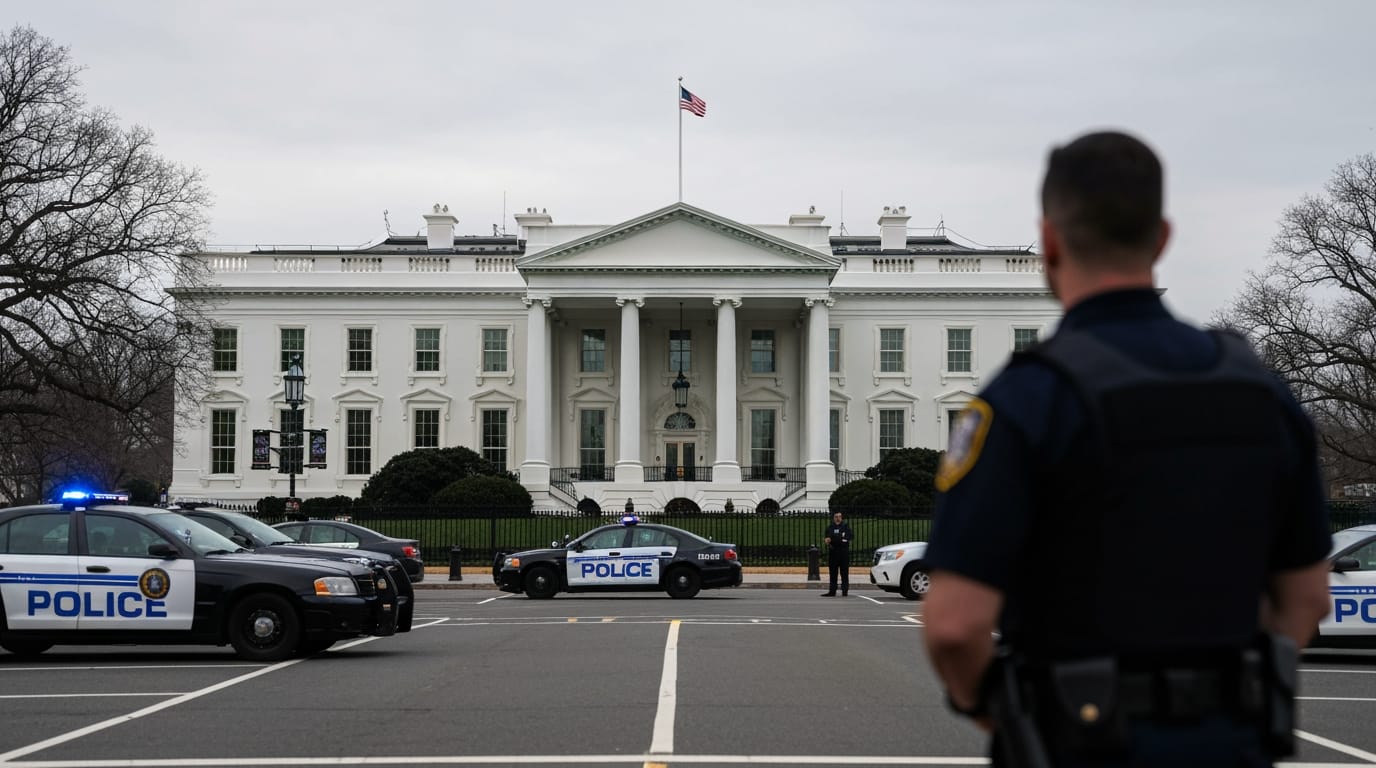
Washington D.C. — The White House was placed under immediate lockdown Saturday following reports of multiple gunshots heard near the executive mansion, prompting a swift and comprehensive response from U.S. Secret Service and other law enforcement agencies. The incident, which sent a ripple of alarm through downtown Washington, D.C., marks the latest in a series of unsettling security events near the nation's most protected landmarks, raising renewed questions about the evolving landscape of presidential security.
Journalists on-site reported hearing what sounded like dozens of gunshots, leading to their rapid evacuation and instruction to shelter inside the secure press briefing room. FBI Director Kash Patel confirmed that law enforcement authorities were actively responding to the reported gunfire near the White House grounds. While initial details remained scarce regarding the source or target of the shots, the immediate activation of high-level security protocols underscored the gravity of any potential threat to the seat of American power. The perimeter around the White House complex was sealed, with Secret Service officers and allied agencies conducting a thorough investigation of the area.
The Immediate Aftermath and Ongoing Investigation
The Saturday afternoon events unfolded quickly, transforming a typically bustling area of Washington into a zone of heightened alert. Reports from CNN indicated that the Secret Service was investigating the alleged shots fired at the corner of an unspecified intersection near the White House. This rapid lockdown, a standard but always unsettling procedure, ensured the safety of personnel within the White House and limited access to the surrounding areas as authorities worked to ascertain the nature of the threat. The incident immediately triggered a coordinated response involving the Secret Service, Metropolitan Police Department, and U.S. Park Police, reflecting the multi-agency approach to protecting federal properties and personnel in the capital. As of early reports, there was no immediate information on casualties or arrests directly related to Saturday's incident, and investigations were ongoing to determine if the gunfire was targeted or an isolated event.
A Pattern of Incidents: The May 4th Confrontation
Saturday's lockdown follows closely on the heels of another significant security incident just weeks prior, highlighting persistent challenges to White House security. On May 4, 2026, the White House was also briefly locked down after a U.S. Secret Service officer exchanged gunfire with an armed individual near the Washington Monument. This altercation occurred shortly after Vice President J.D. Vance's motorcade had passed through the area.
According to statements from Secret Service Deputy Director Matthew C. Quinn, plainclothes officers patrolling the White House perimeter identified a suspicious individual reportedly carrying a firearm. When uniformed officers approached, the individual attempted to flee on foot before firing at the agents. Officers returned fire, striking the armed person, who was then transported to a hospital. Tragically, a nearby juvenile also sustained non-life-threatening injuries from gunfire during the exchange. Then-President Donald Trump was participating in an event at the White House at the time, which was reportedly not interrupted, though the incident prompted an immediate security response across the complex. The identity of the armed individual and their motives were not immediately clear following the May 4th shooting.
Correspondents' Dinner Attack Underscores Vulnerability
Further back, on April 25, 2026, the annual White House Correspondents' Dinner was plunged into chaos when an armed man stormed the lobby of the Washington Hilton hotel, where President Donald Trump and numerous other senior U.S. leaders were in attendance. The assailant, later identified as Cole Tomas Allen, was armed with guns and knives and reportedly rushed toward the ballroom before being intercepted by Secret Service agents.
Guests inside the banquet hall reported hearing what sounded like three to four gunshots from outside the ballroom, near a back stairwell. The suspect fired a shotgun at a Secret Service agent at a security checkpoint before being tackled and arrested. President Trump, uninjured, was swiftly escorted from the stage, and the entire event, attended by hundreds of prominent journalists and national figures, was evacuated and ultimately canceled. Cole Tomas Allen later pleaded not guilty to charges including attempted assassination of the President and assaulting a federal officer. This brazen attack on a high-profile event underscored the persistent threat of targeted violence and the critical role of presidential protection, even away from the immediate White House grounds.
Broader Security Implications and Ongoing Vigilance
The succession of security incidents in the vicinity of the White House and involving presidential protectees has intensified scrutiny on the Secret Service and other federal agencies responsible for safeguarding the nation's capital. These events, ranging from confirmed gunfire and armed confrontations to reports of shots fired, contribute to a pervasive sense of vigilance that defines security operations in Washington, D.C. For instance, on April 5, 2026, Secret Service agents also investigated reports of overnight gunfire near Lafayette Park, directly across from the White House. Although no injuries or suspects were found after a thorough search of the area, the incident nevertheless triggered an increase in security.
Such occurrences highlight the immense pressure on security forces to maintain an impenetrable barrier around the President and the White House, a mission complicated by the public nature of the surrounding areas and the open access that is a hallmark of American democracy. Each incident serves as a stark reminder of the ever-present dangers and the need for constant adaptation in security strategies. The recurring nature of these threats mandates continuous review and enhancement of security protocols to counter evolving tactics and motivations of potential assailants.
Conclusion: A City on Edge
The lockdown of the White House on Saturday, triggered by reports of gunfire, serves as a fresh indicator of the enduring security challenges facing the nation's capital. Coming after the May 4th shootout near the Washington Monument and the April 25th attack on the Correspondents' Dinner, these incidents paint a picture of a city and its protectors operating under constant vigilance. While the specifics of Saturday's event continue to unfold, the cumulative effect of these occurrences reinforces the critical and often perilous work undertaken daily by the U.S. Secret Service and its partners. The ongoing investigations and the enhanced security postures reflect a resolute commitment to protecting the presidency and ensuring the safety of one of the world's most iconic and strategically vital locations.


