WHO Sounds Alarm as Ebola Claims 131 Suspected Lives in Eastern DRC, Threatening Regional Stability
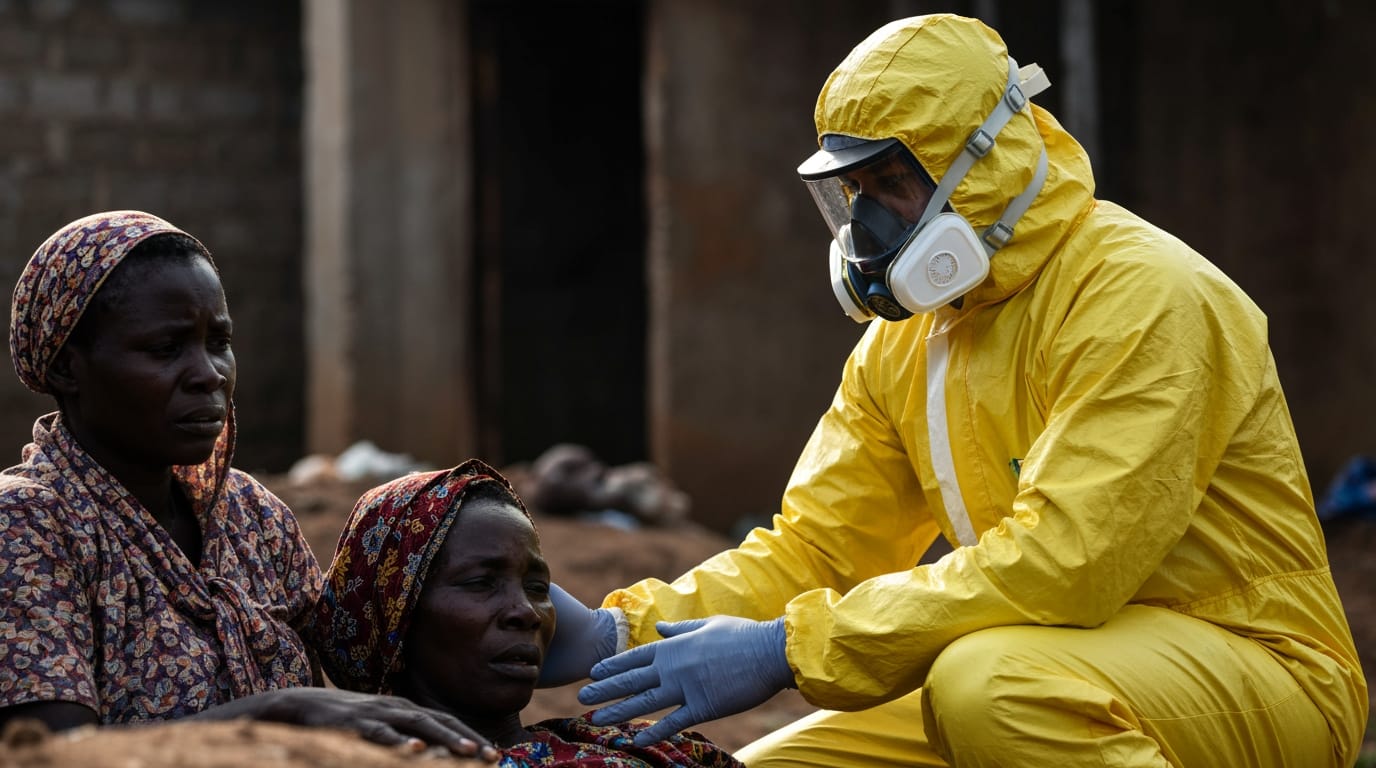
GENEVA/KINSHASA – The World Health Organization (WHO) has voiced profound alarm over a rapidly escalating Ebola outbreak in the Democratic Republic of Congo (DRC), with the country's health ministry reporting 131 suspected deaths and over 500 suspected cases. The alarming speed and geographic spread of the virus prompted WHO Director-General Dr. Tedros Adhanom Ghebreyesus to declare the situation a Public Health Emergency of International Concern (PHEIC) on May 17, 2026, underscoring the urgent need for a robust global response to contain the burgeoning crisis.
The latest resurgence, primarily concentrated in the northeastern Ituri province, presents a formidable challenge due to its epicenter in difficult-to-access areas, high population mobility, and the particularly dangerous Bundibugyo strain of the virus, for which no approved vaccines or treatments currently exist. As the international community mobilizes, concerns mount over potential cross-border transmission, with confirmed cases already identified in neighboring Uganda and even one international transfer to Germany, highlighting the far-reaching implications of this public health emergency.
The Unfolding Crisis in Ituri
The outbreak, identified in the DRC's eastern Ituri province, has seen the number of suspected cases climb sharply, with the Congolese health ministry confirming 131 suspected fatalities and 513 suspected cases as of May 19, 2026. While only 30 cases in Ituri province have been laboratory-confirmed due to challenges in testing, the sheer volume of suspected infections and deaths indicates a significant, uncontained spread. This marks the 17th Ebola outbreak for the DRC, a nation frequently battling the virulent disease since its discovery in 1976. However, the current situation is complicated by the presence of the Bundibugyo strain, a rarer variant previously detected only twice, in 2007-08 in Uganda and 2012 in the DRC. Unlike the more common Zaire strain, for which effective vaccines are available, the Bundibugyo strain leaves health workers without a critical tool for prevention and containment.
The outbreak's geographical spread is a significant worry. Ituri province shares porous borders with Uganda and South Sudan, and its status as a gold-mining hub fosters substantial population movement, facilitating the rapid dissemination of the virus. Beyond Ituri, suspected cases have surfaced in North Kivu province, specifically in the commercial hub of Butembo and the key provincial capital of Goma, further exacerbating fears of wider regional spread. The confirmation of two cases in Uganda's capital, Kampala, including one fatality, directly linked to individuals traveling from the DRC, underscores the tangible threat to regional health security.
Hurdles to Containment: Conflict, Mistrust, and Logistics
Containing the current Ebola outbreak in eastern DRC is fraught with challenges, stemming from a complex interplay of insecurity, community resistance, and logistical hurdles. The region, particularly Ituri, is under military rule, and active conflict dynamics pose a direct threat to response efforts. Aid workers and medical teams often operate in areas where armed groups are present, making safe access and the establishment of treatment centers difficult. This volatile environment can disrupt contact tracing, impede the safe burial of victims, and delay the delivery of crucial medical supplies.
Community engagement has emerged as another critical obstacle. Initial reports indicate a delayed alert within affected communities, largely because many residents initially perceived the illness as "mystical" rather than a viral disease, leading to reluctance in seeking medical care. This mistrust in formal health systems can result in infected individuals remaining within their communities, unknowingly spreading the virus, and making accurate case identification and contact tracing exceptionally difficult. The cultural practices surrounding burials also present a significant transmission risk, as traditional mourning rituals often involve close contact with the deceased, whose bodies remain highly infectious.
Furthermore, the remote and underserved nature of many affected areas complicates the logistical aspects of the response. Few samples have been readily tested in laboratories, hindering a clear understanding of the outbreak's true scope and the precise geographic distribution of confirmed cases. The lack of infrastructure, including reliable roads, makes transporting samples, medical personnel, and essential equipment a constant struggle. These factors collectively create an environment where the virus can thrive and spread unchecked, despite the dedicated efforts of health organizations.
The Regional and Global Ripple Effect
The declaration of a PHEIC by the WHO on May 17, 2026, signaled the international community's recognition of the severe public health risk this outbreak poses, not only to the DRC and its immediate neighbors but potentially globally. While the WHO stressed that this does not constitute a "pandemic emergency" and advised against closing borders, the concern about rapid cross-border spread remains palpable. The confirmed cases in Uganda and the transfer of an infected U.S. citizen to Germany highlight the potential for international propagation, even if contained.
Regional coordination is paramount, as emphasized by Africa CDC Director-General Jean Kaseya, given the high population movement between affected areas and neighboring countries. Collaborative efforts are underway with Uganda, South Sudan, and other partners to bolster surveillance, preparedness, and response capabilities across the region. The WHO has already dispatched five tonnes of medical supplies to the DRC and allocated $500,000 from its contingency fund for emergencies, initiating a rapid scale-up of response measures. These efforts include deploying rapid response teams, strengthening surveillance and laboratory confirmation, implementing infection prevention and control protocols, setting up safe treatment centers, and intensifying community engagement initiatives.
The current outbreak also casts a long shadow over the health systems in eastern DRC, which are still recovering from the devastating 2018-2020 Ebola outbreak—the second largest in history. That epidemic infected over 3,470 people and claimed 2,280 lives, leaving communities and health infrastructure severely strained. The ongoing challenges of violence, poverty, and other disease outbreaks like measles and COVID-19 further compound the vulnerability of the region, making the present Ebola crisis a multi-faceted humanitarian challenge.
Living with Constant Vigilance
For the people of eastern DRC, Ebola is a recurring nightmare, and this latest outbreak brings renewed fear and disruption. The high case fatality rate associated with the Bundibugyo strain, even if lower than the Zaire strain, means a significant proportion of those infected face a grim prognosis without specific treatments. The psychological toll on communities constantly facing such threats, coupled with the economic impact of lockdowns and health restrictions, is immense. Health workers, who form the first line of defense, are also at increased risk, with reports indicating deaths among them, signaling healthcare-associated transmission.
The international response, while critical, must navigate not only the biological complexities of the virus but also the intricate social and political landscape of the region. Sustained funding, coordinated efforts, and, most importantly, trust-building within affected communities will be essential to turn the tide against this deadly pathogen. The focus remains on rapid detection, isolation, contact tracing, and safe burial practices, all while urgently exploring potential experimental treatments for the Bundibugyo strain. Until such breakthroughs occur, the region remains in a precarious state of heightened alert, constantly vigilant against an invisible enemy that repeatedly threatens to unravel lives and livelihoods.


