Wildfire Engulfs Mount Bromo, National Park Closed Indefinitely Amid Escalating Blaze
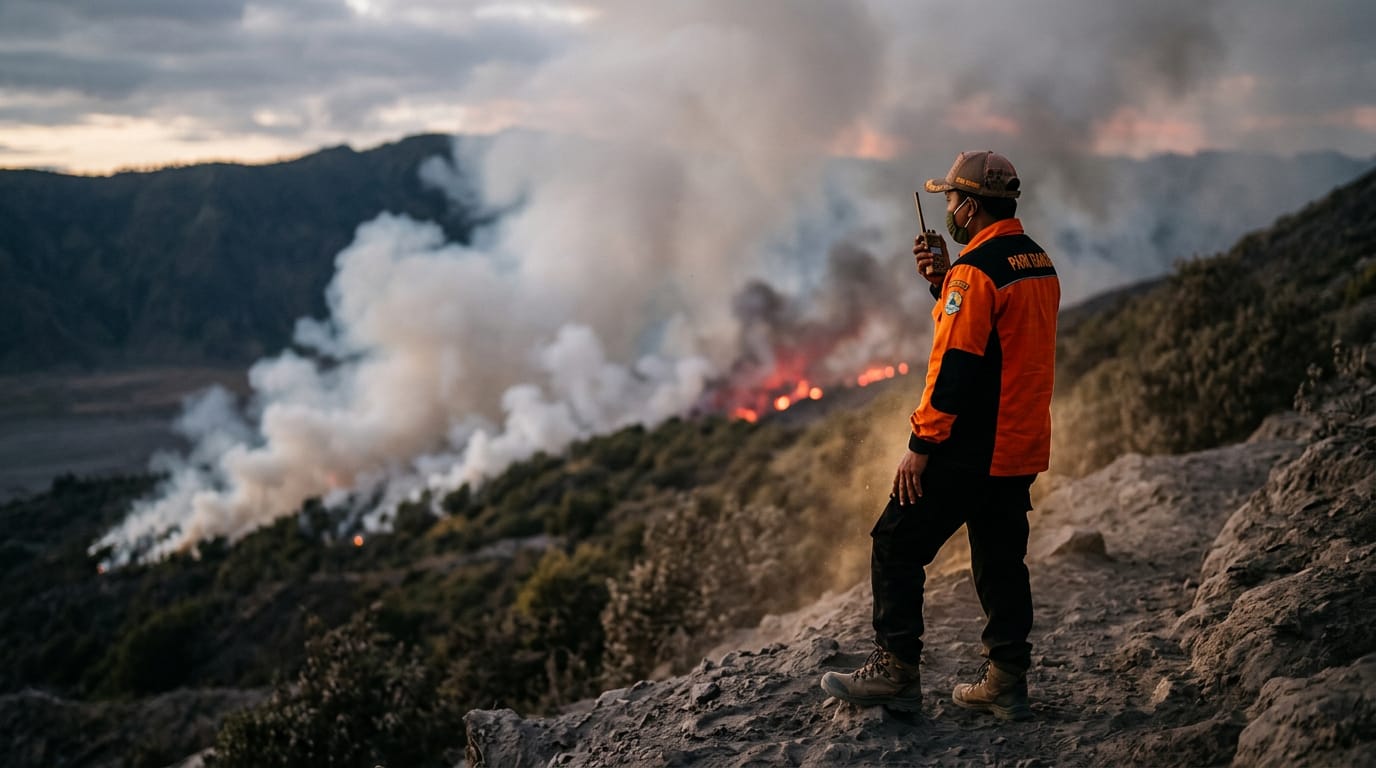
East Java, Indonesia – A rapidly escalating wildfire in Indonesia’s iconic Mount Bromo Tengger Semeru National Park has led to the indefinite closure of the popular tourist destination, as authorities deploy aerial and ground resources in a strenuous battle against the flames. The blaze, which ignited on Monday, August 3, 2026, has expanded significantly, incinerating a vast expanse of the park's unique landscape and posing a substantial threat to its delicate ecosystem and surrounding communities.
The Spreading Inferno and Unyielding Terrain
The wildfire first emerged on Monday, August 3, 2026, within the rugged confines of the Bromo Tengger Semeru National Park in East Java. Initially reported to have scorched approximately 60 hectares (148 acres) by Thursday, August 6, the fire demonstrated a rapid and alarming growth. By Saturday, August 8, the affected area had surged to an estimated 176 hectares (434.91 acres), impacting the caldera area, the Bantengan Block, Watu Gede, and even spreading toward Mount Kursi and the B29 viewpoint in Argosari village. This expansion saw the fire traverse from the Probolinggo Regency into the Malang Regency, highlighting its uncontrolled progression across diverse terrains. The park's chief, Rudijanta Tjahja Nugraha, confirmed that worsening conditions and dry weather facilitated the blaze's rapid spread across the Bromo Caldera. The challenging environment, characterized by steep slopes, difficult-to-reach hotspots, and strong winds, has severely hampered ground firefighting efforts, with heavy fog occasionally limiting the deployment of aerial assets.
Unclear Origins Amidst a Heightened Dry Season
While authorities have yet to officially determine the cause of the current wildfire, investigations are ongoing. However, officials have cited dry weather, strong winds, and exceedingly dry vegetation as critical factors contributing to the rapid intensification and spread of the blaze. The region is currently experiencing a pronounced dry season, exacerbated by the El Niño phenomenon, which the Indonesian Meteorology, Climatology and Geophysics Agency (BMKG) has warned will be more severe and prolonged than usual, increasing the risk of such destructive wildfires. This current incident casts a somber shadow, echoing a major wildfire in 2023 at Mount Bromo, which devastated over 500 hectares after a pre-wedding photoshoot utilized flares. That previous event led to an estimated IDR 89.76 billion (approximately USD 377,000) in economic losses, underscoring the recurrent vulnerability of the park to human-caused fires during arid conditions.
All Access Halted: A Measure for Safety and Containment
In response to the escalating inferno and to prioritize safety, the Bromo Tengger Semeru National Park authority announced a complete and indefinite closure of all tourist activities. The shutdown took effect at 10:00 p.m. local time on Saturday, August 8, 2026, encompassing all five entrance gates across the four surrounding districts of Probolinggo, Pasuruan, Malang, and Lumajang. The park operator emphasized that the closure is a crucial step not only to ensure the safety of visitors, staff, and nearby communities but also to enable firefighting teams to operate without impediment. Tourists who had previously purchased tickets online for the affected period are being offered options to reschedule their visits or request full refunds, a measure designed to mitigate the immediate impact on travelers. Service providers within the tourism sector have also been urged to temporarily suspend all operations inside the national park.
Collaborative Efforts to Combat the Blaze
The battle against the Mount Bromo wildfire has mobilized a significant joint response, involving East Java’s disaster mitigation agency, the National Disaster Management Agency (BNPB), police, military personnel, park officials, and a dedicated cadre of wildfire volunteers. Efforts are being coordinated through both aerial and ground operations. Two water-bombing helicopters, each capable of carrying 1,000 liters of water, have been deployed to target hotspots in inaccessible areas, supplemented by water-spraying drones. On the ground, teams equipped with fire beaters and backpack sprayers are confronting the flames where terrain permits. Officials are also contemplating a Weather Modification Operation, such as cloud seeding, as a supplementary tactic to aid in extinguishing the fire, dependent on suitable atmospheric conditions. Personnel from various agencies, including registered Mount Semeru hiking guides and residents from local villages, are actively involved in the arduous firefighting operations. Additionally, patrols have been established along the borders of affected areas to prevent the wildfire from encroaching upon residential zones. Despite these concerted efforts, a hotspot was reported to be actively emitting smoke on Saturday night, with moderate winds persisting, indicating the persistent challenge faced by emergency crews. No casualties have been reported thus far in connection with the current blaze.
Ecological and Economic Reverberations
The Bromo Tengger Semeru National Park, a UNESCO Biosphere Reserve, is renowned for its unparalleled biodiversity and unique geological features, including the "sand sea" caldera and diverse ecosystems ranging from sub-montane to sub-alpine forests. The ongoing wildfire has already consumed vital vegetation, including mountain casuarina, mentigi, acacia, and various shrubs, threatening the habitat of numerous protected flora and fauna species such as the Javanese edelweiss and a wide array of orchids, mammals, and birds. The long-term ecological ramifications of such widespread destruction remain a serious concern.
Beyond the environmental toll, the fire has cast a significant economic shadow over the region, which heavily relies on tourism. Mount Bromo is a cornerstone of East Java's tourism industry, attracting millions of visitors annually and supporting countless local livelihoods. The indefinite closure of the park is expected to lead to substantial financial losses for local businesses, including hotels, guesthouses, food vendors, souvenir shops, and the crucial jeep rental services that transport tourists across the caldera. The previous 2023 fire provided a stark precedent, with economic losses estimated in the hundreds of thousands of U.S. dollars. Furthermore, the social fabric of the surrounding Tengger communities, whose lives and cultural heritage are intricately linked to the mountains, faces disruption and increased anxiety due to the loss of income and the ecological damage to their ancestral lands.
Awaiting Resolution Amidst Nature's Fury
As the Mount Bromo wildfire continues its destructive path, the focus remains firmly on its containment and the eventual restoration of the cherished national park. The combined challenges of rugged terrain, volatile winds, and the broader context of an intensifying dry season underscore the immense task facing Indonesian authorities. While the immediate priority is to extinguish the flames and ensure safety, the long-term recovery of both the unique ecosystem and the tourism-dependent communities will require sustained effort and commitment. The indefinite closure serves as a stark reminder of humanity's delicate relationship with nature and the profound impact of environmental crises on both biodiversity and human well-being.


