Women Now the Majority at German Universities, Study Shows
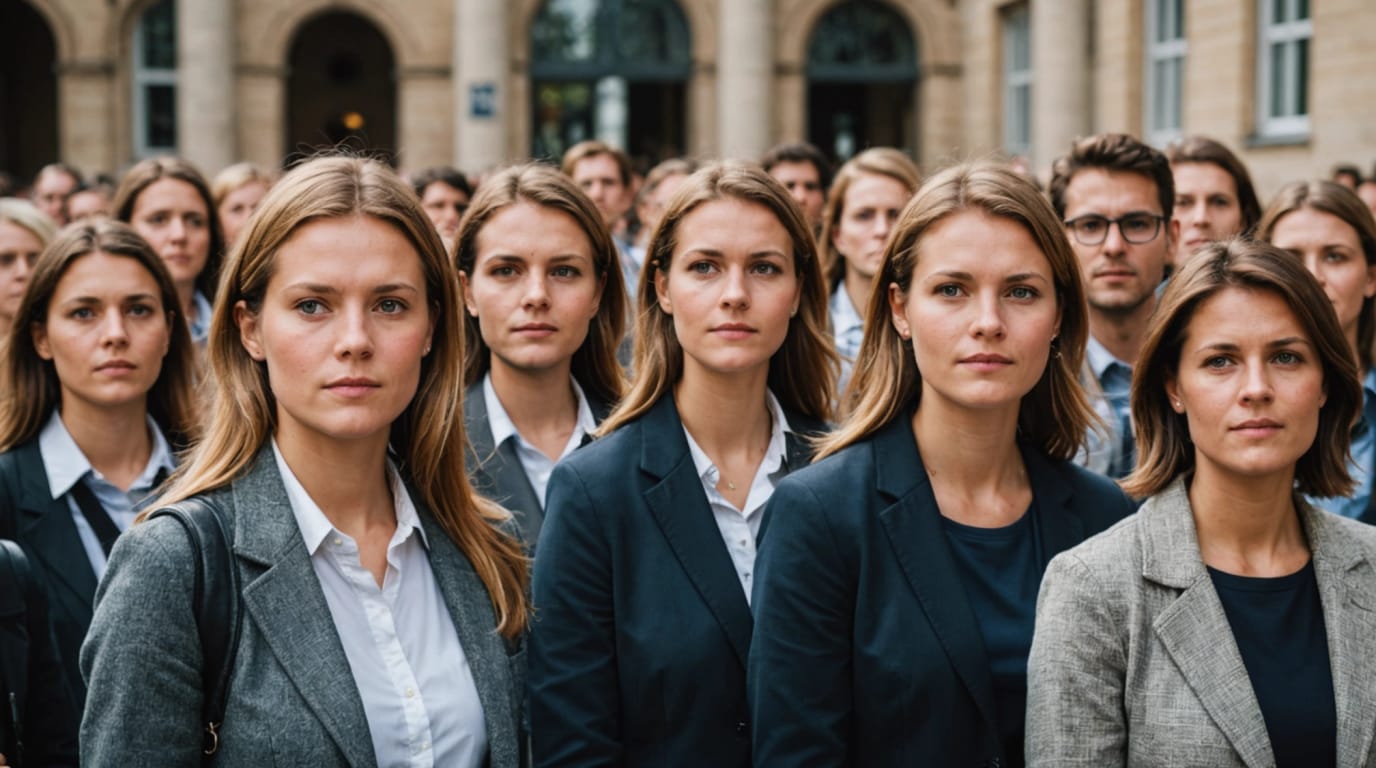
For the first time in German history, women constitute the majority of students enrolled in higher education institutions, marking a significant shift in the country's academic landscape. A recent study highlights this trend, revealing that women now outnumber men in universities across Germany, a development with implications for various sectors and the future workforce.
A Turning Tide in Higher Education
Data from the winter semester of 2021/2022 indicates a watershed moment: 50.2% of students at German higher education institutions were female. This milestone reflects a steady increase in female participation in higher education over the past few decades. In the winter semester of 1998/99, women made up only 44.5% of the student population. The rise signifies not only greater access to education for women but also a change in societal attitudes toward their role in academia and professional fields.
Fields of Study: Gender Disparities Persist
While women have achieved overall majority status, significant gender disparities persist across different fields of study. Certain disciplines, such as social work, psychology, and education science, have a notably high proportion of female students, exceeding 70%. Conversely, other fields, particularly in STEM (Science, Technology, Engineering, and Mathematics), still see a lower representation of women, although progress is being made. In 2021, women accounted for nearly 35% of students in STEM courses, the highest share ever recorded in Germany. Engineering sciences had the highest number of students overall, followed by mathematics and natural sciences, and then computer science.
Implications for the Workforce
The increasing number of women graduating from German universities has significant implications for the country's workforce. As more women enter traditionally male-dominated fields, the potential exists to address skills shortages and bring diverse perspectives to various industries. However, challenges remain in ensuring equal opportunities and addressing gender pay gaps in the professional world. While women are overrepresented among students starting their academic careers, they are underrepresented in higher academic roles. In 2021, only 27% of professorships at German universities were held by women, a slight increase from 26% in 2020.
International Context
The trend of increasing female participation in higher education is not unique to Germany. International figures confirm a similar pattern, with women accounting for 53.6% and 54.1% of Bachelor's and Master's students, respectively, across more than 2,200 departments analyzed internationally. Fields like nursing, education science, and social work also show high proportions of female students globally.
Historical Perspective
The journey toward gender equality in German higher education has been a long and complex one. In the early days of German universities, women were largely excluded due to social conditions and the universities' origins in cathedral schools for future priests. It wasn't until the beginning of the 20th century that university studies became fully accessible to women in German-speaking countries, with Switzerland being an exception. During World War II, the number of female students increased considerably, reaching 50% of the student population in 1943. However, this ratio was not seen again until 1995.
Challenges and Future Directions
Despite the progress made, challenges remain in achieving full gender equality in German academia and the workforce. Efforts are needed to encourage more women to pursue studies and careers in STEM fields, as well as to address the underrepresentation of women in leadership positions within universities. Initiatives promoting gender equality, diversity, and inclusion are crucial to ensuring that all students have the opportunity to succeed, regardless of their gender.
The rise of women as the majority in German universities represents a significant milestone in the country's pursuit of gender equality. While disparities persist across fields of study and in higher academic roles, the trend signals a positive shift toward a more inclusive and diverse academic landscape. As more women graduate and enter the workforce, their contributions will be essential to addressing skills shortages, fostering innovation, and shaping the future of Germany's economy and society. Continued efforts to promote gender equality and create equal opportunities will be vital to ensuring that all students can reach their full potential and contribute to a thriving and equitable society.


