World Cup "Pride Match" Sparks International Debate Ahead of Egypt-Iran Clash
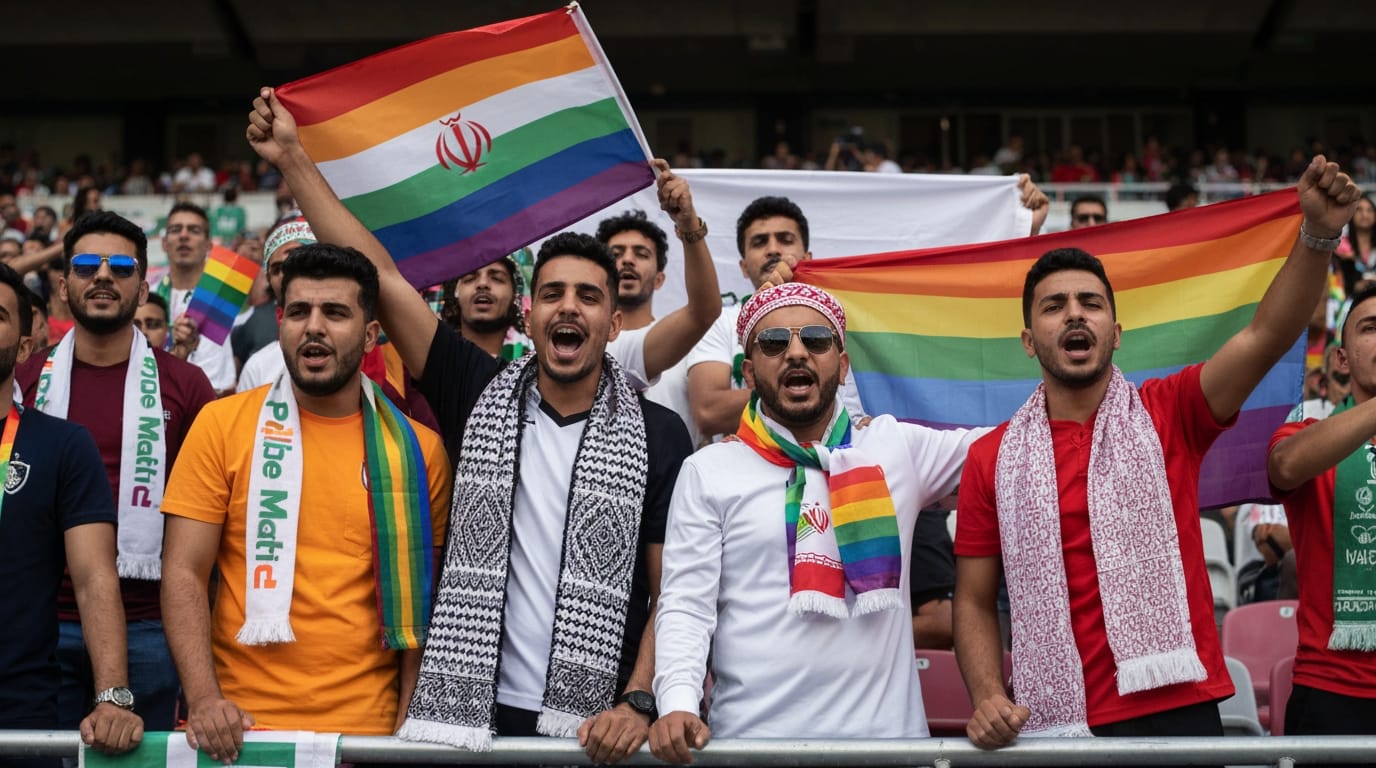
Seattle, WA – A group stage match between Egypt and Iran at the 2026 FIFA World Cup in Seattle has unexpectedly become the focal point of a significant international controversy, pitting local LGBTQ+ celebrations against the cultural and religious objections of two participating nations. The dispute centers on Seattle's local organizing committee designating the June 26 fixture as a "Pride Match" to coincide with the city's annual Pride Weekend, a move that has drawn formal protests from both the Egyptian and Iranian football associations.
The controversy underscores a growing tension at major sporting events where host cities increasingly integrate social messaging, often clashing with the values of nations where LGBTQ+ rights are restricted. As the highly anticipated match approaches, the debate highlights the complex intersection of sports, human rights, and global cultural differences, with FIFA navigating a delicate path between inclusivity and respecting diverse national norms.
The Genesis of a "Pride Match"
The spark for the current debate ignited when Seattle's local World Cup organizing committee, Seattle FWC26, announced its intention to host a "Pride Match" as part of its broader "Pride Match Day" programming. This decision was made before the FIFA tournament draw in December 2025, which ultimately paired Egypt and Iran for the match at Lumen Field. The fixture on June 26, 2026, falls precisely the day before Seattle's annual Pride Weekend, a time of celebration for the LGBTQ+ community in the northwestern city. Local organizers planned for LGBTQ+ celebrations and artwork displays around the stadium and across Seattle, intending to mark the occasion as a Pride-themed event.
Cairo and Tehran Voice Strong Objections
Following the group stage draw, both Egypt and Iran promptly voiced their strong objections to FIFA regarding the "Pride Match" branding and any associated LGBTQ+ messaging. Mehdi Taj, the head of Iran's Football Federation, was quoted by local news agency ISNA in December 2025 as stating that both Tehran and Cairo had raised "objections against the issue," which he labeled an "irrational move that supports a certain group." Iranian state television later indicated that Tehran would "appeal" to FIFA over the matter.
The Egyptian Football Association (EFA) also formally communicated its disapproval to FIFA. In a letter to FIFA's secretary general, Mattias Grafstrom, the EFA "categorically rejected any activities promoting LGBTQ during the match," warning that such events could "provoke cultural and religious sensitivities among fans." The EFA asserted that these activities "directly conflict with the cultural, religious and social values of the region, particularly in Arab and Islamic societies." Furthermore, the association stressed that FIFA usually ensures a neutral and respectful sporting environment, implying that the "Pride Match" designation deviated from this principle.
Cultural and Legal Realities at Play
The vehement objections from Egypt and Iran are deeply rooted in the cultural and legal landscapes of both nations. In Iran, homosexuality is illegal under Islamic law and can carry severe penalties, including the death penalty. This legal framework reflects a societal rejection of same-sex relationships based on religious and traditional interpretations.
Similarly, in Egypt, while homosexuality is not explicitly outlawed, individuals are frequently prosecuted under loosely worded morality laws prohibiting "debauchery." Human rights organizations have extensively documented instances of discrimination, violence, and arrests targeting LGBTQ+ individuals in both countries. For the football federations of these Muslim-majority nations, supporting or even tacitly endorsing LGBTQ+ themes, even if orchestrated by a host city, represents a direct challenge to deeply held cultural and religious beliefs shared by their populations.
FIFA's Evolving Stance on Inclusivity
Despite the strong objections from the participating nations, FIFA has rejected calls to ban rainbow flags or other LGBTQ+-related symbols at the match. The global football governing body confirmed that fans would be permitted to bring rainbow flags and items associated with sexual orientation and gender identity into all World Cup venues, provided they adhere to stadium regulations regarding size and the prohibition of overtly political material. FIFA clarified that the 2026 World Cup is intended as an inclusive event, welcoming people from all backgrounds.
However, FIFA President Gianni Infantino attempted to create some distance between the organization and the "Pride Match" branding. In an interview, he clarified that while there would be a FIFA World Cup match in Seattle, the "Pride events" would be organized separately by external organizations on the same day, asserting that these festivities had "nothing to do with the match" itself. This nuance suggests an effort by FIFA to uphold its inclusivity policy while also acknowledging the sensitivities of objecting nations.
This stance marks a notable shift from the 2022 World Cup in Qatar, where FIFA faced criticism for threatening yellow cards for team captains wearing "One Love" armbands in support of LGBTQ+ rights. At that time, FIFA cited rules against political slogans, leading to frustration among Western teams. The current decision to permit rainbow flags across all venues, even as it seeks to separate the "match" from the "Pride events," indicates an evolution in FIFA's approach to LGBTQ+ symbols at its premier tournament.
The Bigger Picture: Sports, Rights, and Global Values
The "Pride Match" controversy illuminates the persistent challenge of reconciling global sporting events with diverse cultural and human rights contexts. While host nations often leverage such platforms to promote their values, this can lead to friction when those values conflict with those of participating countries. The Seattle match serves as a microcosm of the broader debate surrounding the responsibilities of international sports organizations to advocate for human rights, balance universal values with local customs, and maintain a neutral sporting environment.
As the Egypt-Iran match approaches, its significance extends beyond the football pitch. For both teams, the fixture is critical for their advancement in the tournament, with Egypt potentially securing a knockout stage spot and Iran needing a victory to keep their hopes alive. Yet, the on-field stakes are now overshadowed by an off-field dialogue about cultural diplomacy, freedom of expression, and the evolving role of sports in social justice. The resolution of this specific "Pride Match" debate may set precedents for future international sporting events, influencing how organizers and governing bodies navigate the complex tapestry of global values and human rights.