Xi Jinping Calls for Global AI Cooperation, Proposing New Governance Order at Shanghai Summit
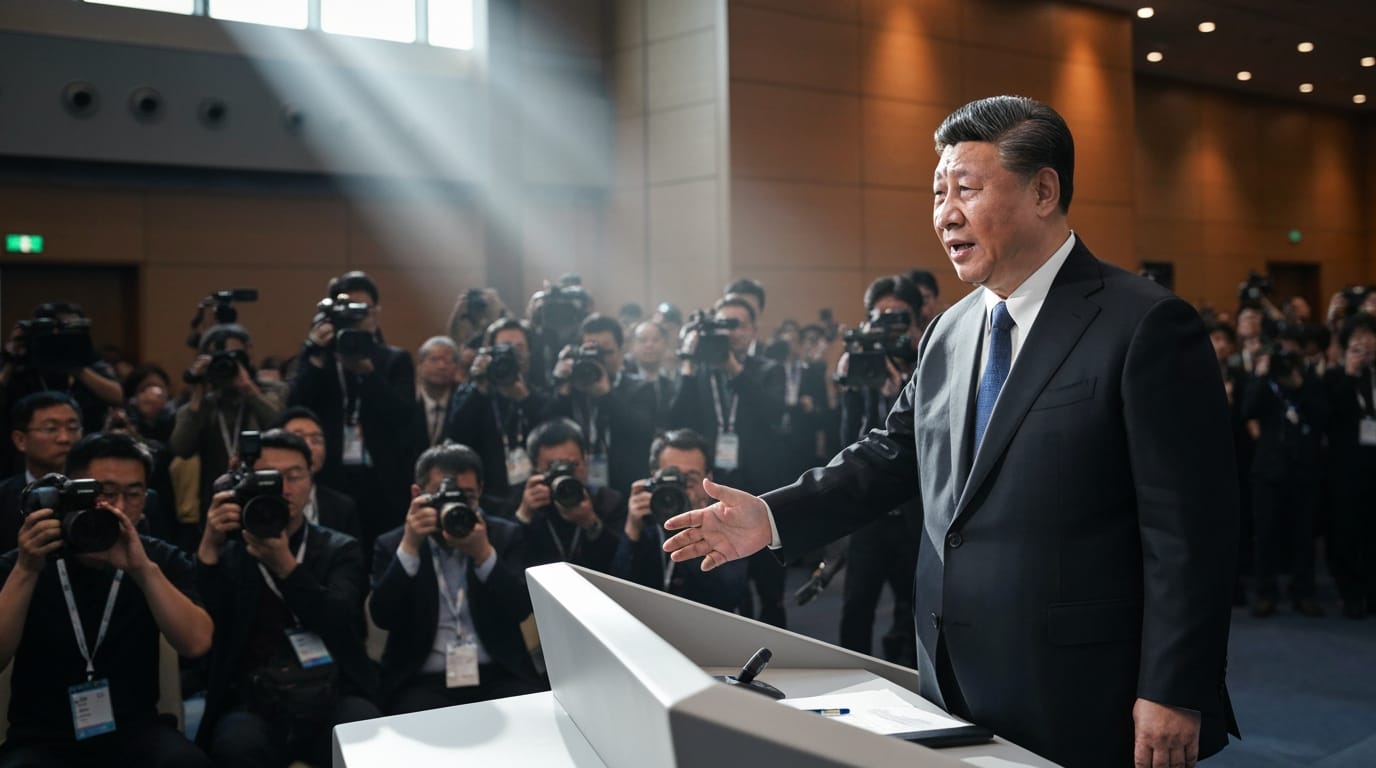
Shanghai, China – Chinese President Xi Jinping delivered a landmark address at the World Artificial Intelligence Conference (WAIC) in Shanghai today, urging international collaboration in the rapidly evolving field of artificial intelligence and asserting that AI development should be a "symphony of international cooperation, not a solo performance by one country." His remarks, marking his first-ever keynote at the prestigious event, underscored China's ambition to lead in shaping global AI governance and to challenge the notion of any single nation dominating the technology.
The President’s forceful appeal for a unified approach coincided with the establishment of the World Artificial Intelligence Cooperation Organisation (WAICO), an independent intergovernmental body headquartered in Shanghai. Twenty-nine countries, including Russia, Pakistan, and Indonesia, signed the agreement to form WAICO, which aims to promote consultation and collaboration for the "healthy and orderly" development of AI. China further pledged substantial support for developing nations, including 5,000 AI research projects and training opportunities over the next five years.
A Call for Shared Development, Not Domination
President Xi's speech centered on the principle that AI's transformative power necessitates a shared global responsibility, rather than proprietary control. He explicitly warned against "overstretching the national security concept in the field of AI or placing one country's security over that of others." This statement is widely interpreted as a direct response to rising geopolitical tensions and restrictions, particularly from the United States, concerning high-tech imports and AI supply chains.
Emphasizing a "people-centric" approach, Xi asserted that AI must always remain under human control. He called for the prompt establishment of a global AI governance framework rooted in consensus, advocating for laws, regulations, technological monitoring, early warning, and emergency response systems to manage AI risks effectively. His vision aligns with a broader push for an open-source ecosystem, which China views as a public good that can democratize access to AI and prevent "new historical injustices" where unequal access creates further divides.
The Dawn of WAICO and Concrete Global Commitments
The formation of WAICO stands as a tangible outcome of this multilateral push. With its headquarters in Shanghai, the organization is poised to become a significant player in the global dialogue on AI standards and ethics. The diverse group of signatory nations signals a growing alignment with China's perspective on inclusive AI development.
Beyond the organizational framework, China outlined concrete initiatives to support global AI capacity building. The commitment to 5,000 AI research projects and training opportunities for developing nations over the next half-decade aims to bridge the technological gap and foster AI capabilities in regions that might otherwise be left behind. Furthermore, plans to establish AI cooperation centers with Latin America, ASEAN, Africa, and BRICS countries demonstrate a strategic effort to cultivate a network of partners for shared AI advancement. These initiatives highlight China's intent to position itself as a reliable partner in AI development, particularly for countries in the Global South.
Geopolitical Stage for a Tech Showdown
President Xi's decision to deliver the opening address at WAIC for the first time elevated the conference to the highest political level. This move signals China's determination to use the platform to articulate its comprehensive and systematic position on AI development and governance on a global stage. The conference itself, running from July 17 to 20, features over 1,100 exhibitors showcasing around 3,000 exhibits, with more than 300 products making their world premieres. This technological display reinforces China's growing prowess in AI.
The timing of Xi's address also carries significant geopolitical weight. It comes amidst ongoing technological rivalry with the United States, where both nations have presented competing visions for AI governance. While Washington has often emphasized limiting regulation to foster innovation, Beijing champions open-source models as a means to broaden access and counter potential technological monopolies. Chinese tech giants, including Huawei, are showcasing advanced AI computing systems designed to reduce reliance on U.S. technology, underscoring China's drive for technological self-reliance. Companies like MiniMax and Moonshot AI are also demonstrating increasingly powerful Chinese AI models, some of which are reportedly rivaling top U.S. offerings.
Charting a Course for Responsible AI
Amidst the rapid advancements, Xi reiterated the critical importance of ensuring AI's responsible development. He called for a balanced approach that prioritizes both innovation and security, with a strong emphasis on maintaining human oversight. The push for international collaboration in setting governance frameworks is presented as a means to make AI technologies "more secure, reliable, controllable, and equitable."
The theme of this year's WAIC, "AI Partnership for a Brighter Future," encapsulates the aspirational tone of China's message. By advocating for multilateralism and active support for developing nations, China seeks to prevent a future where the benefits of AI are concentrated among a few, thereby exacerbating global inequalities. The complex interplay of technological innovation, geopolitical competition, and ethical considerations means the future trajectory of AI will undoubtedly be shaped by these converging and sometimes conflicting visions for its governance and development.


