Young Generations Increasingly Disengaging from Traditional News, Reuters Report Reveals
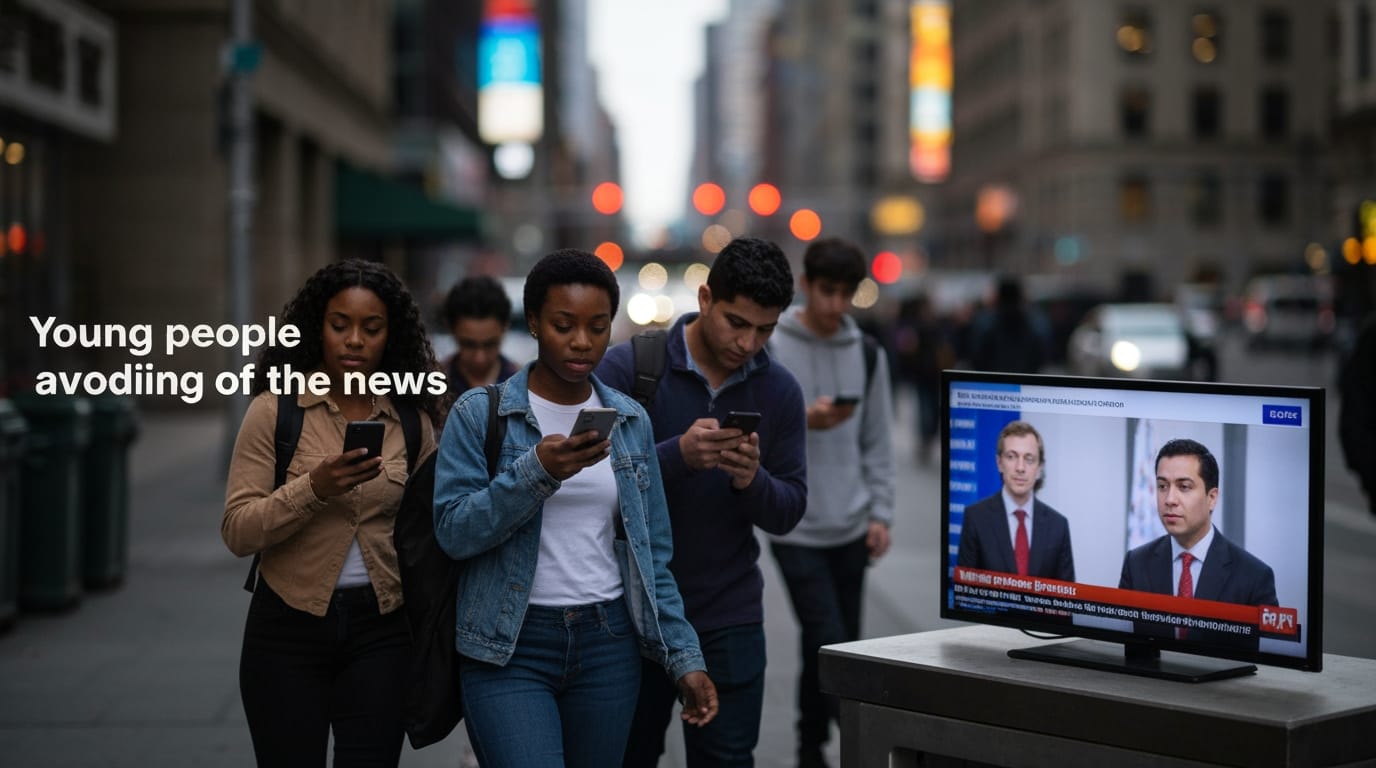
A critical disconnect is widening between young people and traditional news sources, with a recent Reuters Institute report highlighting a significant surge in news avoidance, particularly among those under 35. This growing trend presents a formidable challenge to the journalism industry, as younger demographics increasingly cite negative emotional impact, lack of relevance, and perceived complexity as primary reasons for tuning out. The shift signals a fundamental re-evaluation of how news is consumed and demands urgent adaptation from media organizations to regain the attention and trust of future audiences.
The 2026 Reuters Institute Digital News Report, a comprehensive annual study, reveals an alarming escalation in news avoidance globally, reaching 42% compared to 29% in 2017 when measurements began. This phenomenon is particularly pronounced among individuals aged 18 to 24, who are demonstrating a pronounced move away from conventional news consumption patterns. Daily news engagement among this younger cohort has plummeted by 15 percentage points since 2017, a stark contrast to the mere 5 percentage point decline observed in the 55 and older age group. This widening gap underscores a deep-seated issue that goes beyond mere channel preference, pointing to a more profound disinterest in news as conventionally presented. The report indicates a broader societal trend where interest in news has fallen by an average of 13 percentage points across surveyed markets since 2021, with only 46% now describing themselves as very or extremely interested in news. The proportion of casual or passive news users has consequently risen from 16% in 2021 to 25% in 2026, further emphasizing the general decline in active news seeking.
Several key factors are driving this disengagement among young audiences. A substantial portion of those under 35, approximately 36%, report that news negatively impacts their mood, contributing to feelings of powerlessness in 16% of cases. Beyond emotional distress, a significant segment of young people find traditional news content either irrelevant or difficult to comprehend. About 21% of 18-24 year olds avoid news because it doesn't seem pertinent to their lives, a higher proportion than older groups. Similarly, 15% of this age bracket finds news difficult to understand, a figure three times higher than those over 55. The language often employed by news outlets, frequently steeped in jargon and catering to established news consumers, creates a barrier for younger, less informed audiences. Furthermore, 17% cite the desire to avoid arguments as a reason for sidestepping news, while 29% admit to avoiding news due to a lack of trust in its content. The repetitive nature of news cycles, particularly concerning topics like politics and global health crises, also contributes to reader fatigue, with 43% expressing weariness from the constant coverage.
The way young people consume information has fundamentally shifted, moving away from established media channels towards digital and social platforms. For more than half (52%) of individuals aged 18-24, social media, video networks, and even AI chatbots have become their primary gateways to news in 2026, marking a 32 percentage point difference compared to any other source. This "social-native" demographic often encounters news incidentally, stumbling upon headlines or stories within their feeds rather than actively seeking them out from dedicated news websites or television broadcasts. This incidental consumption means news is often embedded within a broader stream of entertaining or social content, blurring the lines between information and other forms of digital engagement. As a result, trust is increasingly gravitating towards "news influencers" on these platforms, further challenging the authority and reach of traditional news organizations. This shift highlights a preference for personalized, often visual, and easily digestible content that resonates with their immediate interests and digital habits.
The implications for the journalism industry are profound. Nic Newman, lead author of the Reuters Institute report, noted that the very subjects journalists deem most critical—such as political crises, international conflicts, and global pandemics—are precisely the topics that alienate some segments of the public, particularly younger audiences. The digital landscape, characterized by an overwhelming abundance of content and a plethora of entertaining alternatives, means news consumers are constantly bombarded and have an easier time opting for less depressing choices. To counter this trend, Newman suggests that news organizations must prioritize rebuilding trust by ensuring stories are evidence-based, devoid of sensationalism, and clearly delineate opinion from fact. Equally crucial is the need to enhance accessibility and comprehensibility. This includes simplifying language, avoiding jargon, providing thorough explanations for complex narratives, and leveraging digital formats like video that are more aligned with younger audiences' consumption preferences. Mitali Mukherjee, Director of the Reuters Institute, succinctly articulated the challenge: "The news misses its audiences, but the audience doesn't miss the news. That relationship needs to be rebuilt, especially for younger people".
In conclusion, the escalating avoidance of news by younger generations, as detailed by the Reuters Institute, represents a critical juncture for the media landscape. Driven by a confluence of emotional fatigue, perceived irrelevance, and a preference for social and video-centric platforms, this trend demands a proactive and innovative response from news organizations. Re-establishing trust, simplifying narratives, and embracing the digital habits of young audiences are not merely optional adjustments but essential strategies for ensuring the continued relevance and vitality of journalism in an increasingly fragmented information environment. The future of informed public discourse hinges on the industry's ability to bridge this growing divide and reconnect with those who are currently turning away.


