Zelenskyy Issues Stern Warning to Nations Eyeing Moscow's Victory Day Parade
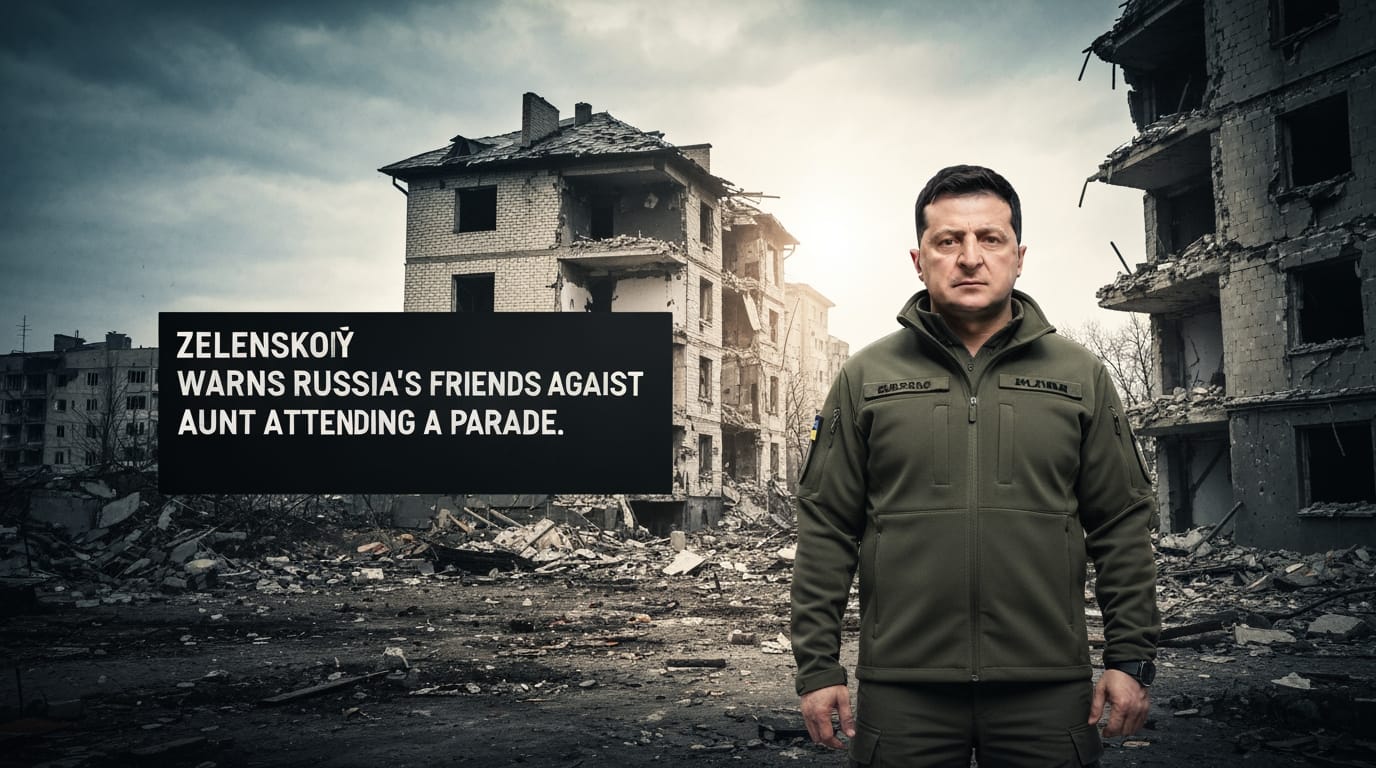
KYIV, UKRAINE – Ukrainian President Volodymyr Zelenskyy has issued a pointed warning to foreign dignitaries considering attending Russia's upcoming Victory Day parade in Moscow on May 9, stating that Kyiv cannot guarantee their safety within Russian territory. The admonition, delivered just days before the landmark 80th-anniversary commemoration of the Soviet Union's triumph over Nazi Germany, underscores the escalating tensions and the deep diplomatic chasm created by the ongoing conflict in Ukraine. Zelenskyy's message serves as both a security advisory and a potent diplomatic challenge, forcing nations to weigh their allegiances and the implications of their presence at an event now deeply intertwined with Russia's current military actions.
The Ukrainian leader's remarks, made on May 3, come amidst reports that Moscow has extended invitations to leaders from over 20 countries, including key allies and nations attempting to maintain neutrality in the face of the protracted war. Zelenskyy's government views attendance not merely as a ceremonial gesture but as a tacit endorsement of Russia's policies, further complicating the already intricate web of international relations. The warning, therefore, transcends typical diplomatic decorum, directly addressing the moral and geopolitical calculations foreign governments must now confront.
Security Concerns and Accusations of Provocation
President Zelenskyy's primary concern, as articulated in his public statements, centers on the inherent security risks for any foreign official stepping onto Russian soil. "We cannot be responsible for what happens on the territory of the Russian Federation. They provide you with security, and therefore we will not give you any guarantees," Zelenskyy was quoted as saying, clearly demarcating Ukraine's non-responsibility for events within Russia's borders. This stark declaration implicitly shifts the burden of protection entirely onto the host nation, Moscow, while simultaneously raising questions about the stability and safety of the environment attendees would be entering.
Beyond the general security landscape, Kyiv has voiced more specific and troubling apprehensions. Ukrainian officials have cautioned that Russia itself might orchestrate "various provocations—arsons, explosions, and so on—and then blame us," suggesting a calculated strategy to manipulate international perceptions and further demonize Ukraine. Such a scenario, if it were to unfold, would plunge already strained diplomatic ties into deeper crisis, potentially dragging attending nations into a complex narrative of blame and counter-blame. This pre-emptive warning from Kyiv seeks to inoculate against such an eventuality, ensuring that the international community is aware of Ukraine's perspective should any incidents occur.
Further emphasizing the gravity of the situation, Zelenskyy's government has also rejected Russia's offer of a three-day ceasefire to mark Victory Day, deeming it a "theatrical production." Instead, Ukraine has consistently called for a more substantial, 30-day cessation of hostilities, arguing that a shorter pause is insufficient for genuine peace efforts. This rejection highlights Kyiv's deep distrust of Moscow's intentions, viewing even humanitarian gestures through the lens of ongoing conflict and strategic maneuvering.
Diplomatic Pressure and the Moral Imperative
The Ukrainian Ministry of Foreign Affairs amplified Zelenskyy's security warning with an explicit condemnation of any foreign military participation in the parade. Kyiv declared that the presence of foreign troops would be "unacceptable" and would be perceived as directly assisting Moscow in "whitewashing its war crimes." This powerful language underscores Ukraine's belief that the parade, a traditional display of military might and historical triumph, is being co-opted to legitimize Russia's current actions in Ukraine. The Ministry asserted that "marching side by side" with Russian soldiers, whom they describe as having committed "atrocities in Ukraine on a scale that Europe has not seen since World War II," would equate to "sharing responsibility for the blood of murdered Ukrainian children, civilians and military."
This is a direct appeal to the moral conscience of invited nations, urging them to consider the reputational and ethical costs of their attendance. Among those reportedly invited are Chinese President Xi Jinping, Belarusian President Alexander Lukashenko, Serbian President Aleksandar Vucic, Venezuelan President Nicolas Maduro, and Slovakian Prime Minister Robert Fico, who has reportedly confirmed his attendance. India was also expected to send a junior minister to the event. For these nations, the decision to attend or abstain carries significant geopolitical weight, impacting their standing with both Kyiv and its Western allies, and potentially their own domestic and international credibility. Ukraine's message effectively transforms the parade from a purely internal Russian affair into a litmus test of international solidarity and a moral crossroads for participating states.
Contesting Historical Narratives and Contemporary Conflict
Victory Day holds immense symbolic significance for Russia, representing a pivotal moment of national unity and military prowess. For decades, the annual parade on Red Square has served as a powerful display of Russian strength and a celebration of its historical role in defeating Nazism. However, in the context of the current conflict, Ukraine argues that Russia has distorted this historical narrative to justify its invasion and ongoing aggression. By equating its current military campaign with the fight against Nazism, Moscow attempts to imbue its actions with historical legitimacy and moral authority.
Ukraine vehemently disputes this revisionist history, emphasizing its own profound sacrifices during World War II. Kyiv highlights that millions of Ukrainians fought in the Red Army, with the country suffering catastrophic losses of civilian lives and military personnel, making it one of the most devastated nations of the war. Ukraine's foreign ministry contends that attributing the victory over Nazism primarily to the Russian nation, as President Vladimir Putin has often done, diminishes the contributions and immense suffering of other Soviet republics. Zelenskyy's warning, therefore, is also a defense of Ukraine's historical narrative and an attempt to prevent the May 9th parade from becoming a propaganda platform that further erases Ukrainian history and justifies present-day aggression.
Geopolitical Stakes and Shifting Alliances
Zelenskyy's explicit warning is a calculated diplomatic move designed to further isolate Russia on the global stage. By directly challenging the legitimacy of attending the parade, Ukraine seeks to apply pressure on nations that have either maintained close ties with Moscow or attempted to navigate a path of neutrality since the full-scale invasion began. For countries like China, India, and others, who wield significant international influence but have largely refrained from condemning Russia's actions, the decision to participate in the parade becomes a highly visible statement of their geopolitical alignment.
The warning forces these nations to confront the optics of standing alongside a country widely condemned for violating international law and committing alleged war crimes, even as they may seek to preserve economic or strategic relationships with Moscow. Ukraine's diplomatic efforts aim to highlight the moral contradictions inherent in such neutrality, particularly when the event in question celebrates a victory against a totalitarian regime, while the host nation is accused of similar authoritarian overreach. The decision of foreign leaders will be closely watched by international observers, serving as an indicator of the evolving global order and the effectiveness of international pressure against Russia.
Conclusion: A Diplomatic Tightrope Walk
President Zelenskyy's comprehensive warning regarding Russia's Victory Day parade is a multifaceted diplomatic maneuver. It simultaneously functions as a genuine security alert for potential attendees, a stern moral and political admonition against legitimizing Russia's ongoing aggression, and a strategic effort to further isolate Moscow. By clearly stating that Ukraine cannot guarantee safety within Russian territory and by framing attendance as complicity in "whitewashing war crimes," Kyiv has significantly raised the stakes for any nation contemplating participation.
The upcoming May 9th parade, typically a moment of historical reflection and national pride for Russia, has thus been transformed into a contentious geopolitical arena. The decisions made by foreign leaders in response to Zelenskyy's warning will not only reflect their immediate diplomatic calculations but will also carry long-term implications for their international standing, their relationships with both Ukraine and its allies, and the broader trajectory of the conflict itself. As the world watches, the attendance, or absence, of Russia's "friends" will speak volumes about the shifting dynamics of global power and morality in an era defined by conflict.


