Zelenskyy Seeks Papal Backing Amidst Intensifying Peace Plan Debates
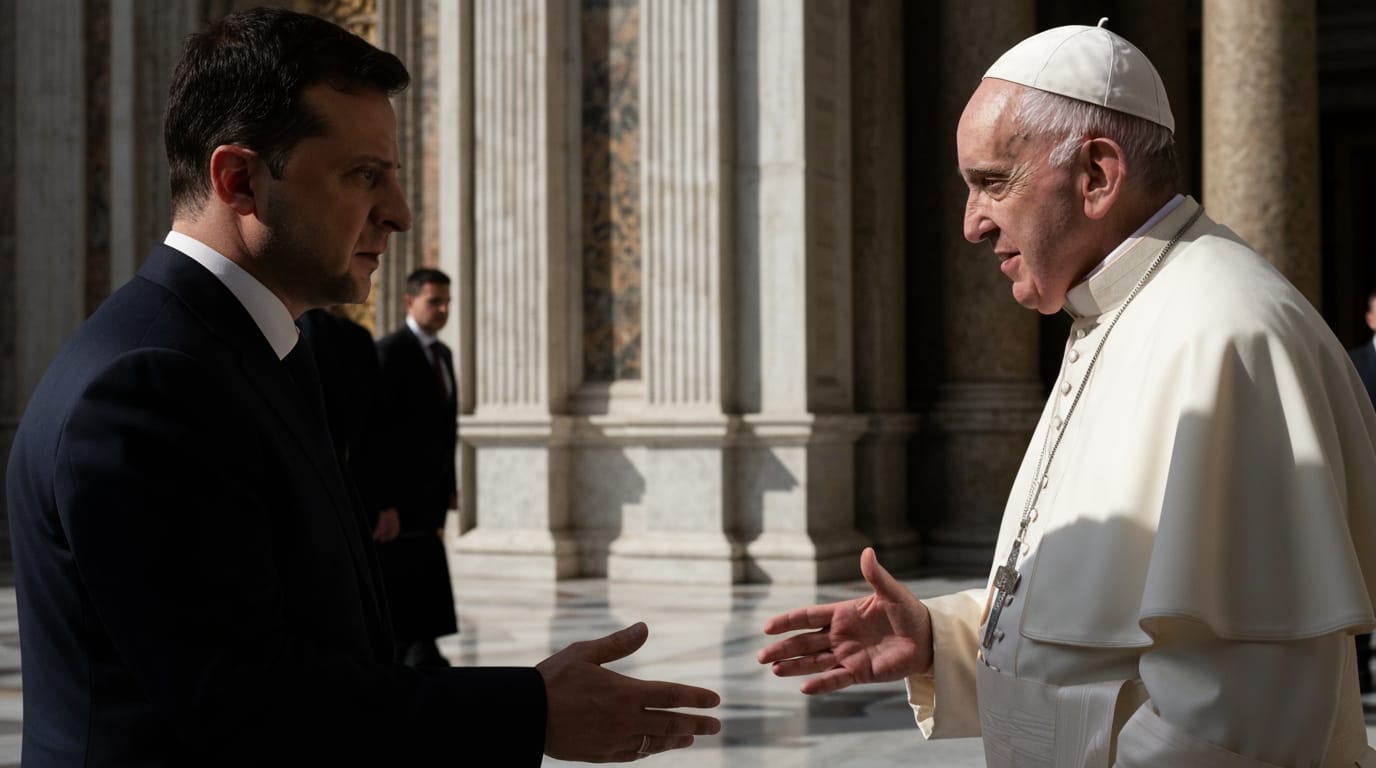
Vatican City, December 9, 2025 – Ukrainian President Volodymyr Zelenskyy today met with Pope Leo XIV in Castel Gandolfo, signaling a renewed push for a just and lasting peace in Ukraine amidst a complex and increasingly fraught international diplomatic landscape. The high-level meeting occurred as Kyiv navigates intense pressure from various international actors, including the United States, to consider peace proposals that could involve significant concessions, which Ukraine has firmly rejected. The encounter with the new Pontiff underscores the enduring moral authority and diplomatic potential the Holy See holds in efforts to end the prolonged conflict.
The thirty-minute discussion between President Zelenskyy and Pope Leo XIV focused on the urgent need for continued dialogue to achieve peace, with particular emphasis on humanitarian concerns such as the plight of prisoners of war and the repatriation of Ukrainian children forcibly abducted to Russia. Pope Leo XIV, the first U.S.-born pontiff, reiterated the Vatican's urgent desire for diplomatic initiatives to bring about a "just and lasting peace" and reaffirmed the Holy See's willingness to host negotiations. This meeting forms a crucial part of President Zelenskyy's broader diplomatic tour across Europe, following engagements in London and Brussels, aimed at solidifying support for Ukraine's own peace formula and countering proposals that Kyiv views as detrimental to its sovereignty and territorial integrity.
High-Stakes Diplomacy in Rome
President Zelenskyy's visit to the papal residence in Castel Gandolfo today, December 9, 2025, represents a significant moment in Ukraine's ongoing diplomatic offensive. The meeting with Pope Leo XIV, shortly before a scheduled discussion with Italian Prime Minister Giorgia Meloni, highlights Rome's continued relevance as a center for international engagement on the conflict. While the Holy See has consistently maintained a position of neutrality, it has simultaneously offered unwavering solidarity and humanitarian assistance to the "martyred" people of Ukraine. The discussions reportedly centered on the broader implications of Russia's full-scale war, with both leaders acknowledging the profound human cost of the conflict.
A key aspect of the conversation involved the critical humanitarian issues stemming from the war. President Zelenskyy specifically addressed the urgent need for the return of Ukrainian children who have been abducted and taken to Russia, a concern echoed by the Holy See's diplomatic mission to the United Nations. The issue of prisoners of war also featured prominently, reflecting the ongoing efforts to facilitate exchanges and ensure humane treatment for those held captive. Zelenskyy's current diplomatic push comes amidst reports of a U.S.-led peace proposal that has raised concerns among European leaders and Kyiv itself. European nations have expressed unease over being excluded from initial discussions surrounding this U.S.-Russian draft plan, which has been criticized for demanding significant concessions from Ukraine. President Zelenskyy has emphatically stated that Ukraine has "no legal right" and "no moral right" to cede any territory, a firm position he has reiterated throughout his European engagements. This resolute stance underscores the monumental challenge in finding common ground for a peaceful resolution.
The Vatican's Enduring Pursuit of Peace
The meeting with Pope Leo XIV marks a continuation of the Vatican's deep engagement with the conflict in Ukraine, a commitment that predates the current pontiff's election in May 2025 following the passing of Pope Francis. Since assuming the papacy, Pope Leo XIV has consistently urged for a "just and lasting peace" and indicated the Vatican's readiness to host peace negotiations. He has actively called for a ceasefire and appealed to Russia to demonstrate gestures conducive to peace. The Holy See's diplomatic efforts extend beyond high-level meetings, with special envoy Cardinal Matteo Maria Zuppi continuing missions aimed at humanitarian goals, such as the reunification of Ukrainian children with their families and prisoner exchanges. These ongoing efforts highlight the Vatican's unique role as a moral voice and potential facilitator in global conflicts, often operating "behind the scenes" to promote dialogue.
While the Vatican's role is widely recognized for its humanitarian and moral weight, its suitability as a neutral mediator for peace talks has not been universally accepted. Russian Foreign Minister Sergei Lavrov, for instance, has previously cast doubt on the Vatican as an appropriate venue for peace talks between Russia and Ukraine, suggesting it would be "inelegant" for two predominantly Orthodox Christian nations to use a Catholic platform for such discussions. This perspective highlights one of the many diplomatic hurdles the Holy See must navigate in its peace initiatives. Nevertheless, the Vatican's consistent calls for an immediate ceasefire and sincere dialogue, as articulated by the Holy See's diplomatic mission to the United Nations, remain a steadfast plea for an end to hostilities.
Ukraine's Red Lines and the Shifting Diplomatic Landscape
Ukraine's position on peace remains steadfast, centered on the principle of territorial integrity and the withdrawal of all Russian forces from its internationally recognized borders. President Zelenskyy has repeatedly asserted that Ukraine will not renounce any territory, a stance enshrined in both Ukrainian and international law. This principled refusal stands in direct opposition to Russia's demands, which include the recognition of Crimea and the four annexed regions (Donetsk, Luhansk, Zaporizhzhia, and Kherson) as Russian territory, as well as Ukraine's abandonment of its NATO aspirations. The "most difficult" issue in any potential peace talks remains territorial control, particularly concerning the Donbas region and the Zaporizhzhia nuclear power plant.
The current diplomatic environment is further complicated by new U.S.-led peace efforts. Reports indicate that an initial 28-point U.S. proposal, which was reportedly drafted without significant input from European NATO members and seen by Kyiv as too favorable to Russia, has been refined into a 20-point plan. While President Zelenskyy noted that no "pro-Ukrainian" points were removed and no "compromise" was made on territory in the revised draft, the push for such plans underscores the differing perspectives on how to achieve a resolution. European leaders have expressed concerns about being sidelined in these discussions and the potential for a peace deal that could leave Ukraine vulnerable to future aggression. Ukraine's ongoing diplomatic tour is therefore crucial for rallying collective international support for its own vision of a just peace and ensuring that its core demands are not eroded in the pursuit of a settlement.
The Path Forward and Lingering Obstacles
The path to a lasting peace in Ukraine remains fraught with immense challenges. The fundamental disagreements between the belligerents—Russia's insistence on retaining occupied territories and Ukraine's unwavering demand for their full liberation—appear irreconcilable at present. While international efforts continue, both through the Vatican's moral diplomacy and various national initiatives, the lack of a clear, mutually acceptable framework for negotiations perpetuates the conflict. The Holy See's calls for dialogue are significant, but the actual engagement of both sides in good faith remains elusive.
Moreover, the shifting dynamics of international alliances and domestic political considerations within key supporting nations add layers of complexity. President Zelenskyy's engagements, including his meeting with Pope Leo XIV, serve not only to seek support but also to underscore the human impact of the war and to advocate for a peace that upholds international law and justice. The ongoing debates surrounding territorial concessions, security guarantees, and the future geopolitical alignment of Ukraine continue to define the parameters of potential peace, highlighting that while diplomacy remains active, a comprehensive resolution is still a distant prospect.
Conclusion
President Zelenskyy's meeting with Pope Leo XIV today in Castel Gandolfo reaffirms the critical role of moral leadership and sustained diplomatic engagement in the quest for peace in Ukraine. As the conflict grinds on, the Vatican's consistent appeals for dialogue and its humanitarian efforts offer a beacon of hope, focusing on the human elements of the crisis, such as the return of abducted children and prisoner exchanges. Yet, the profound chasm between Ukraine's resolute defense of its territorial integrity and Russia's annexation demands continues to present formidable obstacles to any lasting settlement. The ongoing high-stakes diplomacy, complicated by divergent international approaches and national interests, underscores that while the desire for peace is universal, the pathway to achieving it remains intricate and uncertain.


