Zelenskyy Signals Readiness for Wartime Elections, Conditions US Security Guarantees
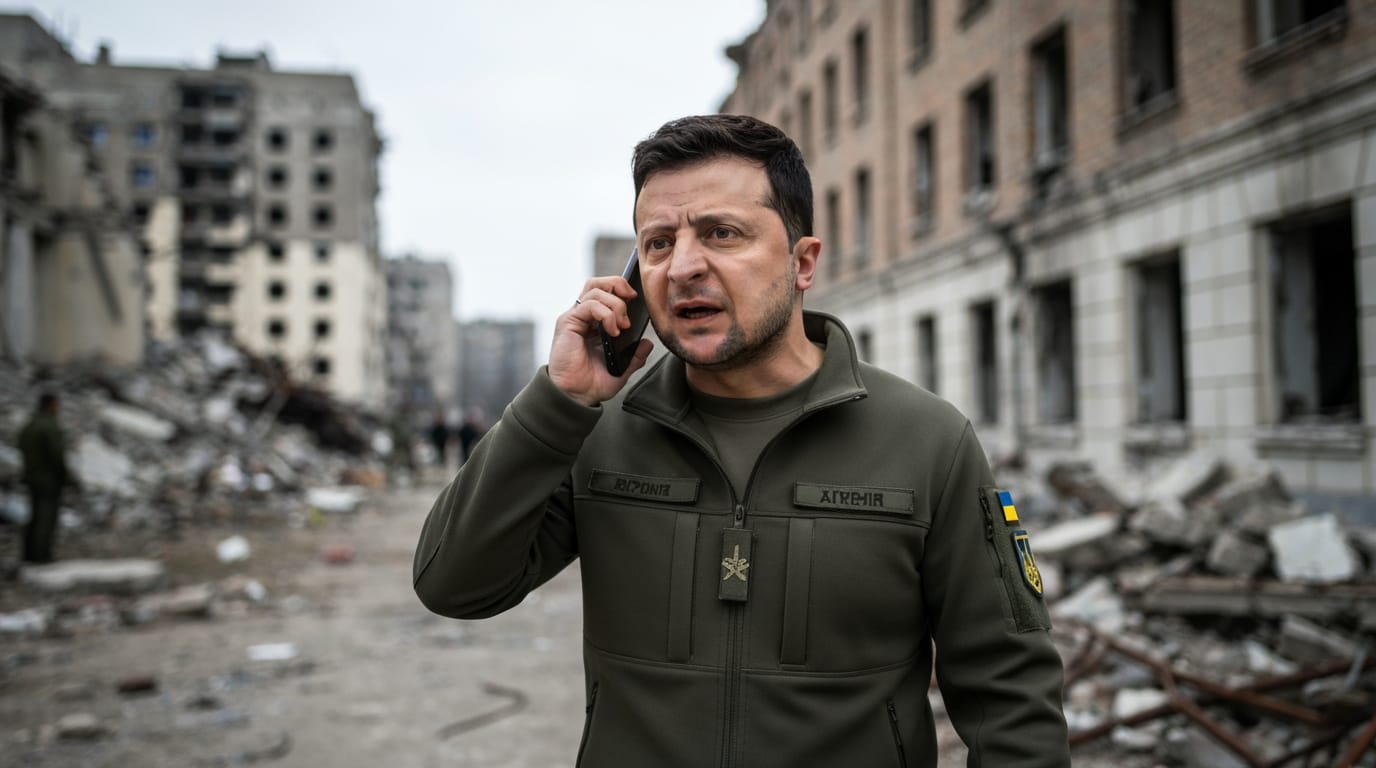
KYIV, Ukraine – In a pivotal shift that intertwines Ukraine's democratic future with its wartime realities, President Volodymyr Zelenskyy has expressed a conditional readiness to hold elections amidst ongoing hostilities, provided the United States and European partners ensure comprehensive security and financial backing. This declaration, made in response to growing international pressure, particularly from some American political figures, highlights the intricate balance Ukraine must strike between upholding democratic principles and prosecuting a full-scale war against Russia. The proposal lays bare the monumental logistical, constitutional, and security challenges inherent in conducting a national vote while a significant portion of the country remains under attack or occupation.
The Conditional Path to the Ballot Box
President Zelenskyy's recent statements indicate a willingness to move forward with presidential elections within 60 to 90 days, contingent upon crucial external support. He explicitly requested the United States, potentially in collaboration with European allies, to "provide security for the elections." This encompasses not only protecting polling stations and voters from direct military attacks but also facilitating the participation of millions of displaced citizens and soldiers. Zelenskyy has also made it clear that Ukraine would not divert funds from its defense budget for electoral processes, suggesting that Western nations advocating for a wartime vote should bear the financial burden. "I will not take money from weapons and give it to elections," he stated, estimating presidential elections to cost around $196.7 million and parliamentary elections approximately $135.9 million. Ukraine's 2024 budget projects expenditures nearly double its revenues, with the deficit largely covered by international loans and grants, making external funding for elections a critical requirement.
Constitutional Hurdles and Wartime Complexities
A significant legal barrier to immediate elections is Ukraine's martial law, enacted following Russia's full-scale invasion in February 2022. The Ukrainian Constitution explicitly prohibits holding elections under martial law. Article 83 of the constitution extends the authority of the Verkhovna Rada (parliament) until the first session of a newly elected body after martial law is lifted, and Article 19 of martial law legislation bans all national elections during this period. To proceed with elections, fundamental legislative changes would be required, a process Zelenskyy has urged Ukrainian lawmakers to explore.
Beyond the legal framework, the practicalities of conducting free, fair, and representative elections during a conflict are daunting. Approximately 20% of Ukrainian territory remains under Russian occupation, disenfranchising millions of citizens who reside there. Furthermore, the war has resulted in massive population displacement, with an estimated 6.3 million Ukrainian refugees scattered across Europe and an additional four million internally displaced within the country. Updating voter lists for such a dispersed population and establishing accessible, secure polling stations both domestically and abroad present enormous logistical challenges. The right to vote for military personnel serving on the front lines is another critical concern that would need to be addressed. International observation, a cornerstone of democratic elections, also faces unprecedented difficulties, with organizations like the OSCE noting the impossibility of guaranteeing observer safety in active conflict zones and the extensive time (at least nine months) required to prepare a mission.
Public Sentiment and Geopolitical Pressures
The debate over wartime elections is not confined to official corridors; it deeply resonates within Ukrainian society. Public opinion polls consistently reveal that a majority of Ukrainians prioritize national defense and stability over holding elections during the war. Surveys from late 2024 and early 2025 indicated that between 60% and 63% of Ukrainians oppose elections until the conflict concludes, emphasizing concerns about security risks, logistical difficulties, and the potential for political polarization. Over 100 Ukrainian civil society organizations have echoed this sentiment, arguing that genuinely democratic elections are unfeasible until lasting peace is established and martial law is lifted.
Internationally, calls for Ukrainian elections have come from various quarters, including former U.S. President Donald Trump and Senator Lindsey Graham. Trump has notably questioned Ukraine's democratic status due to the absence of recent elections, a sentiment Zelenskyy has countered, stressing that decisions on elections are solely for the Ukrainian people. This external pressure highlights a broader geopolitical dynamic where the commitment to democratic processes intersects with the harsh realities of wartime governance. Concerns also exist about potential Russian interference, with analysts warning that elections held under current conditions could be exploited by Moscow to sow discord, undermine legitimacy, or promote pro-Russian candidates. Russia has historically used the absence of elections as propaganda to challenge Zelenskyy's legitimacy.
The Delicate Balance: Democracy vs. Survival
President Zelenskyy's conditional openness to elections reflects a nuanced understanding of the delicate balance Ukraine must maintain. While committed to democratic ideals, the paramount objective remains national survival and the defense against an aggressor. The conditions he has set – robust security assurances, external financial support, and a revised legal framework – underscore the extraordinary measures required to ensure any wartime election would be genuinely free, fair, and legitimate.
The coming months will likely see intensive discussions among Ukraine, the United States, and European partners to determine the feasibility and mechanics of such an undertaking. The challenge lies not just in facilitating the vote itself, but in doing so without compromising Ukraine's military effort, exacerbating internal divisions, or lending unintended legitimacy to Russia's ongoing aggression. Ultimately, the decision to proceed, and the manner in which it is executed, will be a testament to Ukraine's enduring commitment to democracy, even in the crucible of war, and the international community's resolve to support it.


