Zimbabwe Braces for Potential Uprising as Tensions Mount Against Mnangagwa's Government
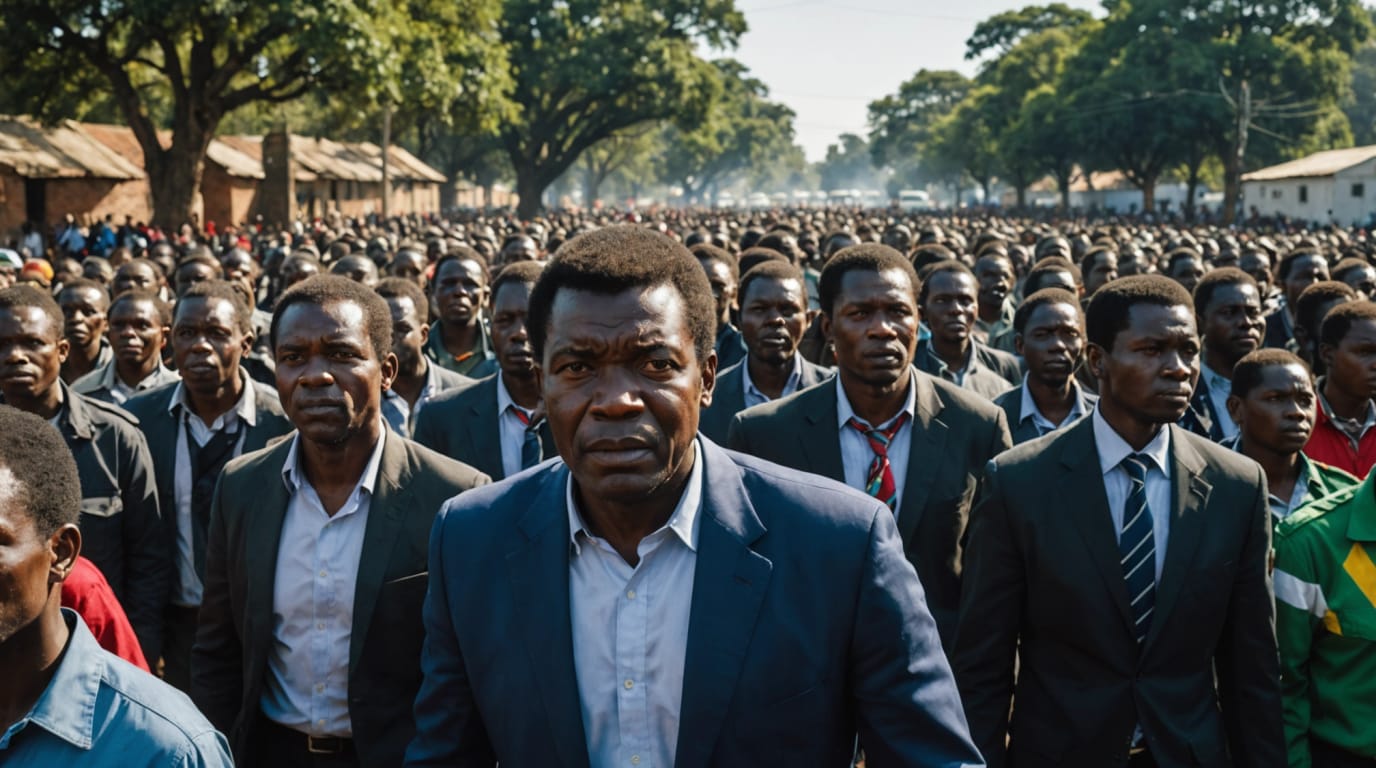
HARARE - Zimbabwe is on edge as a planned nationwide uprising looms on March 31, fueled by growing discontent with President Emmerson Mnangagwa's administration and simmering tensions within the ruling ZANU-PF party. Calls for the president's resignation have intensified, raising concerns about potential instability and the government's response.
Geza's Call to Action
The call for an uprising has been spearheaded by Blessed Geza, a firebrand war veteran recently expelled from ZANU-PF. Geza, who resurfaced online in military attire after a period in hiding, has urged Zimbabweans to take to the streets on March 31 to demand Mnangagwa's immediate resignation. In a video address posted on social media, Geza declared the planned demonstration "not even a protest but an uprising," calling on citizens to "invade the streets." He has also appealed for assistance with transportation for demonstrators and warned law enforcement against interfering with the protests.
Geza's motives appear to be linked to the presidential ambitions of Vice President Constantino Chiwenga. He openly campaigned for Chiwenga to become president, claiming that prominent opposition figures such as Nelson Chamisa and Job Sikhala support the former military commander's ascendancy to power.
Government Response and Warnings
The government has reacted strongly to Geza's call for an uprising. Information Minister Jenfan Muswere denounced the calls for Mnangagwa's resignation as "delusional rumblings and reactionary grandstanding." He assured the nation that law enforcement agents are prepared to quash any violent demonstrations, stating that "no violent demonstration will ever see the light of day." Muswere also dismissed Geza as a "divisionalist and factionalist hell-bent on sowing seeds of division," urging Zimbabweans to ignore his calls.
State Security Minister Lovemore Matuke downplayed the protests, claiming they are fueled by Zimbabweans abroad and insisting Mnangagwa remains popular. He issued a stern warning, stating, "we want to warn you that we are ready and we will be waiting to deal with you."
Underlying Causes of Discontent
The planned uprising reflects deep-seated frustration among Zimbabweans over the country's economic struggles, corruption, and perceived lack of leadership. Hopewell Chin'ono, a prominent investigative journalist and anti-corruption activist, stated that people are not supporting Geza's call for Mnangagwa's removal because they love Geza, but because they are desperate for a solution to their suffering. He added that Mnangagwa has "completely wrecked Zimbabwe's public institutions through corruption."
Mnangagwa, 82, has faced criticism for his perceived attempts to cling to power beyond his current term, which ends in 2028. Despite repeated assurances that he would step down at the end of his term, ZANU-PF is reportedly advancing plans to amend the Constitution to extend his rule by two years, pushing elections to 2030. This has fueled suspicion that Mnangagwa is attempting to influence his successor, potentially sidelining Vice President Chiwenga.
Factionalism within ZANU-PF
The tensions surrounding the planned uprising also highlight the deep factionalism within the ruling ZANU-PF party. Geza's open support for Chiwenga's presidential ambitions underscores the power struggle between Mnangagwa and his vice president. ZANU-PF spokesperson Christopher Mutsvangwa launched a public attack on Chiwenga, calling him "illiterate" and "an electoral liability."
The infighting within ZANU-PF is reminiscent of the internal battles that led to the 2017 military coup that ousted Robert Mugabe from power. Mnangagwa, who came to power with the backing of the military, including Chiwenga, now faces a potential challenge from within his own party.
Concerns of Military Intervention
Geza's reappearance in military gear has sparked fears of another military coup, reminiscent of the 2017 ouster of former President Robert Mugabe. The military has historically played a significant role in Zimbabwean politics, and any sign of its involvement in the current political tensions raises concerns about the potential for instability.
Authorities arrested journalist Blessed Mhlanga for covering Geza's calls for protests, further fueling concerns about freedom of the press and the government's tolerance of dissent.
Uncertain Outcome
As March 31 approaches, the situation in Zimbabwe remains tense and uncertain. It is unclear whether the planned uprising will gain significant momentum or be effectively suppressed by the government. The level of public support for the protests, the response of security forces, and the actions of key political players will all play a crucial role in determining the outcome.
The events of March 31 could have far-reaching implications for Zimbabwe's political future, potentially leading to further instability, a shift in power within ZANU-PF, or a renewed crackdown on dissent. The international community is closely watching the situation, with concerns about the potential for human rights abuses and the need for a peaceful and democratic resolution to the country's political challenges.


