2025: A Year of Hard-Won Human Rights Victories Amidst Persistent Global Challenges
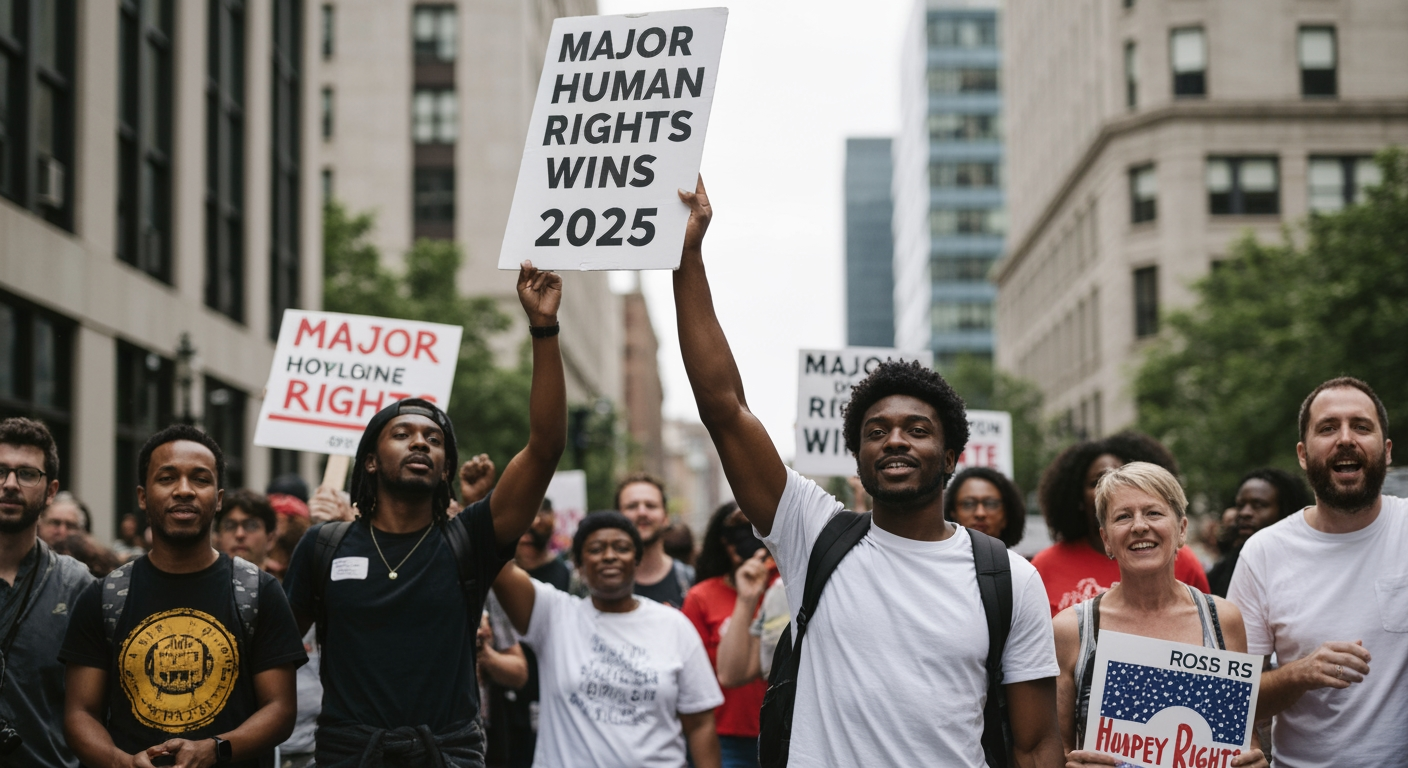
As 2025 draws to a close, the landscape of human rights presents a complex tapestry of progress and enduring struggle. While significant strides have been made in international justice, corporate accountability, and the protection of vulnerable groups, the year has also underscored the resilience of authoritarian practices and the ongoing threats posed by conflict, discrimination, and climate change. Against a backdrop of increasing global instability, dedicated activists, international bodies, and civil society organizations have nonetheless secured vital victories, offering glimmers of hope and setting crucial precedents for the future.
International Justice Systems Flex Their Muscle
The year 2025 witnessed pivotal actions by international judicial bodies, reinforcing the principle that even the most powerful individuals can be held accountable for human rights abuses. The International Criminal Court (ICC) emerged as a central player, with its Prosecutor filing requests for arrest warrants against the Taliban's Supreme Leader and Chief Justice for alleged gender persecution, which were cited as crimes against humanity in Afghanistan. The ICC further pursued investigations and issued arrest warrants for senior officials accused of crimes in Ukraine and Palestine, with an additional warrant application pending for an individual from Myanmar, signaling a broad commitment to addressing severe international law violations. A particularly notable development occurred in March when former Philippine President Rodrigo Duterte was arrested and transferred to the ICC in The Hague, marking a historic step towards justice and demonstrating the court's reach in pursuing accountability for alleged atrocities.
Beyond international tribunals, domestic legal systems also delivered landmark decisions. In Chile, a police officer was imprisoned in May 2025 for the 2019 killing of Romario Veloz during social unrest, establishing a significant precedent in cases of human rights violations committed by state agents. This ruling, while celebrated, also highlighted the ongoing challenge of widespread impunity for police violence in the country.
Advancing Social Protections and Challenging Discrimination
Across various regions, 2025 brought notable progress in safeguarding social rights and confronting discrimination. Advocacy efforts led to the release of prominent human rights defenders in Saudi Arabia, including Mohammed al-Qahtani and Asaad bin Nasser al-Ghamdi, both of whom had faced lengthy detentions for their activism. In Algeria, sustained campaigns by Amnesty International and women's rights groups prompted President Abdelmadjid Tebboune to announce concrete measures to combat violence against women, including the launch of a national, 24/7 toll-free helpline for victims.
The rights of LGBTQ+ individuals also saw important advancements. Despite restrictive anti-Pride laws in Hungary, Budapest Pride proceeded with an estimated 200,000 participants, marking the largest turnout in 30 years and underscoring robust public resistance to discrimination. In a move that promised greater recognition and inclusion, South Korea updated its 2025 Population and Housing Census to allow for the counting of same-sex couples. However, these gains were juxtaposed with setbacks, such as a bill approved by Peru's Congress to eliminate the concept of gender from legislation, which UN experts warned would weaken protections for women and gender-diverse individuals.
Corporate Accountability and Environmental Guardianship
The intersection of business and human rights gained increasing prominence in 2025. The European Union's Corporate Sustainability Due Diligence Directive (CSDDD) became effective in July, mandating environmental and human rights due diligence for companies operating within the EU. Complementing this, the Corporate Sustainability Reporting Directive (CSRD) began its reporting requirements in 2025, pushing companies toward greater transparency on environmental, social, and governance (ESG) issues. Further international efforts to regulate corporate conduct continued with the 11th session of the UN open-ended intergovernmental working group in October, focusing on a legally binding instrument to regulate transnational corporations regarding human rights.
Specific corporate actions also demonstrated a response to human rights concerns. Cellebrite, a digital forensics company, announced it would cease using its equipment for some customers in Serbia following research by Amnesty International, leading to investigations by Serbian authorities. In the United States, enforcement of the Uyghur Forced Labor Prevention Act (UFLPA) continued vigorously, with additional commodities identified as high-priority sectors for enforcement and the launch of a "Forced Labor Allegation Portal".
Environmental defenders also celebrated key victories. In Kenya, a proposed nuclear power plant was halted due to concerted efforts by the Center for Justice Governance and Environmental Action (CJGEA) and local communities. Similarly, a Mexican court ruled in favor of the El Bajío Ejido community in a case concerning illegal mining on their land, highlighting the ongoing struggle for land rights and corporate accountability.
Worker rights saw significant advances, particularly in the United States. New York City baristas secured a $38 million settlement from Starbucks for systemic violations of scheduling laws, marking the largest worker protection settlement in the city's history. The United Food and Commercial Workers International Union (UFCW) achieved a landmark national contract with JBS, the world's largest meat processor, securing wage increases and pension benefits for its heavily immigrant workforce. Furthermore, sustained union protests led Utah lawmakers to reverse a restrictive labor law, demonstrating the power of collective action.
Global Health as a Human Right
Public health initiatives in 2025 underscored a commitment to health as a fundamental human right. A major achievement was the adoption of the first Pandemic Agreement at the Seventy-eighth World Health Assembly in May. This landmark accord, alongside amended International Health Regulations, aims to better protect populations globally from future pandemics by fostering international collaboration and promoting fairer access to vaccines, medicines, and diagnostics. The World Health Organization (WHO) continued its advocacy for mental health as a human right, expanding its QualityRights initiative and urging greater investment in services and stigma reduction. Additionally, global efforts to eliminate cervical cancer gained momentum, with countries expanding HPV vaccination programs, bringing the world closer to eradicating the disease.
Conclusion: A Continuous Pursuit of Dignity
The year 2025 ultimately proved to be a testament to the persistent pursuit of human dignity and justice. While international reports from organizations like Amnesty International and Human Rights Watch cautioned against the widespread creep of authoritarianism, repression of dissent, and the undermining of international norms, the documented victories demonstrate that progress is possible through dedicated activism, legal action, and international cooperation. From holding powerful figures accountable to protecting environmental and labor rights, these successes illustrate the tangible impact of concerted efforts. The challenges remain formidable, with inequalities, conflicts, and discriminatory practices continuing to threaten human rights globally. Yet, the wins of 2025 serve as a powerful reminder that the fight for a more just and equitable world is an ongoing, vital endeavor, fueled by the unwavering commitment of those who champion human rights.
Related Articles

Mounting Frustration Grips Russia as Economic Hardship and War's Toll Deepen
Moscow, Russia – A palpable shift in public sentiment is emerging across Russia, with growing frustration among citizens fueled by a confluence of economic pressures, increasing internet restrictions, and the undeniable...

Germany's Strategic Calculus: Ukraine Aid is an Investment in European Security, Not Charity
Berlin – The ongoing provision of substantial aid to Ukraine by Germany and its allies is increasingly being framed not as an act of altruism, but as a crucial investment in European security and stability. This...