2026 World Cup: A Global Spectacle Embroiled in Political Undercurrents and Controversial Interventions
The 2026 FIFA World Cup, heralded as the largest and most inclusive tournament in history, has kicked off across North America, showcasing an unprecedented collaboration between the United States, Canada, and Mexico. This monumental event, featuring 48 national teams vying for football's ultimate prize across 16 host cities, was envisioned as a celebration of unity and sporting excellence. Yet, even as the cheers of millions fill stadiums from Mexico City to New Jersey, the tournament finds itself navigating a complex landscape shaped by geopolitical tensions, contentious immigration policies, and a high-stakes controversy involving a star player and an unexpected presidential intervention.
North America's Grand Stage: A Tournament of Unprecedented Scale
The "United 2026" bid successfully secured the hosting rights for the 23rd FIFA World Cup, marking the first time three nations have jointly hosted the quadrennial event and the first expansion to 48 teams. From June 11 to July 19, 2026, football enthusiasts are witnessing an expanded format with 104 matches. The iconic Estadio Azteca in Mexico City hosted the opening game, while the grand finale is slated for MetLife Stadium in New Jersey. The United States is shouldering the majority of the schedule, with 78 matches, including all quarterfinals, semifinals, and the final, while Canada and Mexico each host 13 games. This continental endeavor aims to leverage existing infrastructure across 16 cities, promising a vibrant festival of football, but the journey to this point, and the tournament itself, has been anything but purely sporting.
The Political Pitch: Trump's Influence on a Global Event
The shadows of political influence have loomed large over the 2026 World Cup, particularly due to the involvement of former U.S. President Donald Trump, who is now in his second term. His administration's stance and rhetoric have significantly shaped the context in which the tournament is unfolding. During the initial bid phase in 2017-2018, Trump publicly endorsed the North American bid, even writing letters to FIFA President Gianni Infantino to assure the global football body that his administration's stringent immigration policies would not impede the entry of World Cup participants, officials, or fans. These assurances were crucial in mitigating concerns stemming from his travel bans. However, his advocacy was not without controversy, as Trump utilized social media to issue what were widely perceived as veiled threats to countries considering voting against the North American bid, prompting FIFA to issue a reminder about its rules against political interference.
As the tournament approached, the complexities only deepened. Under the second Trump administration, U.S. immigration and visa policies became a major point of contention, impacting travel for players, officials, journalists, and fans from numerous qualifying nations. A travel ban affecting citizens from 39 countries, including some with teams in the World Cup, meant many ordinary fans faced significant hurdles in obtaining visas to attend matches in the United States. The Iranian national team's participation, in particular, was complicated by geopolitical events, leading to visa denials for some staff and a forced relocation of their training base. In a move that underscored the close ties between Trump and FIFA's leadership, President Infantino awarded Trump the "first-ever FIFA Peace Prize" in December 2025, a gesture widely seen as an attempt to placate the U.S. President and drawing criticism for appearing to compromise FIFA's neutrality. Moreover, Trump's assertions that he could unilaterally move World Cup games from certain U.S. host cities if he deemed them unsafe were publicly rebuffed by FIFA officials, who maintained that such decisions rest solely with the global football body. Human rights organizations have also voiced concerns that FIFA risks becoming a "public relations tool of an increasingly authoritarian U.S. government" given the prevailing political climate.
The Balogun Backlash: A Red Card Rescinded, a Controversy Ignited
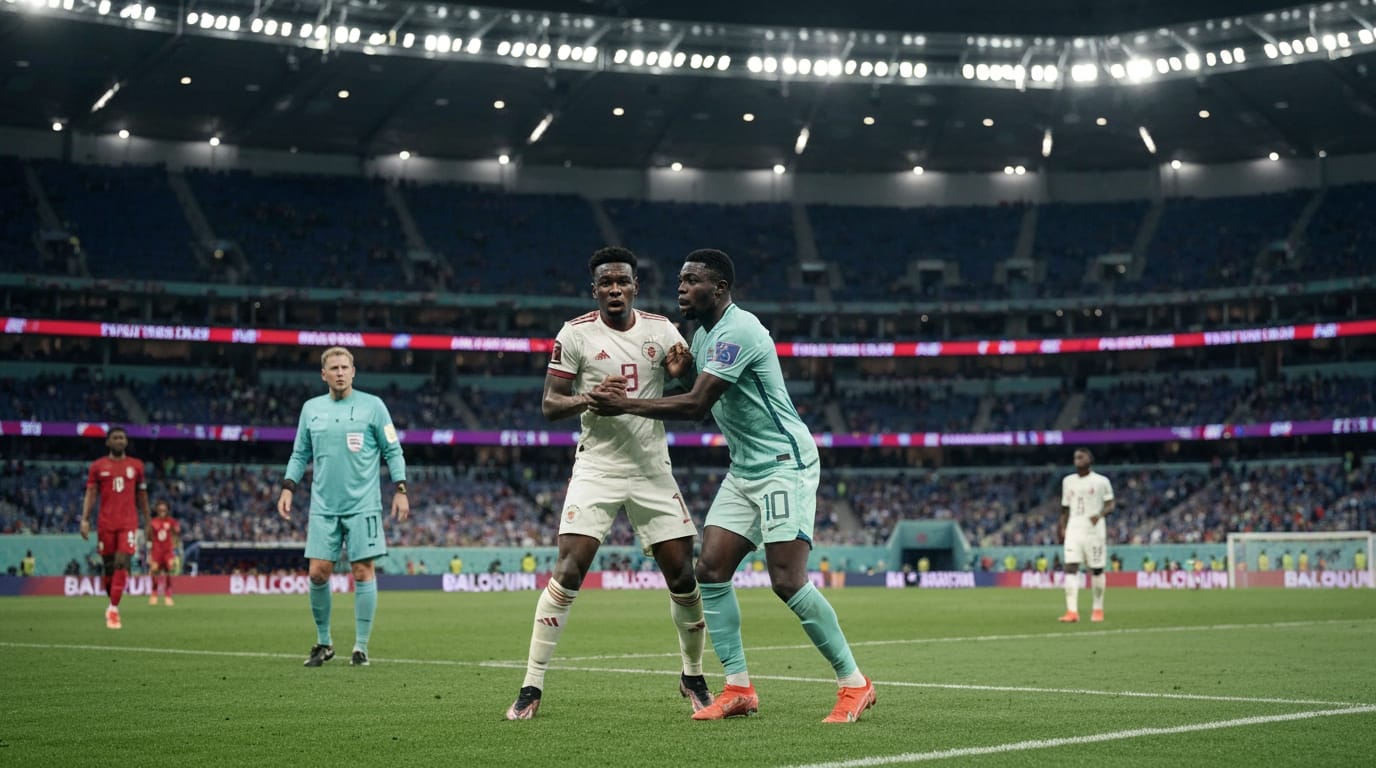
Amidst the broader political landscape, a specific incident has ignited a firestorm of debate, casting a shadow over the tournament's integrity: the Folarin Balogun controversy. During a fiercely contested Round of 32 match against Bosnia and Herzegovina, Folarin Balogun, the U.S. Men's National Team's prolific striker, received a red card for an awkward challenge, a decision that would have triggered an automatic one-game suspension for the critical Round of 16 match against Belgium. The sending-off was widely regarded as harsh, with many, including his USMNT teammates, arguing it was an accidental foul rather than an intentional act.
In an extraordinary turn of events, and despite FIFA's own rules generally prohibiting appeals against straight red cards, the disciplinary committee controversially lifted Balogun's suspension. This unprecedented decision, which allows Balogun to play against Belgium, came to light shortly after it was reported that President Donald Trump had personally called FIFA President Gianni Infantino to discuss the matter. Trump later publicly celebrated FIFA's decision on social media, thanking them for "reversing a great injustice."
The reversal has been met with significant outrage, particularly from the Belgian team, whose coach expressed astonishment and questioned the fairness of the ruling. Critics argue that the intervention undermines the integrity of FIFA's disciplinary process and sets a dangerous precedent for political interference in sports. While FIFA cited Article 27 of its disciplinary code, which allows for the suspension of sanctions, it offered no detailed public explanation for its decision, fueling speculation and concerns about transparency. Balogun remains on a one-year probation, meaning any similar infringement could see his original suspension reinstated.
FIFA's Delicate Balance: Navigating Politics and Integrity
The interwoven events surrounding the 2026 World Cup – from the complexities of hosting across three nations under a politically charged environment to the unprecedented reversal of a star player's suspension – place FIFA in a precarious position. The organization consistently champions a message of "Football Unites the World" and is mandated by its Code of Ethics to maintain political neutrality. Yet, the tournament's lead-up has repeatedly highlighted the difficulty of upholding this neutrality in practice, especially with the close relationship between FIFA's president and influential political figures.
The controversies surrounding immigration policies and the Balogun decision intensify scrutiny on FIFA's governance and its commitment to fair play. The perception of political pressure influencing judicial outcomes risks eroding public trust in the sport's governing body and its flagship event. The World Cup is a powerful platform, capable of fostering global connection, but it also becomes a stage where geopolitical realities and internal conflicts are amplified, challenging the ideal of sport as a realm separate from politics.
A Tournament Under Scrutiny
As the 2026 FIFA World Cup progresses, it promises to be a memorable spectacle of footballing talent and national pride. However, it also serves as a potent reminder of the ever-present entanglement of global sports with politics and power. The successes on the pitch will undoubtedly captivate audiences, but the backdrop of controversies, particularly those involving political influence over judicial matters and significant implications for international participation, ensures that this tournament will be remembered for more than just its goals and victories. The legacy of the 2026 World Cup will be measured not only by its sporting achievements but also by how it navigated, or succumbed to, the complex political currents of its time.