A Decade On: UK and Germany Forge New Strategic Partnership Post-Brexit
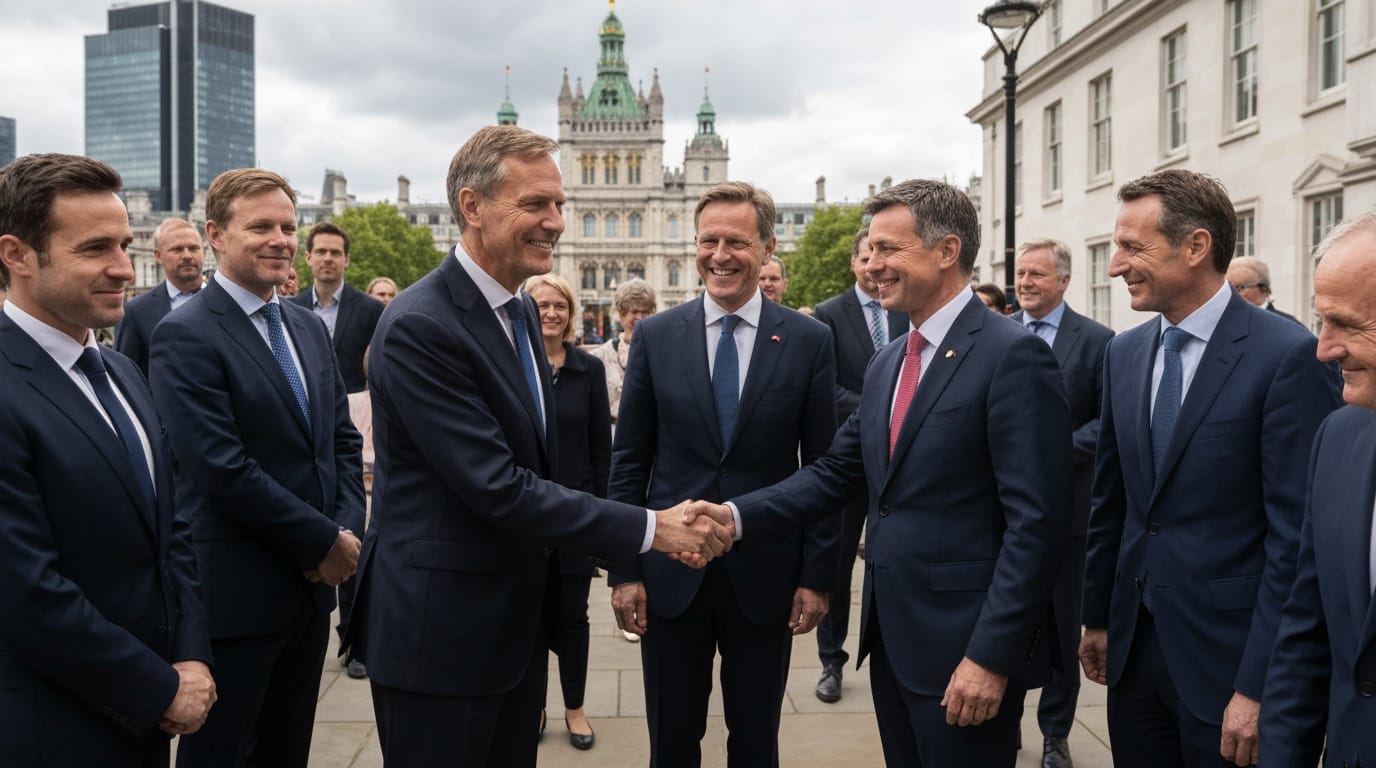
London, UK – Ten years after the United Kingdom's pivotal vote to leave the European Union, a new chapter is unfolding in its relationship with Germany. Once strained by the complexities of Brexit, relations between the two European powers have seen a significant diplomatic reset, culminating in the signing of the comprehensive Kensington Treaty in July 2025. This landmark agreement, championed by UK Prime Minister Keir Starmer and German Chancellor Friedrich Merz, signals a determined effort to move beyond past divergences and build a robust, future-oriented strategic partnership rooted in shared security interests and renewed cooperation across critical sectors.
The Lingering Shadow of Brexit: A Decade of Divergence
The immediate aftermath of the 2016 Brexit referendum cast a long shadow over UK-German relations. Germany, a staunch advocate of European integration and a close ally, viewed the UK's departure with "consternation," interpreting it variously as a "messy relationship break-up" and an act of "self-harm". German decision-makers, many with personal and academic ties to Britain, felt the distress acutely. Compounding this diplomatic friction were British actions perceived as "cherry-picking" during negotiations and a failure to fully honor commitments in the Withdrawal Agreement, including a "specific and limited" breach of international law, which further eroded trust.
Economically, the impact was substantial. Prior to Brexit, the UK was Germany's third-largest trading partner in 2016. By 2022, it had fallen out of Germany's top ten. The imposition of new trade barriers, divergent regulatory frameworks, and the cessation of free movement significantly hampered economic exchanges. Analysts estimate that by the end of 2025, Brexit had reduced the UK's Gross Domestic Product (GDP) by 6% to 8%, with a cumulative drag on trade, investment, and productivity. Small and medium-sized enterprises, in particular, faced increased burdens from customs declarations, conformity checks, and regulatory compliance. The deep institutional ties facilitated by EU membership, which once meant little need for specific bilateral structures, became "threadbare" following the UK's exit.
A Turning Tide: Diplomatic Reset and the Kensington Treaty
The gradual process of rapprochement began modestly with the administration of former UK Prime Minister Rishi Sunak, marked by the signing of the Windsor Framework. However, a more decisive shift occurred with the election of Sir Keir Starmer's Labour government in 2024, which explicitly pledged to "reset the relationship" with the European Union and strengthen ties with European allies. Starmer’s visit to Berlin in August 2024 served as a critical catalyst, initiating discussions that would eventually lead to a new bilateral treaty.
Despite a brief hiatus due to changes in the German government, the "Kensington Treaty," formally known as the "Treaty on Friendship and Bilateral Cooperation," was ultimately signed on July 17, 2025, in London by Prime Minister Starmer and Chancellor Merz. Both leaders hailed the agreement as a "historic day" and a "new chapter" for German-British relations. Described as a "first-of-its-kind: legally binding and comprehensive," the treaty and its accompanying 17-point action plan encompass a wide array of cooperation areas, from diplomatic and defense matters to economic, scientific, and people-to-people initiatives. This new framework is designed to institutionalize dialogue through biennial German-British summits and various ministerial meetings, aiming to re-establish the regular high-level contacts that were once a feature of their shared EU membership.
Pillars of Renewed Cooperation
The Kensington Treaty outlines concrete areas of collaboration, underscoring a strategic alignment driven by a recognition of common challenges, particularly in a volatile geopolitical landscape.
Defense and Security: A central tenet of the renewed partnership is deepened cooperation in defense. The treaty builds upon the "Trinity House Agreement on Defence," signed in October 2024, establishing a mutual assistance clause that commits both nations to aid each other in the event of an attack. Key initiatives include the joint development of a 2,000 km+ deep precision strike capability, cooperation on uncrewed aerial systems, and efforts to strengthen NATO's eastern flank. This enhanced defense partnership aims to boost European deterrence and defense capabilities over the coming decade.
Migration Management: Addressing the pressing issue of irregular migration, the treaty includes a Joint Action Plan on Migration. Germany has committed to introducing legislation to counter human smuggling operations facilitating illegal migration to the UK, a critical priority for the British government.
Energy and Climate: Both nations are collaborating on ambitious energy and climate projects, particularly focused on the North Sea. Plans include developing offshore hybrid interconnections, accelerating the development of hydrogen and CO2 infrastructures, and fostering green industrial cooperation. This builds on the 2023 Energy and Climate Partnership, leveraging the UK’s significant offshore wind and hydrogen resources and Germany’s industrial decarbonization goals.
People-to-People Connections: Recognizing the importance of cultural and societal ties, the treaty aims to bolster exchanges. Concrete measures include visa-free travel for German school groups visiting the UK and the establishment of a task force to explore and implement a direct rail link between the UK and Germany within the next ten years. Broader initiatives will facilitate mobility in education, science, and culture, building on existing strong cultural links such as town twinning arrangements and institutions like the Goethe-Institut.
Economic Realignment and Lingering Challenges
While trade and economic ties faced significant disruption post-Brexit, Germany remains one of the UK's largest trading partners. The 2020 Trade and Cooperation Agreement (TCA) and the 2023 Windsor Framework have provided new foundations for economic engagement. Encouragingly, bilateral trade reportedly increased by 1.4% last year, indicating a modest recovery from the initial post-Brexit downturn.
However, the broader economic ramifications of Brexit persist. UK firms continue to grapple with customs checks, complex rules of origin, and regulatory divergence that hinder seamless trade and investment flows. The German economy has expressed a desire for UK efforts towards a customs union or EU Economic Area membership to alleviate some of these barriers. The success and scope of the Kensington Treaty's economic provisions are, in part, contingent on the ongoing reset negotiations between the UK and the wider EU, as the spirit of cooperation on a bilateral level must navigate the complexities of the broader EU-UK relationship.
Conclusion
Ten years after the seismic Brexit vote, the relationship between the United Kingdom and Germany has demonstrably entered a new phase of deliberate engagement and strategic partnership. The Kensington Treaty, signed in 2025, represents a formal and comprehensive commitment to move beyond the post-Brexit estrangement, driven by shared geopolitical realities, particularly the evolving security landscape in Europe.
While the initial years post-Brexit were marked by economic friction and diplomatic distance, the proactive efforts of both governments, especially under the new UK leadership, have laid a solid foundation for renewed cooperation. From joint defense projects to climate initiatives and enhanced cultural exchanges, the treaty underscores a pragmatic recognition that close collaboration is not merely desirable but strategically essential.
Challenges remain, particularly concerning the broader UK-EU relationship and the long-term economic adjustments. However, the new framework provides a robust platform for addressing these issues. The UK and Germany are now actively building a resilient partnership, demonstrating a commitment to common values and interests that extend far beyond the immediate repercussions of Brexit, and contributing to the stability and prosperity of a changing European continent.


