The North's Champion Rises: Andy Burnham's Resurgence to the Brink of Number 10
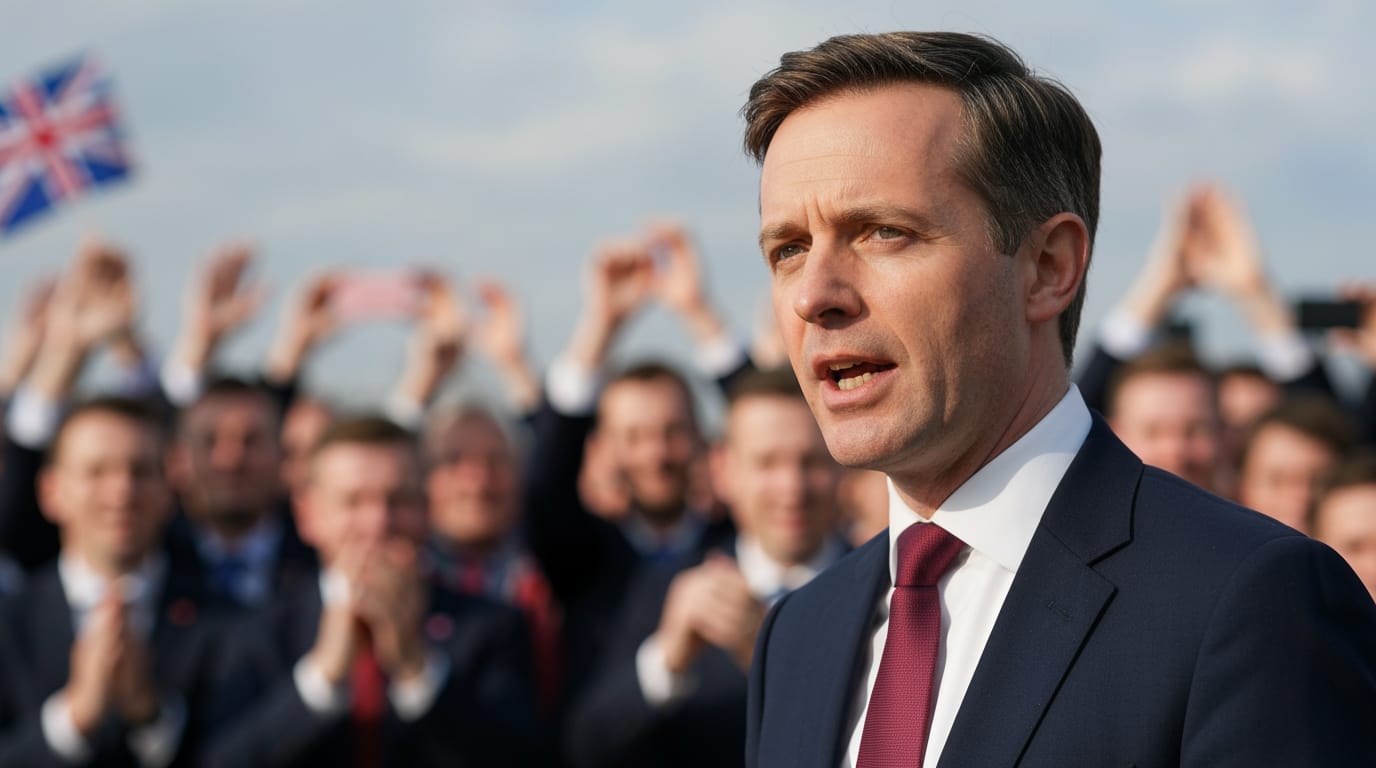
Andy Burnham has emerged as the commanding frontrunner to become the next Prime Minister of the United Kingdom, following the recent resignation of Keir Starmer. His strategic return to Westminster, marked by a decisive victory in the Makerfield by-election, signals a pivotal moment in British politics, propelling the former Mayor of Greater Manchester to the forefront of national leadership considerations. Often celebrated as the "King of the North," Burnham's ascent is not merely a party affair but represents a broader public yearning for a distinct brand of regional advocacy and what he terms "Manchesterism."
Burnham's journey to this prominent position has been decades in the making, charting a course from local government to the corridors of power, then back to regional leadership, only to return to the national stage with renewed vigor and widespread public appeal. His potential premiership would mark a significant shift, promising a focus on issues beyond the traditional London-centric political landscape and aiming to reconnect with communities that have long felt overlooked.
A Career Forged in the North
Born Andrew Murray Burnham in Aintree, Liverpool, in 1970, and raised in Culcheth, Cheshire, his roots are firmly planted in the working-class communities of England's North West. The son of a British Telecom engineer and a medical practice receptionist, Burnham's early life experiences, including the transformative impact of the 1989 Hillsborough disaster and the miners' strike, deeply influenced his political awakening. He joined the Labour Party at the age of 14 or 15, demonstrating an early commitment to political engagement.
Burnham pursued higher education at Fitzwilliam College, Cambridge, where he studied English. After initial forays into journalism and working as a researcher for Labour MP Tessa Jowell, he was elected as the Member of Parliament for Leigh in 2001, a traditionally safe Labour seat in his home region. His parliamentary career saw him rise through the ranks, serving in various ministerial capacities under Prime Ministers Tony Blair and Gordon Brown. These roles included Parliamentary Private Secretary to David Blunkett and Ruth Kelly, Minister of State at the Home Office, Chief Secretary to the Treasury, Secretary of State for Culture, Media and Sport, and ultimately, Secretary of State for Health from 2009 to 2010.
Despite his ministerial experience, Burnham twice sought the leadership of the Labour Party, in 2010 and again in 2015, coming fourth and second respectively. Following his second leadership bid, he served as Shadow Home Secretary under Jeremy Corbyn before making a strategic departure from Westminster politics.
The Manchester Experiment: A Mayoralty that Redefined a Career
In 2017, Andy Burnham made the significant decision to step away from national parliamentary politics to contest the newly created position of Mayor of Greater Manchester. This move proved to be a pivotal moment, allowing him to cultivate a distinct political identity and build a powerful platform centered on regional issues. He won the mayoral election decisively in 2017 and was subsequently re-elected with substantial majorities in 2021 and 2024, consistently winning every ward in Greater Manchester.
His tenure as Mayor has been characterized by a proactive approach to devolved powers and a strong commitment to local priorities. One of his most notable achievements is the implementation of the "Bee Network," an integrated public transport system that brought Greater Manchester's bus network back under public control for the first time in 40 years. This system, which integrates buses with trams and has plans to include local rail services by 2030, has been praised for providing a "London-style" transport solution and has seen a rapid growth in passenger numbers.
Burnham's vocal advocacy for greater regional autonomy earned him the moniker "King of the North," particularly during the COVID-19 pandemic when he publicly challenged the central government's perceived "London-centric" response. He championed devolution, arguing that transferring more power and resources to local governments is crucial for addressing inequalities and better understanding community needs. Beyond transport, his mayoralty focused on key issues such as ending rough sleeping, promoting economic regeneration—which has seen the city center boom—and transforming Greater Manchester into a greener city-region. While his mayoralty boasts significant successes, it has also faced scrutiny, notably regarding challenges in policing, such as the collapse of Greater Manchester Police into special measures, and the controversial abandonment of the Clean Air Zone.
"Manchesterism" Goes National: Policy Vision and Broad Appeal
Burnham's political philosophy, often dubbed "Manchesterism," centers on prioritizing "people and place before party." He advocates for a national political agenda that champions regions often neglected by Westminster, promising to scale up the policies and principles developed in Greater Manchester to benefit the entire UK.
At the core of his policy platform is a strong belief in public ownership and intervention to tackle the cost of living crisis. He advocates for bringing essential services such as energy, water, housing, and transport under public control. Allies suggest a focus on nationalizing parts of the water sector, starting potentially with companies like Thames Water, and eventually extending to energy transmission and supply companies. To alleviate financial burdens on households, he has proposed measures such as temporary rent freezes, reallocating levies from energy bills, and reducing rail fares, drawing parallels to his success in lowering bus fares in Greater Manchester. While aiming for significant public investment, Burnham has pledged not to increase income tax, national insurance, or VAT, and has even considered cuts to employer national insurance contributions and business rates for high-street establishments, offset by taxing online giants and speculative landlords.
He has consistently supported social care reform, proposing a "national care levy" to replace inheritance tax, aiming to provide free care for those most in need. Burnham is also an advocate for electoral reform, suggesting a national commission to explore alternatives to the current system. His progressive stances extend to supporting trans rights, criticizing harsh immigration policies, and calling for the UK to rejoin the European Union.
Burnham's public appeal is robust. He is widely perceived as an "amiable northern everyman," a strong communicator who can "speak human," and a "man of the people." Polling data consistently shows him as the most popular figure within the Labour Party, with 42% of Labour members preferring him as their leader, significantly ahead of other potential contenders. Across the general public, he is the preferred choice for next Labour leader and Prime Minister, indicating a broader resonance beyond party lines. This popularity, however, is not without its critics, who question the specific details and funding mechanisms for his ambitious policy proposals and have sometimes characterized his political evolution as "Captain Flip-flop."
The Path to Number 10: Opportunities and Obstacles
The current political climate, marked by Keir Starmer's resignation amid internal dissent and poor electoral performance, has created an opening for Burnham. Many within Labour view him as the party's best hope to reconnect with disaffected voters, particularly in the traditional northern heartlands and those who have gravitated towards parties like Reform UK. His recent by-election win in Makerfield, a constituency reflective of these demographics, is seen as crucial evidence of his ability to appeal to a broad base.
Burnham's return to Parliament has made him eligible to contest the Labour leadership, and there are calls from some within the party for him to assume leadership without a contest. However, challenges remain. Skeptics question whether his "King of the North" appeal can effectively translate into a national mandate across diverse regions of the UK. Concerns persist about the specificities of his policy platforms, particularly the financial implications of his proposed public spending and nationalization plans. Furthermore, the significant difference between governing a city-region of three million people and leading a country of 70 million presents a considerable test of his leadership capabilities. His past failures in leadership bids also serve as a reminder of the complexities of national party politics.
Ultimately, Andy Burnham stands at a critical juncture. His unique blend of working-class background, extensive ministerial experience, and a successful, high-profile mayoralty has positioned him as a compelling and popular figure. With a clear vision to decentralize power and prioritize public services, the coming weeks will determine if this northern champion can successfully navigate the national political landscape and secure the highest office in the land, ushering in a new era for British politics.


