A Tale of Two Energies: China Champions Renewables as U.S. Grapples with Coal's Sunset
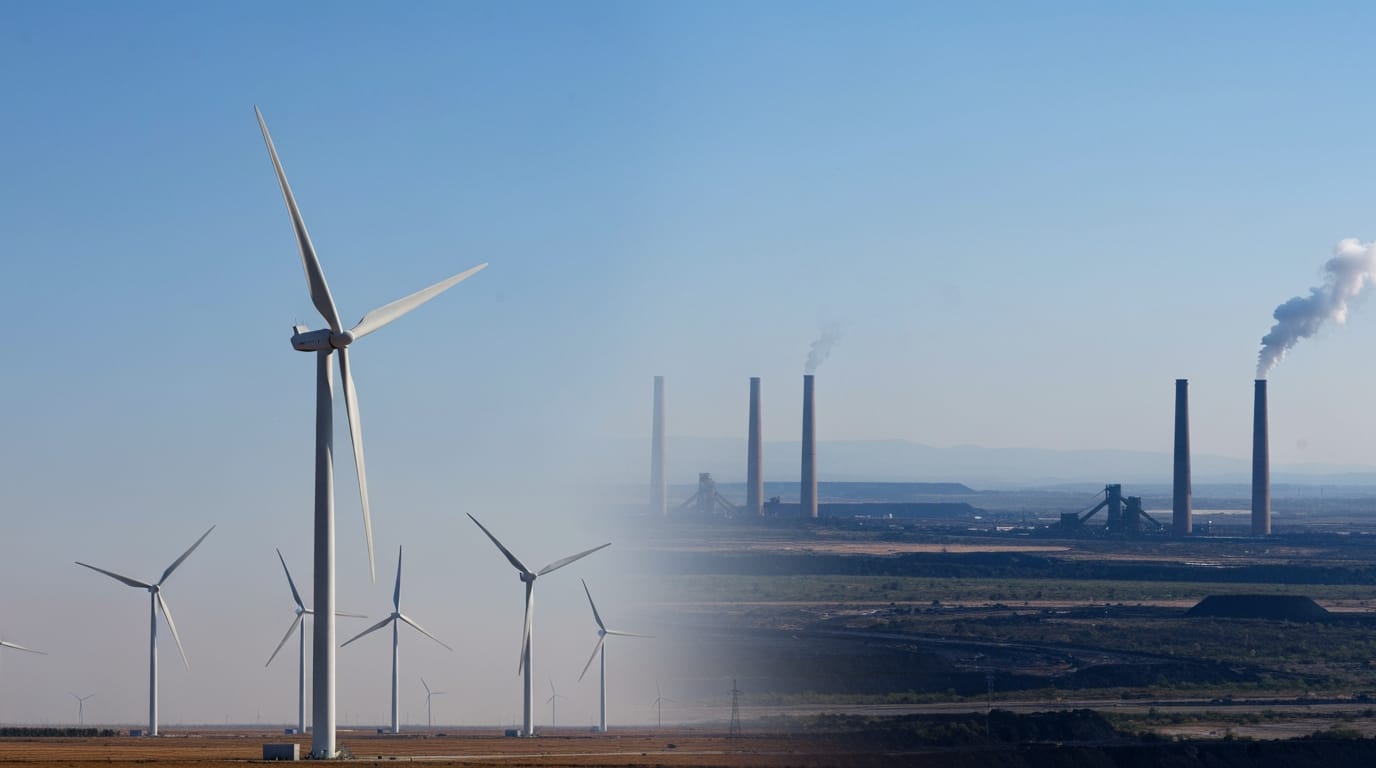
In a dramatic global energy narrative, China has firmly positioned itself as a titan of renewable energy, channeling unprecedented investments into solar, wind, and hydropower, while the United States, under former President Donald Trump's administration, made concerted efforts to revive its struggling coal industry. This stark divergence in energy strategies by the world's two largest economies has profound implications, not only for their respective economic futures and environmental footprints but also for the trajectory of global climate action and international energy markets. China's proactive embrace of clean energy technologies has not only reduced its reliance on fossil fuels but has also transformed the sector into a significant economic engine, while efforts to reinvigorate coal in the U.S. faced persistent market and environmental challenges.
China's Green Colossus: A Blueprint for Renewable Dominance
China's commitment to renewable energy has been nothing short of transformative, evolving into a central pillar of its economic growth and industrial policy. By 2020, China had pledged to invest 2.5 trillion yuan (approximately £292 billion) in renewable power generation, a strategic move projected to create over 13 million jobs within the sector. This ambitious plan rapidly established China as the world's largest investor in renewable energy, accounting for 45% of global investments in 2017 alone, totaling $126.6 billion. The scale of deployment is equally staggering; in 2024, China installed more wind turbines and solar panels than the rest of the world combined.
The economic dividends of this green revolution are substantial. Analysis indicates that China's clean energy industries contributed a record 15.4 trillion yuan ($2.1 trillion) in 2025, constituting 11.4% of the nation's Gross Domestic Product (GDP)—a figure comparable to the entire economies of Brazil or Canada. These sectors were crucial in meeting China's economic targets, delivering an estimated 40%, 25%, and 37% of all GDP growth in 2023, 2024, and 2025, respectively. Clean energy's contribution to China's investment growth in 2025 exceeded 90%, underscoring its pivotal role in the national economy. The robust manufacturing base, producing the majority of the world's solar panels, wind turbines, and batteries, has also drastically reduced the cost of renewable energy technologies, making clean electricity the "cheapest electricity in history" in many regions. This aggressive development not only addresses domestic energy demand, with wind and solar capacity additions recently doubling that of the rest of the world combined, but also fosters significant export markets, particularly to the Global South.
Trump's Bid to Revive Coal: A Fight Against Market Forces
In stark contrast, the Trump administration pursued policies aimed at bolstering the ailing U.S. coal industry, a sector in long-term decline due to market forces, environmental regulations, and the competitive rise of natural gas and renewables. Throughout his presidency, Donald Trump repeatedly vowed to bring back coal jobs, blaming environmental regulations from previous administrations for the industry's woes. In April 2025, President Trump signed several executive orders designed to support coal, including designating it as a critical mineral, lifting barriers to coal mining on federal lands, and rescinding policies that steered the U.S. away from coal production. Efforts were made to expedite mining permits, extend the lifespan of coal plants, and exempt some from Environmental Protection Agency (EPA) rules. The administration also allocated significant funds, including $625 million in 2025, for coal-fired power plants, with $350 million designated for modernization and $175 million for projects intended to provide affordable energy to rural communities.
Despite these governmental interventions, the coal industry continued to face significant headwinds. Coal production and related jobs fell by 26.5% and 18.2% respectively between the year before Trump's inauguration and the last year of his first term. The primary drivers of this decline were economic: the abundance of cheap natural gas and the rapidly falling costs of renewable energy made coal economically uncompetitive. Market forces proved more powerful than policy directives, with utilities increasingly opting for cleaner, more affordable energy sources. By 2024, coal-fired resources accounted for only 15% of total U.S. electricity generation. Even with directives to keep aging coal plants operational, these decisions often proved costly for consumers, incurring millions in extra expenses for maintenance and staffing. Critics highlighted that such policies not only used taxpayer money to prop up an expensive energy source but also raised concerns about public health due to increased emissions.
Divergent Paths: Economic Imperatives and Environmental Consequences
The contrasting energy policies of China and the U.S. reflect differing economic priorities and environmental philosophies. For China, the aggressive pivot to renewables is not merely an environmental endeavor but a strategic economic play. The profitability of its renewable sector has become a key driver of its national economy, fostering innovation, creating millions of jobs, and establishing global market dominance in clean energy technology. This has allowed China to meet a significant portion of its electricity demand growth with clean generation, actively displacing fossil fuels and reducing emissions.
Conversely, the Trump administration's support for coal was rooted in a desire to protect traditional industries and jobs, often overlooking the escalating economic disadvantages of coal compared to emerging energy sources. Efforts to roll back environmental regulations, such as weakening limits on mercury and other toxic emissions from coal plants, faced strong opposition and legal challenges, and were criticized for their potential adverse impacts on public health and the environment. The continued operation of older, less efficient coal plants not only proved expensive but also contributed to higher greenhouse gas emissions in the U.S., even as global emissions were being offset by China's renewable expansion.
Global Reverberations: Climate, Markets, and Geopolitics
The divergent energy strategies of these two global powers carry significant geopolitical and environmental ramifications. China's ascent as the leading producer and exporter of clean energy technologies gives it considerable leverage in global energy supply chains. Its investments in renewable energy projects worldwide, particularly through initiatives like the Belt and Road Initiative, are reshaping the global energy landscape and accelerating the adoption of clean energy in many developing nations. This dominance, however, has also spurred concerns in the U.S. regarding over-reliance on Chinese supply chains and potential national security risks, leading to efforts to diversify and localize clean energy manufacturing.
From a climate perspective, China's massive deployment of renewables has a substantial impact on global efforts to combat climate change. While China remains the world's largest carbon emitter, its rapid growth in clean energy capacity is crucial for global decarbonization goals. The U.S. strategy under Trump, which included withdrawal from the Paris Agreement and actions perceived as hostile to clean energy, created a vacuum in climate leadership that China readily filled. The differing approaches highlight a broader tension between prioritizing economic competitiveness and environmental sustainability, influencing international cooperation on climate action and the pace of the global energy transition.
The Shifting Sands of Global Energy
The contrasting energy policies of China and the United States underscore a fundamental shift in the global energy paradigm. China's strategic embrace of profitable renewables has established it as a formidable force in the clean energy economy, driving innovation, creating wealth, and influencing global energy markets. Its investments and technological advancements are making clean energy increasingly accessible and affordable worldwide. Meanwhile, despite dedicated efforts from the Trump administration, the U.S. coal industry continued its decline, struggling against powerful economic currents favoring cleaner and more cost-effective alternatives. This divergence illustrates a broader global trend: the accelerating transition towards a clean energy future, driven by both economic opportunity and environmental necessity, with China firmly at the forefront of this transformation.