The Double-Edged Promise: Unpacking Advanced Recycling's Role in a Circular Future
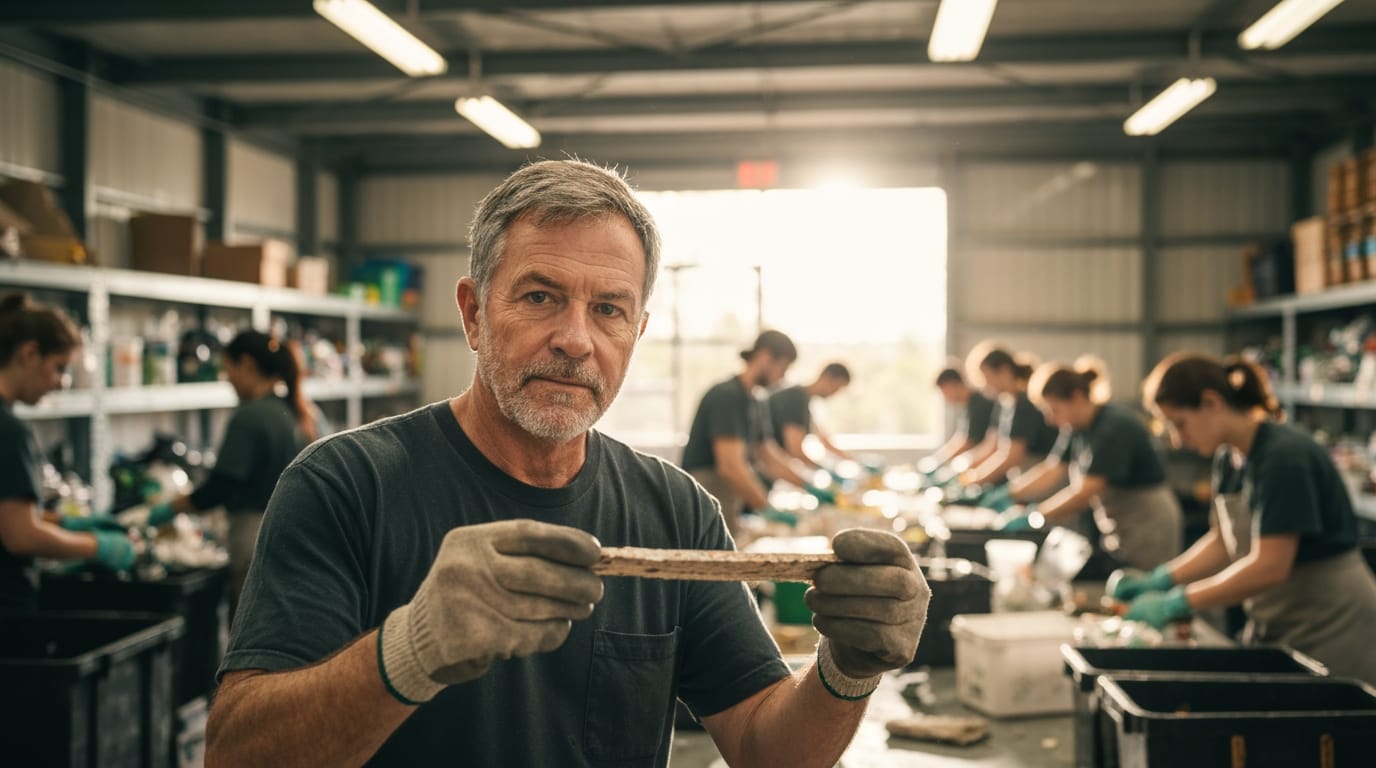
The global plastic waste crisis continues to escalate, with mountains of discarded materials overwhelming landfills and polluting natural environments. Traditional mechanical recycling, while vital, struggles to cope with the sheer volume and diversity of plastic waste, particularly mixed, contaminated, or multi-layered plastics. In this challenging landscape, "advanced recycling," often referred to as chemical recycling, has emerged as a purported game-changer, promising to revolutionize how humanity manages its plastic footprint by breaking down polymers to their molecular building blocks. However, this innovative approach is not without its skeptics, raising critical questions about its environmental impact, economic viability, and ultimate effectiveness in fostering a truly circular economy. The discourse around advanced recycling is a complex tapestry of technological optimism and environmental caution, highlighting a pivotal moment in the quest for sustainable waste management.
The Dawn of Molecular Transformation: A Solution for Hard-to-Recycle Plastics
Advanced recycling technologies represent a significant departure from conventional mechanical recycling, which physically processes plastics by sorting, shredding, washing, and melting them. Mechanical methods often lead to a degradation of material quality with each cycle, limiting their use in high-value applications and making them unsuitable for heavily contaminated or mixed plastic streams. This is where advanced recycling aims to intervene. It encompasses a suite of processes, including pyrolysis, gasification, depolymerization, and solvolysis, designed to chemically break down plastics into their constituent monomers or hydrocarbon feedstocks.
The primary appeal of these molecular transformation techniques lies in their ability to handle plastics that mechanical recycling largely cannot. Mixed plastic waste, films, and multi-layered packaging, often deemed "unrecyclable," can theoretically be processed by advanced methods. The output of these processes is touted as "virgin-like" material, capable of being used in high-quality applications, including food-contact packaging, without the quality degradation seen in mechanical recycling. This capability is crucial for achieving a circular economy, where materials are continuously reused and recycled, reducing reliance on finite virgin resources. Promoters argue that by converting waste plastics into valuable chemicals and fuels, advanced recycling offers an alternative to incineration and landfilling, thus reducing overall waste and associated emissions. Technologies like pyrolysis, which heat plastics in an oxygen-free environment to produce oils, carbon black, and gas, and gasification, which converts mixed waste into synthesis gas (syngas), are at the forefront of this innovation.
The Shadow of Scrutiny: Environmental and Economic Hurdles
Despite the promising narrative, advanced recycling faces considerable scrutiny, with environmental groups and researchers raising significant concerns about its real-world benefits and potential drawbacks. A major point of contention centers on the energy intensity of many advanced recycling processes. Pyrolysis and gasification, for instance, require substantial amounts of energy to reach the high temperatures necessary for breaking down plastic polymers. If this energy is sourced from fossil fuels, the climate benefits can be diminished, or even negated. Some studies have indicated that certain chemical recycling methods can have a higher climate impact than landfilling plastics or even producing virgin plastic.
Furthermore, critics highlight that advanced recycling facilities can generate hazardous air pollutants, such as dioxins and benzene, and produce considerable quantities of hazardous waste. The use of toxic solvents in some processes also adds to environmental concerns. A significant debate revolves around the classification of the outputs: while proponents emphasize the creation of new plastic, a substantial portion of the output from processes like pyrolysis and gasification is often fuel (plastic-to-fuel) rather than feedstocks for new plastic. Environmental advocates argue that converting plastic waste into fuel, which is then burned, is akin to incineration and does not constitute genuine recycling, contributing to fossil fuel consumption and carbon emissions. Research has also shown low material retention rates in some processes, with only a small percentage of the input plastic ultimately being reformed into new plastic.
Economically, advanced recycling technologies face an uphill battle. The capital costs associated with building and operating these sophisticated facilities are substantial. This often makes them less cost-competitive than established mechanical recycling methods. Consequently, chemically recycled products can carry a price disadvantage compared to virgin materials unless driven by strong market demand, policy mandates, or significant premiums for recycled content. While investments are growing, many advanced technologies remain in developmental stages, grappling with challenges of commercial scale and consistent operation. Securing a consistent and clean feedstock supply also presents logistical and economic hurdles.
Bridging the Gap: Policy, Infrastructure, and Integrated Innovation
Navigating the complexities of advanced recycling necessitates a multi-pronged approach that addresses both its technological potential and its inherent challenges. Policy plays a critical role in shaping the trajectory of these technologies. Extended Producer Responsibility (EPR) schemes, which shift the financial and operational burden of managing post-consumer waste from municipalities to product manufacturers, are gaining traction globally. Studies demonstrate that well-designed EPR programs can significantly boost recycling rates by incentivizing producers to design more recyclable products and funding improved recycling infrastructure. However, regulatory clarity is paramount; the lack of a universal definition for "recycling" in the context of advanced methods creates ambiguity and policy fragmentation across different regions, hindering large-scale implementation. Efforts to classify advanced recycling outputs consistently, distinguishing between plastic-to-plastic and plastic-to-fuel, will be crucial for transparent environmental accounting and policy development.
Technological advancements beyond the core chemical processes are also vital. The efficiency and precision of waste sorting are being revolutionized by artificial intelligence (AI) and robotics, which can identify and separate materials with unprecedented accuracy. Improved sorting reduces contamination in feedstock, which is often a significant challenge for advanced recycling processes and can impact their efficiency and environmental footprint. Scaling these technologies is not merely a chemical engineering feat but a "systems engineering challenge," requiring integrated solutions across the entire value chain, from feedstock collection and preprocessing to output purification and market integration. This holistic view includes developing infrastructure for logistics and transportation of waste and recycled materials, ensuring reliable supply chains, and fostering market demand for recycled content.
The Path Forward: Balancing Ambition with Responsibility
Advanced recycling presents a compelling, albeit complicated, proposition in the global effort to manage plastic waste. It offers a potential avenue to divert challenging plastic streams from landfills and incinerators and to create high-quality recycled content, thereby supporting a circular economy. However, it is not a standalone solution or a "silver bullet." The enthusiasm for these new technologies must be tempered with rigorous scientific assessment, transparent reporting, and careful consideration of their full life cycle environmental impacts.
To ensure advanced recycling becomes a valuable component of a sustainable future rather than a "big bluff," several principles must guide its development and deployment. First, a clear hierarchy of waste management strategies must be upheld, prioritizing waste reduction and reuse, followed by mechanical recycling, and then advanced recycling for materials that cannot be handled by other means. Second, robust regulatory frameworks are needed to define genuine recycling, minimize hazardous emissions, ensure safe handling of byproducts, and prevent greenwashing. Third, continuous innovation must focus on improving energy efficiency, reducing environmental footprint, and increasing material yields of advanced recycling processes. Finally, economic models must evolve to make advanced recycling competitive, potentially through policy incentives that internalize environmental costs and create strong market demand for high-quality recycled materials.
The future of recycling is likely to be a diverse ecosystem of interconnected technologies, with advanced recycling playing a complementary, rather than dominant, role alongside strengthened mechanical recycling and, most importantly, fundamental shifts towards reduced consumption and innovative product design. Only through a balanced and integrated approach can the promise of molecular transformation genuinely contribute to a cleaner, more circular planet.