Afghan Women's Football Team Forges Path of Defiance on International Stage
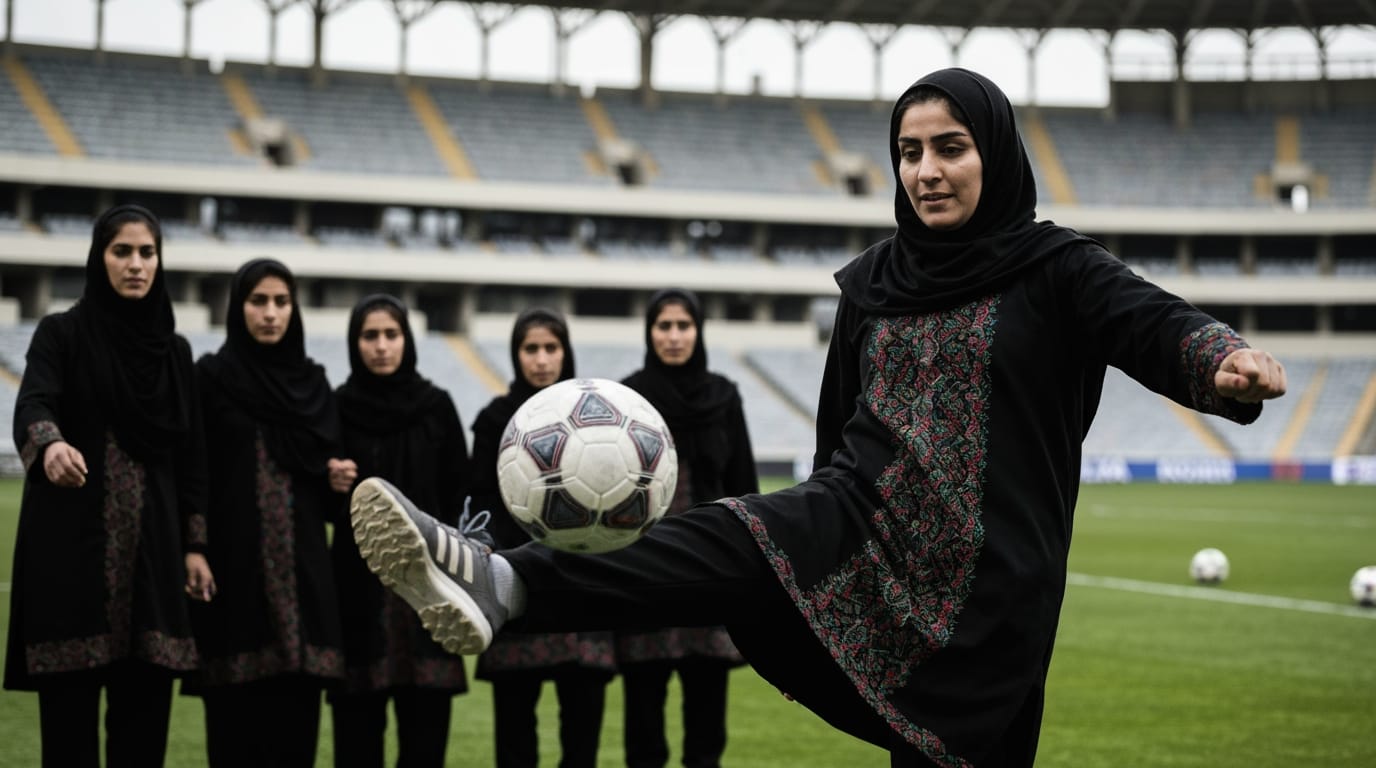
In a powerful demonstration of unwavering spirit and resilience, Afghan women footballers have marked a historic return to the international stage, competing in a FIFA-organized tournament in Morocco. Their participation, under the banner of "Afghan Women United," transcends the sport itself, serving as a poignant statement against the Taliban's sweeping ban on women's athletics and a beacon of hope for women's rights globally. From their forced exodus in 2021 to their recent competitive matches, these athletes embody an indomitable will to play, inspire, and reclaim their voices.
The Genesis of a Dream: Early Hopes and Inherent Challenges
The Afghan women's national football team first took shape in 2007, born from grassroots efforts to establish organized women's sports within the country. In a nation where women's participation in football had traditionally been non-existent, the team quickly became a potent symbol of emerging opportunities and progress for Afghan females. They made their official international debut in 2010 at the SAFF Women's Championship in Bangladesh, marking a significant step for women in Afghan society. Key figures like former captain Khalida Popal played a pivotal role in the team's formation and its initial recognition, navigating societal norms and establishing a foundation for female athletes. However, even during this period of growth, the path was fraught with difficulties. Female players routinely faced prejudice, and the broader environment presented significant challenges, underscored by a 2019 FIFA ban on the former president of the Afghanistan Football Federation for abusing his position and sexually abusing female players. This incident highlighted the deep-seated issues and grave risks that Afghan women athletes contended with even before the dramatic political shifts of 2021.
The Fall and Forced Exodus: A Scramble for Safety
The landscape for women's football in Afghanistan drastically changed following the Taliban's rapid takeover of the country in August 2021. With the re-establishment of their regime, the Taliban swiftly imposed draconian rules, including an outright ban on women's participation in sports and various other public spheres. This sudden reversal of rights plunged the female footballers into immediate peril. As well-known athletes, they faced direct threats of retaliation and persecution, forcing them to make the harrowing decision to flee their homeland. Coordinating with international bodies and authorities from multiple countries, former captain Khalida Popal, alongside FIFPro, became instrumental in orchestrating the urgent evacuation of over 150 athletes and their families, a desperate scramble for safety amid the chaos of the U.S.-led withdrawal. This mass exodus saw many players resettling as refugees in Australia and various European nations, leaving behind their homes but carrying with them the dream of continuing their athletic careers.
Rebuilding and Advocacy in Exile: A New Front
Dispersed across different continents, the exiled Afghan women footballers refused to abandon their passion or their role as advocates for women's rights. In their new host countries, particularly in Australia, many players began the arduous process of rebuilding their lives and their football careers. In Melbourne, for instance, a significant number of players regrouped, joining local football clubs and participating in state leagues by March 2022. These efforts, while providing a sense of community and purpose, also allowed them to continue speaking out against the injustices faced by women back home. The Afghan Women's National Football Team, though no longer officially recognized by the Taliban-controlled Afghan Football Federation, transformed into a powerful international symbol of courage and resistance for millions of women and girls. Their public appearances and continued engagement with the sport served as a constant reminder of the human cost of the Taliban's policies and the universal right to play and pursue one's dreams.
A Global Stage Reclaimed: The Rise of Afghan Women United
A pivotal moment arrived in May 2025 when FIFA, the global governing body of football, approved a dedicated refugee team framework. This initiative was designed to support Afghan women's football in exile, critically bypassing the need for recognition from the Taliban-aligned federation. Under this new framework, a composite team, aptly named "Afghan Women United," was formed, drawing from approximately 70 eligible players residing in diaspora communities. The team, coached by Pauline Hamill, represented a collective effort to formally re-enter international competition.
Their historic return to the global stage occurred in October 2025 at the FIFA Unites: Women's Series tournament in Morocco. The tournament, originally scheduled for the United Arab Emirates, was relocated to Morocco due to visa denials for the team, highlighting the persistent logistical and political hurdles they face. Afghan Women United competed against national teams from Chad, Tunisia, and Libya. Their first match, a 6-1 loss to Chad on October 27, 2025, was nevertheless celebrated as a triumph, signifying not just a return to play but a defiant act of reclaiming their right to participate. The team went on to secure their first international victory with an emphatic 7-0 win over Libya, further solidifying their presence and capabilities. Captain Fatima Haidari articulated the team's profound pride and gratitude for the opportunity, while goalkeeper Fatima Yousufi powerfully described their return as "a powerful slap to the Taliban's face," asserting their indomitable spirit.
Beyond the Scoreboard: A Message of Unbreakable Will
The journey of the Afghan women footballers, culminating in their recent international matches, stands as a profound testament to resilience and empowerment. Their story resonates far beyond the confines of the football pitch, serving as a powerful message to the international community about human rights and the critical importance of advocating for those whose voices have been suppressed. FIFA President Gianni Infantino lauded their participation as a "beautiful story" of resilience and representation, acknowledging the broader impact of their presence.
Afghan Women United is more than just a football team; it is a symbol of an ongoing fight for the fundamental rights of women in Afghanistan. Through every pass, every goal, and every moment on the field, these athletes remind the world that dreams cannot be easily extinguished, and the will to live freely and pursue one's passions is an unbreakable force. Their mission extends beyond competitive success, aiming to inspire a new generation and ensure that the world does not forget the struggles, sacrifices, and enduring spirit of Afghan women.