Africa's Democratic Crossroads: Halting the Coup Contagion
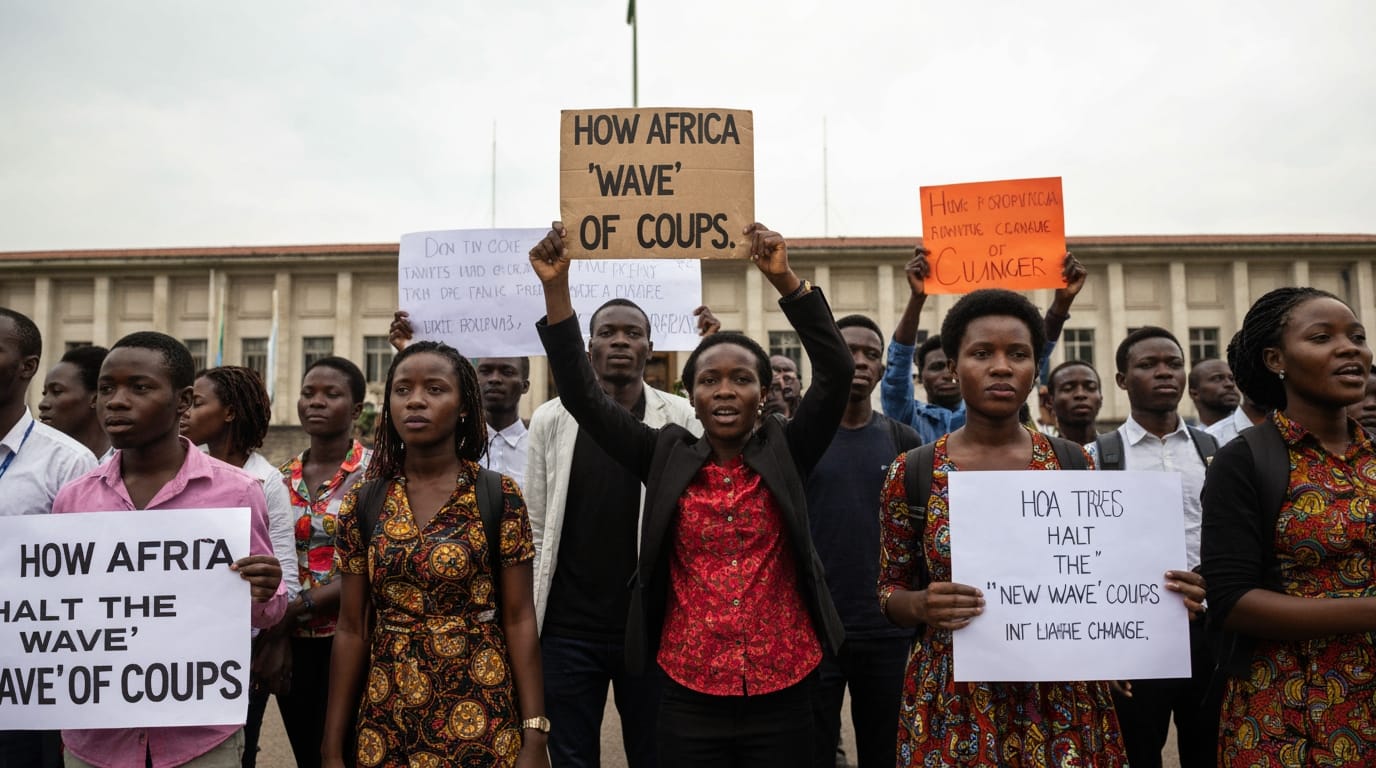
Across Africa, a disturbing resurgence of military coups is challenging democratic progress and threatening regional stability, forcing a critical re-evaluation of strategies to uphold constitutional governance. Since 2020, the continent has witnessed at least nine successful coups and seven additional attempted takeovers, marking a concerning reversal of democratic gains made in previous decades. This "new wave" is concentrated particularly in West Africa and the Sahel, where countries like Mali, Burkina Faso, Guinea, and Niger have seen their elected governments toppled, raising urgent questions about the underlying vulnerabilities and the efficacy of current prevention mechanisms. Halting this escalating trend demands a multi-faceted approach, addressing deep-seated internal grievances, strengthening regional responses, and fostering consistent international support for democratic principles.
The Alarming Resurgence and its Geographic Epicenter
The current surge in military interventions represents a stark departure from the period between 2000 and 2019, which saw a significant decline in coups across Africa. However, this progress has been undone since 2020, with military officers frequently appearing on television to announce the suspension of constitutions and the dissolution of elected bodies. Countries such as Mali (which experienced two coups), Burkina Faso (also two), Guinea, Niger, and Gabon have fallen under military rule, often amidst claims of insecurity, poor governance, and popular discontent. Sudan also saw a military takeover in 2021, and an unconstitutional succession in Chad in the same year underscored the fragility of civilian control. This concentration in the Sahel region, often dubbed the "coup belt," highlights areas particularly susceptible to instability due to complex security, economic, and political challenges.
Africa has a long history of coups, with over 200 successful and unsuccessful attempts since 1950, accounting for a disproportionately high number globally. The frequency of past coups can create a self-fulfilling precedent, increasing the likelihood of future military interventions. Leaders who seize power unconstitutionally often seek to expand their authority, perpetuating a cycle of instability and making them vulnerable to counter-coups.
Deep-Rooted Causes Fueling the Instability
The drivers behind this contemporary wave of coups are complex and multi-layered, combining internal socio-political fragilities with broader regional and international dynamics. Fundamentally, poor governance, characterized by corruption, a lack of transparency, and inadequate public service delivery, stands out as a primary catalyst. Citizens become disillusioned when their governments fail to provide basic public goods or address widespread grievances.
Economic hardship further exacerbates these frustrations. High unemployment rates, persistent economic inequalities, and a general lack of opportunities create fertile ground for unrest and make populations susceptible to the promises of military leaders. Many of the affected nations are classified as Least Developed Countries, highlighting a correlation between low development indicators and increased coup risk. The mismanagement of insurgencies and persistent insecurity, particularly from extremist groups in the Sahel, also plays a significant role, often cited by military plotters as a justification for their actions.
Within the military itself, politicization, a lack of civilian oversight, and internal discontent over issues like pay or perceived corruption can motivate takeovers. Furthermore, electoral malpractice, such as the manipulation of constitutional term limits by incumbent leaders, erodes trust in democratic processes and can create a vacuum that the military exploits. The perception that elections are merely tools for elites to gain power through fraudulent means also fuels public disgruntlement.
External factors and global power dynamics also contribute to the contagion. The self-reinforcing regional nature of coups suggests that instability in one country can inspire similar actions in neighboring states. Global competition and the influence of foreign powers, sometimes turning a blind eye to authoritarian tendencies to secure alliances, can further complicate efforts to uphold democratic norms. Inconsistent responses from regional, continental, and international bodies to past coups have also emboldened plotters.
The Devastating Impact on Development and Democracy
The consequences of military coups are far-reaching and profoundly detrimental to a nation's development and democratic aspirations. Economically, coups disrupt governance, undermine economic performance, and lead to sharp declines in GDP growth. The immediate disruption and uncertainty generate instability, often leading to sanctions from regional and international bodies, which further strain already fragile economies. For instance, following the 2023 coup in Niger, severe sanctions imposed by ECOWAS led to a significant decline in economic conditions. Such measures negatively impact credit ratings, foreign direct investment, and overall market confidence.
Beyond economics, military rule typically erodes democratic institutions, restricts civic space, and often leads to human rights abuses. Basic social services like healthcare and education are severely disrupted, with military takeovers interrupting supply chains, causing economic downturns that affect health outcomes, and leading to the destruction or occupation of educational facilities. For example, countries like Mali, Guinea, Burkina Faso, and Niger have seen declines across governance indices, including security, anti-corruption, participation, and human development, after coups. Support for democracy also tends to plummet as citizens realize that military rule often fails to deliver promised security improvements or address core grievances.
The cyclical nature of coups perpetuates instability, making future conflicts more likely. The closure of democratic channels for addressing grievances creates an environment where discontent festers, fueling conditions for further upheaval. Military rule, despite its promises, has consistently proven to be a poor shortcut to development, undermining the very accountability and responsiveness that stable governance requires.
Crafting a Robust Strategy for Prevention
Halting Africa's coup contagion requires a concerted, multi-pronged effort led by African nations, supported by regional organizations, and reinforced by consistent international cooperation. A fundamental step is to strengthen democratic institutions, ensuring transparent elections, establishing independent judiciaries, fostering a free press, and supporting robust civil society organizations. These elements are crucial for a system of checks and balances that prevents the concentration of power.
Good governance must be actively promoted by combating corruption, ensuring equitable resource distribution, and creating genuine opportunities for political participation. Addressing the underlying socio-economic drivers of discontent, such as poverty, inequality, and lack of jobs, is paramount, as these grievances are often exploited by coup leaders. Furthermore, the professionalization of militaries and the reinforcement of civilian control over armed forces are critical to ensuring that military institutions protect the nation rather than interfere in politics.
Regional and continental bodies, particularly the African Union (AU) and the Economic Community of West African States (ECOWAS), have a crucial role to play. The AU has a normative framework condemning unconstitutional changes of government, but its efficacy and consistency need improvement. These organizations must adopt a more proactive and forceful stance, shifting from merely reactive sanctions to preemptive diplomatic and, if necessary, military intervention. Recent actions, such as ECOWAS's rapid response to a foiled coup attempt in Benin in December 2025 with Nigerian military support, demonstrate the potential impact of a united front. ECOWAS's Protocol on Democracy and Good Governance needs to be consistently enforced, holding leaders accountable for violating democratic principles, including the manipulation of term limits. Strengthening early warning systems and conflict prevention mechanisms within these bodies is also vital. Collaboration with civil society organizations can further enhance the effectiveness of these efforts.
The international community's role should be one of consistent support for African-led initiatives, avoiding short-sighted geopolitical interests that can inadvertently legitimize authoritarian regimes. International partners should prioritize long-term goals of democratic stability and socio-economic development, tailoring programs to local needs and supporting the strengthening of democratic forces and civilian oversight.
Conclusion
The new wave of coups in Africa represents a significant challenge to the continent's democratic trajectory and its aspirations for stability and prosperity. While the causes are complex and varied, ranging from entrenched corruption and economic hardship to regional contagion and external influences, the path forward is clear: sustained commitment to good governance, robust democratic institutions, and addressing the socio-economic needs of citizens. Military rule has consistently proven to be a false promise, leading to further instability and hindering genuine development. By fostering stronger social contracts between citizens and their governments, enhancing the capacity and resolve of regional bodies like the AU and ECOWAS, and securing consistent, principled international support, Africa can collectively work to halt this alarming trend and ensure a future where constitutional order and democratic values prevail.


