Europe's Political Center Shifts Right as Far-Right Influence Grows
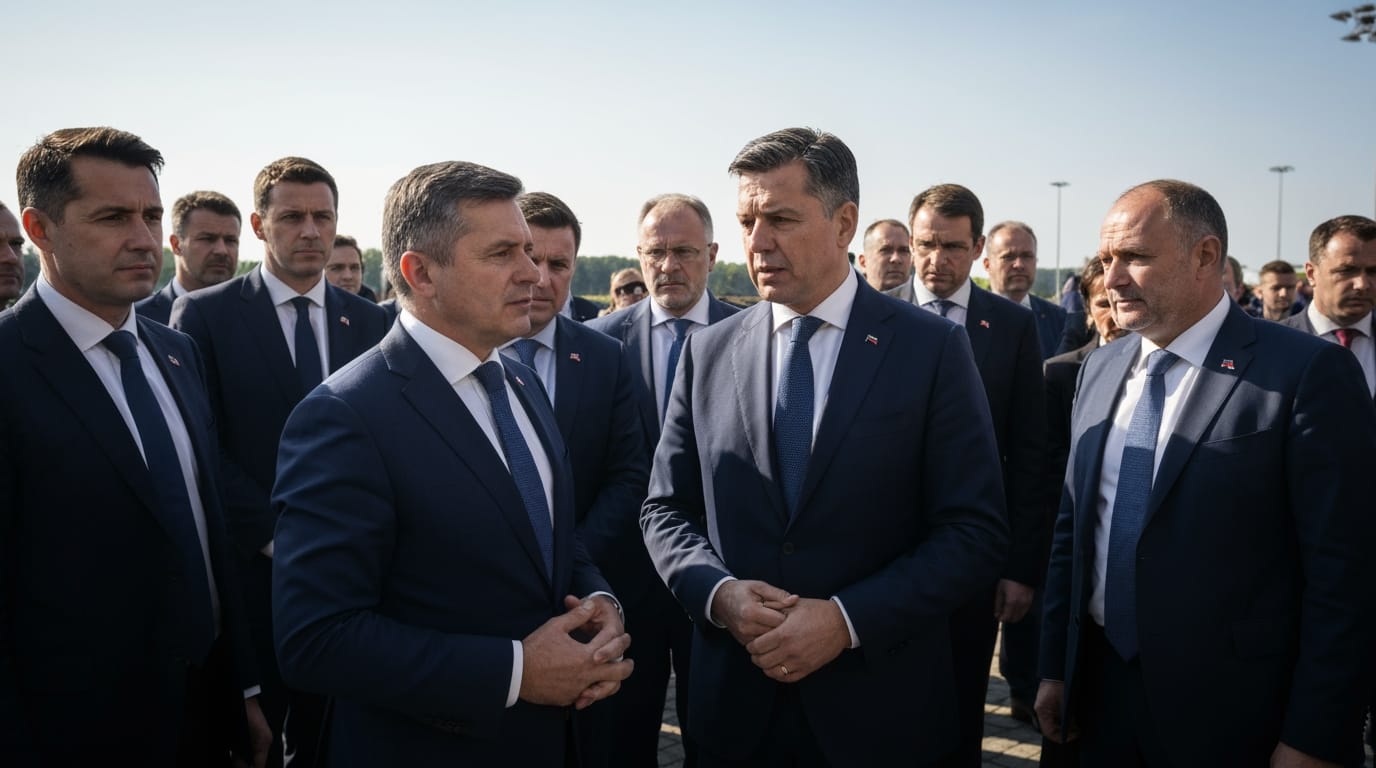
Europe's traditional center-right parties are increasingly navigating a complex political landscape defined by the significant rise of the far right, leading to unprecedented levels of reliance and ideological convergence. What was once considered the political fringe has transitioned into a powerful force, reshaping national governments and the broader European Union apparatus, and forcing mainstream conservative parties to adapt or risk further electoral decline. This dynamic is manifesting in coalition governments, policy shifts, and a redefinition of acceptable political discourse across the continent.
The ascent of far-right parties in Europe represents one of the most profound political transformations of the 21st century. After decades largely confined to the periphery following World War II, these movements have regained substantial traction across both Western and Eastern Europe. Recent electoral cycles underscore this dramatic shift, with far-right parties securing a notable 26% of seats in the European Parliament after the 2024 elections, demonstrating their growing influence within EU institutions. This surge is not merely confined to individual nations; far-right parties are now either leading governments or serving as crucial partners in ruling coalitions in at least seven EU member states, including Italy, Finland, Croatia, the Czech Republic, Hungary, the Netherlands, and Slovakia, with some estimates suggesting their presence in up to 14 of the 27 member states. Countries like Italy have seen the Brothers of Italy (FdI), with its neo-fascist roots, ascend to lead the government under Giorgia Meloni. In France, the National Rally consistently leads in polls, while Germany's Alternative for Germany (AfD) has seen its support double in recent years, reflecting its growing legitimacy. Even traditionally social-democratic nations like Sweden and Finland have witnessed far-right movements come closer to power than ever before.
Several intertwined factors have fueled this dramatic shift, making far-right narratives resonate with a broader electorate. Immigration stands out as a primary catalyst. The 2015 "migrant crisis," which brought a significant influx of refugees from the Middle East and Africa, intensified public anxieties about national identity, economic competition, and security. Far-right parties adeptly capitalized on these fears, positioning themselves as staunch defenders of national sovereignty and advocates for stricter border controls and the preservation of "traditional European values." Studies indicate that certain types of immigration, particularly low-skilled immigration from non-European countries, correlate with increased support for far-right parties. Beyond immigration, persistent economic discontent has played a significant role. The lingering effects of the 2008 financial crisis, subsequent austerity measures, and rising costs of living have exacerbated inequality and bred resentment toward established political parties. Far-right movements have skillfully exploited this dissatisfaction by promoting economic nationalism and promising to prioritize the needs of native citizens over international institutions. This anti-establishment sentiment, coupled with a broader distrust of traditional political elites, who are often perceived as detached from the concerns of ordinary citizens, has created fertile ground for populist appeals. Furthermore, a pervasive Euroscepticism, where many nationalist parties argue that EU governance undermines national sovereignty, adds another layer to their appeal. The decline of traditional left-wing parties has also contributed, leaving a void that far-right parties have been quick to fill, especially among voters who previously identified with a "popular, protective left."
This surging popularity has presented Europe's center-right parties with a strategic dilemma. Historically, mainstream conservative parties often sought to distance themselves from the far right. However, the current political reality, characterized by electoral challenges and the need to form viable governing majorities, has led to what some observers term the "creeping integration" of far-right parties into the political mainstream. This integration is evident in various forms of collaboration, from formal coalition agreements to informal parliamentary support. In Sweden, the conservative Moderates now rely on the parliamentary backing of the far-right Sweden Democrats to influence policy, a move once considered unthinkable. In Finland, the far right is an integral part of the new government coalition. At the European Union level, the European People's Party (EPP), the largest center-right bloc, has increasingly engaged with far-right groups, particularly since the 2024 European elections. This cooperation extends to national governments, where far-right representatives are now involved in major EU decisions through their participation in the European Council and the Council of the EU. A significant aspect of this reliance is the center-right's adoption of increasingly hardline stances on issues traditionally championed by the far right, most notably immigration. By mirroring some far-right positions, center-right parties aim to "claw back votes" from disillusioned segments of the electorate and prevent further defection to more extreme alternatives. This strategic adjustment, however, comes with its own set of consequences, as it effectively normalizes and legitimizes elements of the far-right agenda.
The growing reliance of the center right on the far right carries significant implications for policy, governance, and democratic norms across Europe. One immediate impact is the observable shift in policy agendas, particularly concerning immigration, climate action, and foreign policy, such as aid to Ukraine. Far-right ideas, once marginal, are increasingly shaping mainstream political discourse and legislative outcomes, as seen in the EU's New Pact on Migration and Asylum, which reflects a move towards harsher border control measures. This mainstreaming of nationalist and, at times, xenophobic ideas raises concerns about the erosion of the rule of law, the shrinking of civic space, and potential adverse effects on human rights and fundamental freedoms. The increased presence of far-right parties in government also grants them greater influence at the EU level, where they can impact decision-making processes in the European Parliament and potentially form blocking minorities in the Council of the EU if they gain power in larger member states like France. For center-right parties, this strategic accommodation presents a delicate balance: while it may offer short-term electoral gains or pathways to power, it also risks alienating their traditional base and could inadvertently bolster the long-term viability and legitimacy of the far right. The question remains whether adopting hardline stances on issues like migration will truly secure stable majorities or simply validate the far-right's platform, ultimately transforming the very nature of European conservative politics.
In conclusion, the European political landscape is in the midst of a profound transformation, with the center-right increasingly finding itself intertwined with the burgeoning influence of the far right. Driven by public anxieties over immigration, economic insecurity, and a general distrust of established institutions, far-right parties have transitioned from marginal players to indispensable political actors. This shift has led to an era where center-right parties, in their pursuit of power and electoral relevance, are often compelled to accommodate or even adopt elements of the far-right agenda, particularly on issues like migration. While this reliance facilitates new governing coalitions and policy directions, it also raises critical questions about the future of democratic governance, the rule of law, and the fundamental values that have long underpinned European integration. The dynamic interplay between the center-right and the far right is not merely a transient phase but a defining characteristic of contemporary European politics, with far-reaching consequences for the continent's future trajectory.


