Iran's Regime on the Brink: A Confluence of Crises Tests Four Decades of Theocratic Rule
TEHRAN – The Islamic Republic of Iran faces its most profound and multifaceted crisis since its 1979 inception, grappling with widespread domestic unrest, a collapsing economy, significant military setbacks, and an unprecedented leadership transition following the assassination of Supreme Leader Ayatollah Ali Khamenei. A perfect storm of internal and external pressures has converged, leading many analysts to question the long-term viability of the regime as it struggles to maintain control amidst escalating public defiance and a dramatically altered geopolitical landscape.
The Firestorm Within: Unprecedented Domestic Unrest
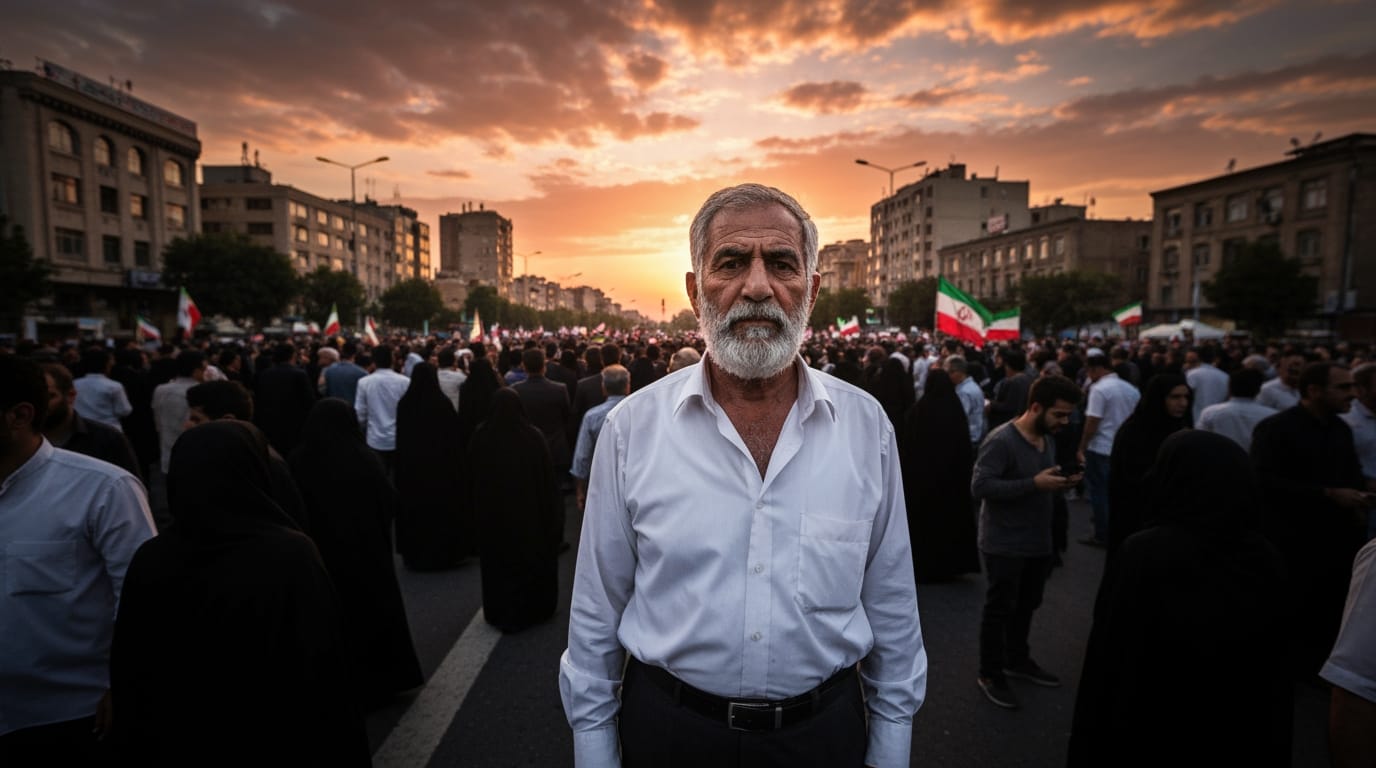
Since late December 2025, Iran has been engulfed by a wave of nationwide protests, described as the largest and most sustained since the 1979 revolution. What began as demonstrations against a collapsing currency and skyrocketing living costs rapidly escalated into overt calls for regime change across all 31 of Iran's provinces and over 200 cities. The protests were initially fueled by deep economic grievances, including the sharp depreciation of the Iranian rial and soaring inflation. However, they quickly broadened to encompass demands for fundamental political freedom and an end to the theocratic system itself, highlighting profound discontent that has been simmering for years.
The regime's response has been characterized by an increasingly brutal crackdown. Security forces have employed lethal force against demonstrators, resulting in mass casualties. Estimates for those killed range from 3,117 according to the Iranian government to as high as 36,500 by local health officials and rights organizations such as Amnesty International and Human Rights Activists News Agency (HRANA) by early February 2026. Tens of thousands of individuals, including children, have been arbitrarily arrested. To obscure the scale of the violence, authorities imposed a widespread internet blackout and telecommunications restrictions, a tactic previously used in 2019 and 2022 to suppress dissent. This severe repression, however, has not entirely quelled the uprisings, with a significant second wave of protests breaking out in late February 2026, led by university students.
A Battered Economy and Crippling Sanctions
At the heart of the domestic turmoil lies Iran's deepest and longest economic crisis in modern history. The Iranian rial has plummeted to unprecedented lows, trading at 1,750,000 rials to one US dollar by December 2025, making it one of the least valuable currencies globally. Inflation rates soared, reaching over 48.6% in October 2025 and 42.2% in December 2025, with food price inflation exceeding 70% in 2025. These figures have drastically impacted household budgets, pushing an estimated 22% to 50% of Iranians below the poverty line. Reports in early 2026 suggested that 57% of Iranians are experiencing some level of malnourishment, and unemployment for males aged 25-40 reached 50%.
The economic hardship is exacerbated by severe shortages of essential goods, water, and energy, culminating in electricity and gas disruptions. International sanctions, particularly those reimposed by the United States under President Donald Trump and the United Nations in September 2025, have severely limited Iran's oil exports and access to global markets. The UN reimposition of sanctions, triggered by non-compliance with the 2015 nuclear deal, specifically targets Iran's nuclear and missile production, alongside broader European and American restrictions. Domestic mismanagement, pervasive corruption, and structural inefficiencies within the Iranian economy are further compounding the crisis, leading to a "polycrisis" where multiple systemic failures interact and intensify.
External Pressures and Regional Retreat
Beyond its internal struggles, Iran has suffered significant blows to its regional standing and military capabilities. The year 2025 witnessed a "12-Day War" with Israel, during which precision strikes by Israeli and United States forces severely degraded Iran's nuclear facilities and military infrastructure. These attacks, described as "pre-emptive" by Israel due to Iran's proximity to obtaining a nuclear weapon, destroyed key elements of Iran's air defenses, missile forces, and nuclear sites, including those at Fordow, Natanz, and Isfahan. While Iran has shown determination to rebuild its nuclear program, with renewed activity at previously targeted sites and continued development of deeply buried facilities, its military capabilities have been undeniably weakened.
Concurrently, Iran's regional alliance network has unraveled. The fall of the Assad regime in Syria in late 2024 deprived Tehran of a significant ally. Furthermore, Israeli operations have "dismantled Iran's regional strategy piece by piece," with Hamas significantly degraded in Gaza and Hezbollah undermined in Lebanon. These setbacks have stripped the regime of its aura of invincibility, creating an unprecedented level of vulnerability. International pressure continues, with the US and its allies pushing for Iran-backed groups to disarm or integrate into state armed forces.
A New Era of Uncertainty: The Post-Khamenei Succession
The culmination of Iran's tumultuous period came on February 28, 2026, with the assassination of Supreme Leader Ayatollah Ali Khamenei amidst the ongoing conflict. This event plunged the Islamic Republic into a profound leadership vacuum, triggering an uncertain and potentially volatile succession process. An interim three-member leadership council, comprising President Masoud Pezeshkian, Judiciary Chief Gholam-Hossein Mohseni-Ejei, and senior cleric Alireza Arafi, assumed temporary powers to oversee the transition.
On March 9, 2026, the Assembly of Experts announced Mojtaba Khamenei, the late Supreme Leader's son, as the new Supreme Leader, following an election held between March 3 and 8. While the constitution outlines a process for succession, the timing and context of this transition — during wartime and amidst intense domestic and international pressure — introduces significant instability. Mojtaba Khamenei's elevation, despite reported reservations against a hereditary transfer of power, highlights the regime's attempt to project continuity while facing immense internal and external scrutiny. The future trajectory of the Islamic Republic under new leadership remains highly uncertain, with potential for further factionalism and shifts in policy.
Crossroads for the Islamic Republic
The convergence of these severe challenges has led to intense debate among international observers regarding the Iranian regime's stability. Some analysts contend that Iran has reached a strategic breaking point, with the combination of a devastated military, a shattered regional network, a crumbling economy, and a leadership vacuum creating an unprecedented threat to its existence. They argue that the sheer scale of the protests and the depth of public anger indicate a fundamental questioning of theocratic rule that cannot be easily suppressed.
However, others caution against premature predictions of collapse, pointing to the regime's history of resilience, its loyal security forces, and its proven willingness to employ extreme repression to maintain power. The rapid, albeit controversial, succession of Mojtaba Khamenei could be seen as an attempt to stabilize the leadership and demonstrate resolve. Nevertheless, the current confluence of crises presents an unparalleled test for the Islamic Republic. The stakes are immense, not only for the Iranian people but also for regional stability, with the potential for further escalation and unpredictable outcomes in a Middle East already fraught with tension.