German Regional Election Overshadowed by Iran War, Reshaping Political Landscape
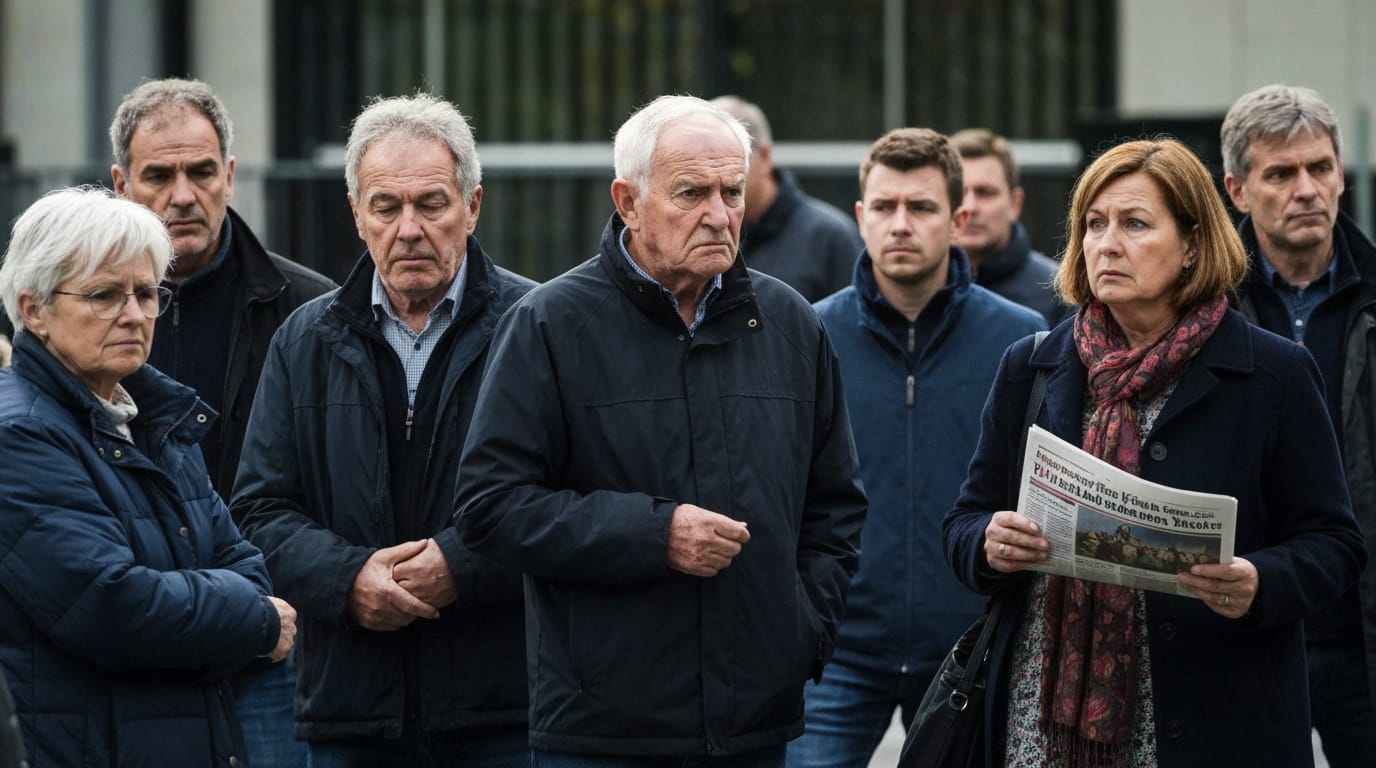
Stuttgart, Germany – A pivotal regional election in Baden-Württemberg on March 8, 2026, intended as a key barometer for Germany's domestic political currents, instead found itself dramatically eclipsed by the sudden eruption of conflict in the Middle East. Just one week prior to voters heading to the polls, military actions by the United States and Israel against Iran ignited a full-scale regional war, sending shockwaves across global markets and fundamentally altering the discourse in what was meant to be a locally focused campaign. The conflict swiftly escalated, blocking the vital Strait of Hormuz and triggering unprecedented spikes in energy prices, turning what local politicians had hoped would be a debate on Baden-Württemberg's future into an urgent national and international security referendum.
Crisis in the Middle East, Chaos at Home
The outbreak of hostilities, marked by the closure of the Strait of Hormuz – a choke point for 20% of global oil trade – and drone attacks on Qatari liquefied natural gas (LNG) facilities, immediately sent energy costs soaring across Europe. German motorists faced gasoline prices as high as €2.50 per liter, with diesel topping €2, representing a substantial increase. This direct economic blow, coupled with rapidly escalating geopolitical tensions, instantly relegated traditional regional campaign issues to the background. The established concerns over the transformation of the automotive sector, local job security, and infrastructural development in Baden-Württemberg, while still pressing, were suddenly viewed through the urgent prism of energy scarcity and international instability. The war starkly highlighted Germany's vulnerabilities as a highly industrialized nation dependent on stable global supply chains and affordable energy.
Economic Fallout and Voter Anxiety
Germany’s economy was already navigating a period of stagnation, grappling with persistent challenges since the 2022 energy crisis triggered by the Russia-Ukraine war. The pre-existing "permanent crisis mode" was exacerbated by the new Middle East conflict, which threatened to plunge the nation into deeper economic turmoil. Economists promptly warned of rising inflation and increased investment uncertainty, concerns that resonated deeply within industrial powerhouses like Baden-Württemberg, home to major automotive and mechanical engineering companies. This pervasive economic anxiety profoundly influenced voter sentiment. Surveys prior to the conflict had already indicated that security was a paramount concern for Germans regarding energy supply, a sentiment that amplified dramatically with the new crisis. Voters, already wary of economic hardship and a perceived decline in living standards, turned towards parties offering strong, albeit sometimes radical, responses to these emergent threats. The Alternative for Germany (AfD), for instance, capitalized on these fears, nearly doubling its support in the Baden-Württemberg election by campaigning on security and immigration issues and exploiting public anxieties over the deteriorating economy. This surge reflected a broader public dissatisfaction with mainstream political responses to complex global and domestic challenges.
A Campaign Drowned Out
The regional election campaign, initially centered on local issues specific to Baden-Württemberg's diverse economy and social fabric, struggled to maintain relevance against the backdrop of an unfolding international catastrophe. Candidates from all parties found their carefully crafted messages on education, infrastructure, and regional economic development overshadowed by urgent questions about energy security, rising living costs, and Germany's role in a volatile world. Local media and analysts, instead of dissecting nuanced policy proposals, increasingly focused on the existential threat of deindustrialization and the potential for a deeper economic recession. Political rallies and town halls, meant to be platforms for local engagement, became venues for anxious discussions about global events. The ability of candidates to address and project competence on international security and economic stability suddenly became an unexpected, yet critical, measure of their leadership, irrespective of their regional mandate. The Greens, led by Cem Özdemir, ultimately secured a narrow victory, while the Christian Democratic Union (CDU) candidate Manuel Hagel aimed to regain control in the traditionally conservative state.
The Shifting Political Landscape
The outcome in Baden-Württemberg, where the Greens marginally surpassed the CDU, and the AfD made significant gains, is now being interpreted as a profound reflection of how global events can dictate domestic political fortunes. The election was widely seen as the first significant test for Chancellor Friedrich Merz's federal government, which has been grappling with a struggling national economy. The poor performance of the Social Democratic Party (SPD), a federal coalition partner, further underscored a broader disillusionment with established political forces. The substantial increase in support for the AfD, nearing 19% of the vote, illustrates a growing trend of voters seeking alternatives amid heightened insecurity, both economic and geopolitical. This result adds pressure on the "cordon sanitaire" – the traditional political consensus against cooperation with the far-right – and signals a potentially more fragmented and polarized political landscape across Germany. The federal government, therefore, faces not only the immediate challenge of navigating an international crisis but also the deeper task of restoring public confidence in its ability to shield German citizens from global shocks while addressing their everyday concerns.
Conclusion
The Baden-Württemberg state election of March 2026 will be remembered not for its local policy debates or regional political contests, but as a stark illustration of how rapidly and fundamentally global conflicts can reshape domestic political realities. The "Iran War" forced an abrupt and uncomfortable refocusing of the public agenda, exposing Germany's economic vulnerabilities and accelerating a shift in voter priorities towards security and stability. As Germany moves deeper into a year marked by multiple state elections, the overshadowing influence of international events and the growing public demand for decisive leadership on global crises are likely to continue to redefine the nation's political landscape, challenging traditional party structures and potentially ushering in a new era of German politics.


