Aid Convoy Attacked in Sudan, One Killed as Civilian Toll Mounts Amid Escalating Conflict
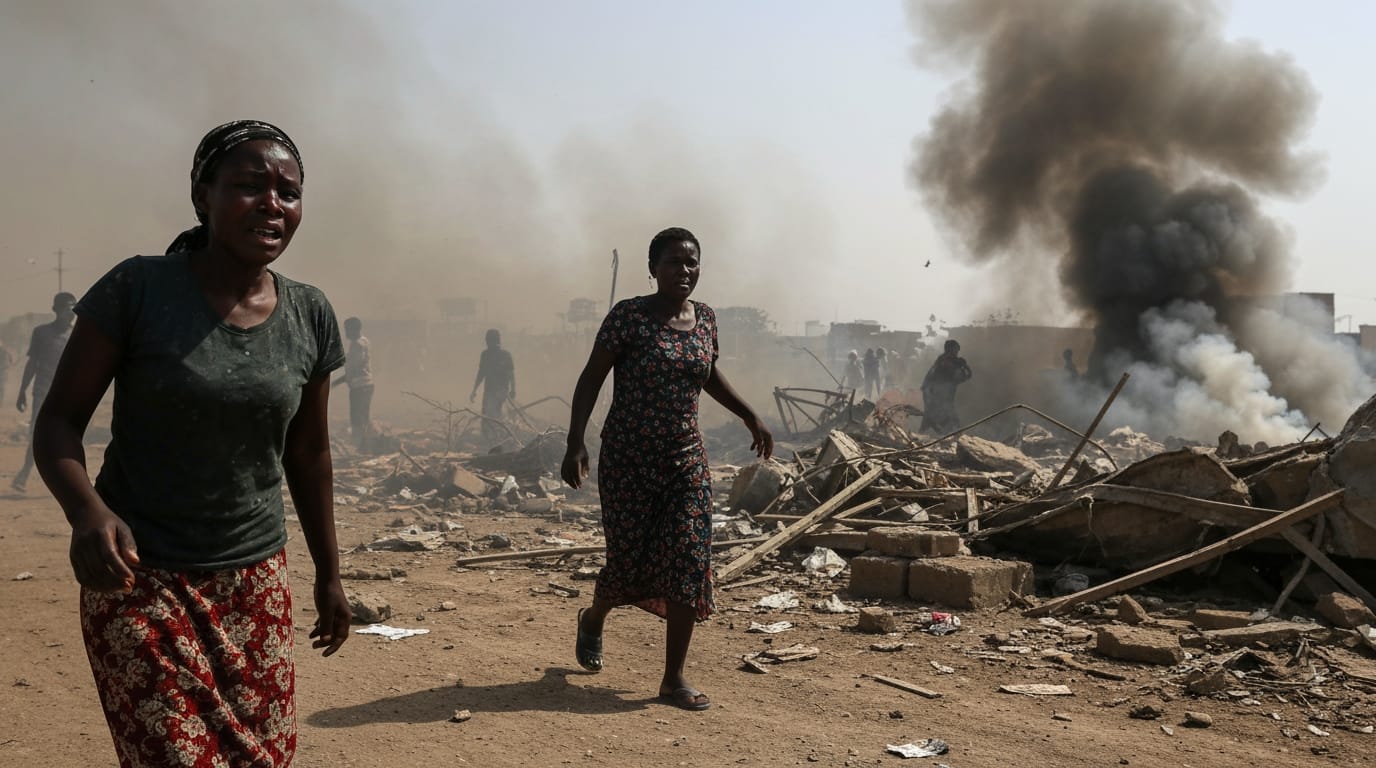
An aid convoy operated by the United Nations World Food Program (WFP) was struck by a suspected drone attack in Sudan's North Kordofan state on Friday, resulting in one fatality and several injuries. The incident, which saw humanitarian supplies burned and destroyed, has drawn widespread condemnation and highlights the perilous conditions for aid delivery in the war-torn nation. In a separate but related tragic event just one day later, a drone strike on a vehicle carrying displaced families in the same region claimed the lives of at least 24 civilians, including eight children, further underscoring the severe human cost of the ongoing conflict.
The attacks come as Sudan endures a brutal civil war that has created one of the world's worst humanitarian crises, with millions displaced and facing acute food insecurity. Humanitarian organizations and international bodies are calling for immediate action to protect civilians and aid workers, whose efforts are increasingly hampered by relentless violence.
Assault on a Lifeline: The WFP Convoy Strike
The WFP convoy, transporting vital food assistance to displaced populations, was targeted by a drone on Friday, February 6, in the Allah Karim area of North Kordofan province, as it made its way towards El-Obeid. The strike ignited the trucks, destroying the humanitarian supplies and leaving one person dead and at least three others wounded. Denise Brown, the U.N. Humanitarian Coordinator in Sudan, reported witnessing the aftermath, including the burning aid trucks, and expressed profound concern over the incident.
The Sudanese Ministry of Foreign Affairs swiftly accused the paramilitary Rapid Support Forces (RSF) of carrying out the drone attack, denouncing it as a "criminal act" and a "grave violation of international humanitarian law." Independent groups, including Emergency Lawyers and the Sudan Doctors Network, also attributed the strike to the RSF, labeling it a "full-fledged war crime" that undermines efforts to provide life-saving aid. As of the latest reports, the RSF had not issued an immediate comment on the specific incident.
A New Massacre: Civilian Vehicle Targeted
Just hours after the assault on the aid convoy, North Kordofan was again plunged into tragedy. On Saturday, February 7, a drone attack struck a vehicle transporting displaced families near the city of Rahad. The Sudan Doctors Network reported that this strike, also blamed on the RSF, killed at least 24 people, including eight children, with two infants among the dead. Dozens more were injured in the attack. The victims were fleeing intense fighting in the Dubeiker area, seeking safety when their transport was hit. The doctors' group described the incident as a "new massacre" and urged the international community to take immediate action to protect civilians and hold the RSF leadership accountable for these alleged violations.
These two incidents occurred on consecutive days, intensifying concerns over the RSF's use of drone technology and their alleged disregard for civilian safety and international humanitarian law. The attacks also highlight the extreme dangers faced by anyone attempting to move within conflict zones in Sudan, whether for aid delivery or seeking refuge.
International Outcry and the Broader Context of Conflict
The United States condemned the attack on the WFP convoy, with a senior adviser for African and Arab affairs emphasizing that "destroying food intended for people in need and killing humanitarian workers is sickening" and demanding accountability. The Sudanese Foreign Ministry's statement on the WFP attack underscored that such actions are "not an isolated incident, but rather a continuation of a pattern adopted by the militia to obstruct humanitarian work and use deprivation of food as a means of pressure against civilians."
Since April 2023, Sudan has been engulfed in a devastating power struggle between the Sudanese Armed Forces (SAF) and the Rapid Support Forces (RSF). This conflict has resulted in tens of thousands of deaths and displaced millions, creating an unparalleled humanitarian disaster. The war has shifted focus, with fighting now concentrated in regions like Kordofan, after the RSF gained control of much of Darfur to the west. El-Obeid, a key city that the WFP convoy was attempting to reach, has been encircled by RSF forces for a year and lies on a crucial route linking Darfur with the capital, Khartoum.
The targeting of aid convoys and vehicles carrying displaced persons is a direct violation of international humanitarian law, which mandates the protection of humanitarian workers, assets, and civilians in conflict zones. These laws require warring parties to allow and facilitate the rapid and unimpeded passage of humanitarian relief for civilians in need.
Exacerbating a Catastrophic Humanitarian Situation
The latest attacks critically undermine the already stretched humanitarian response in Sudan. More than 21 million people, nearly half of Sudan's population, are currently experiencing high levels of acute food insecurity, with several areas on the brink of famine. Attacks on humanitarian operations not only endanger personnel but also cut off life-saving assistance to populations that desperately need it, creating conditions where hunger and displacement worsen exponentially.
Humanitarian agencies frequently face immense challenges, including insecurity, bureaucratic impediments, and direct attacks, in their attempts to deliver aid. In 2024, at least 85 aid workers were killed in Sudan, according to the UN Office for the Coordination of Humanitarian Affairs (OCHA), highlighting the extreme risks involved. The destruction of aid supplies, as seen in the WFP convoy attack, represents a profound setback for communities already struggling for survival.
The recent drone strikes in North Kordofan represent a severe escalation in the Sudanese conflict's impact on civilians and humanitarian efforts. The loss of life among those seeking safety and delivering essential aid underscores the urgent need for all parties to the conflict to respect international humanitarian law and ensure the protection of civilians and unhindered access for humanitarian assistance. Without a drastic change in the conduct of hostilities, the humanitarian crisis in Sudan is poised to deepen, with catastrophic consequences for millions of vulnerable individuals.


