Saudi Arabia and Syria Ink Major Investment Package, Signaling New Era of Economic Partnership
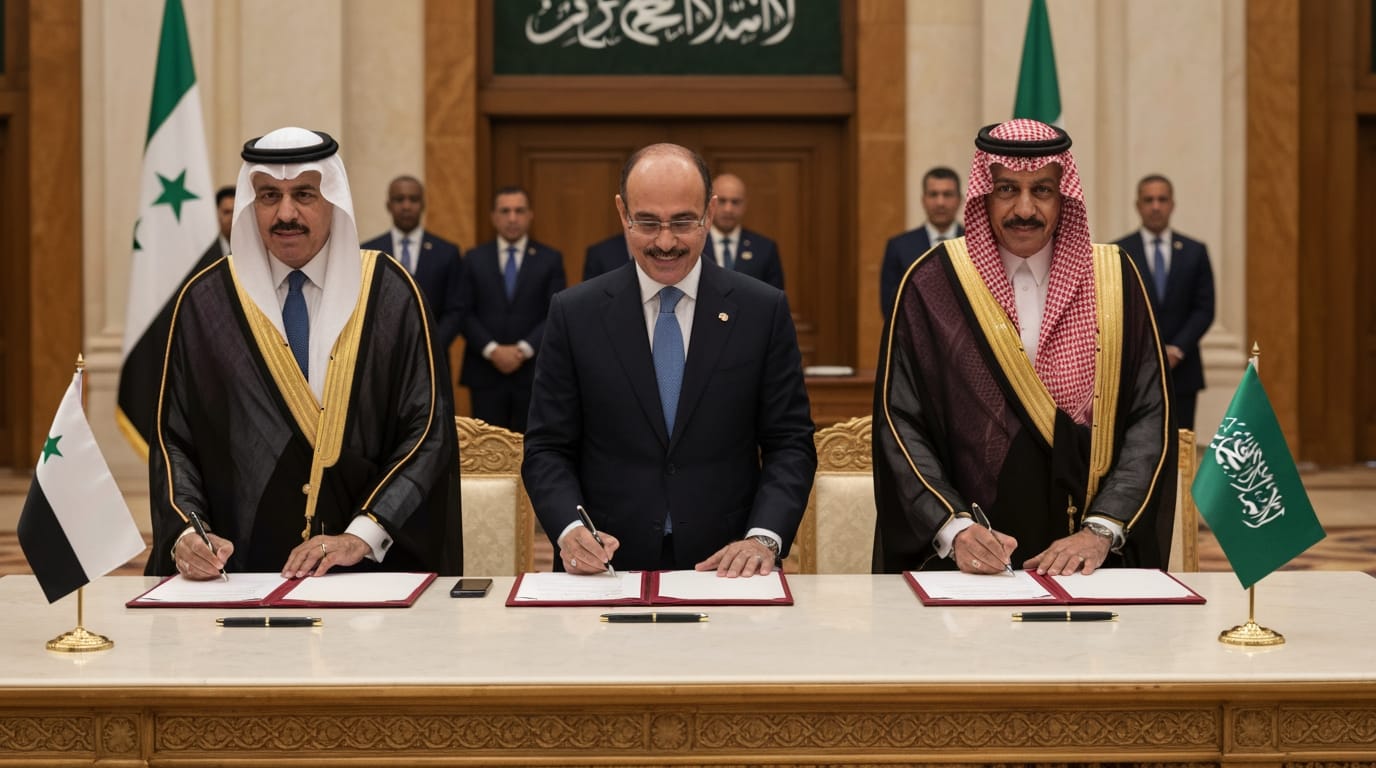
Damascus, Syria – In a landmark development signaling a profound shift in regional dynamics, Saudi Arabia and Syria on Saturday signed a comprehensive investment package designed to inject billions into the war-torn Syrian economy and foster a strategic long-term partnership. The agreements, spanning critical sectors from aviation and digital infrastructure to water and real estate, mark the most significant economic re-engagement between the two nations since the lifting of international sanctions on Syria. The deals underscore a concerted effort by Riyadh to champion Syria's reconstruction and integration into a new regional order, with potential far-reaching implications for stability and prosperity across the Middle East.
A Sweeping Commitment to Syrian Revitalization
The signing ceremony at the People's Palace in Damascus saw high-level representation, with Syrian transitional President Ahmed Al-Sharaa and Saudi Investment Minister Khalid Al-Falih overseeing the formalization of the accords. The extensive package includes commitments across a wide array of vital sectors, including aviation, banking, digital infrastructure, water, transport, real estate, energy, and telecommunications.
A cornerstone of this renewed economic partnership is the launch of the Eilaf Saudi Fund, specifically established to finance major projects within Syria. Minister Al-Falih announced an initial commitment of 7.5 billion Saudi riyals, approximately $2 billion, from this fund to spearhead the development of two airports in the strategic city of Aleppo. This initiative includes a joint aviation deal between Saudi budget carrier flynas and the Syrian Civil Aviation Authority to create "Flynas Syria," a new low-cost national carrier slated to commence operations in the fourth quarter of 2026. The ambitious redevelopment of Aleppo International Airport, overseen by a Saudi investment consortium led by BinDawood Investment Group, aims to establish Aleppo as a future regional transport hub with a projected annual capacity of up to 12 million passengers.
Beyond aviation, the agreements delve deep into Syria's foundational infrastructure. A significant digital infrastructure project, dubbed "Silk Link," will be spearheaded by Saudi company STC, transforming Syria into a global data transit corridor with an investment exceeding 3 billion Saudi riyals. Additionally, Saudi firm ACWA Power is backing what has been described as "the world's largest water agreement," focusing on essential water desalination and transport initiatives. The development of the Syrian Modern Cables Company is also part of the strategic plan, with an agreement with the Syrian sovereign wealth fund. These agreements alone represent around 20 billion Saudi riyals (approximately $5.3 billion) in new investments, building on previously signed memorandums and deals totaling 40 billion Saudi riyals, bringing the cumulative Saudi investment in Syria to roughly 60 billion Saudi riyals, or about $16 billion. This substantial financial influx is poised to lay the groundwork for a broader surge of Saudi investments into Syria.
Strategic Realignments and Economic Imperatives
The burgeoning economic ties between Riyadh and Damascus are not merely transactional; they are deeply rooted in evolving geopolitical strategies and pressing economic needs. For Saudi Arabia, this assertive engagement reflects a calculated move to shape a new regional order and prevent the resurgence of influences that run counter to its strategic interests. Following the collapse of the Bashar al-Assad regime in December 2024 and the ascension of transitional President Ahmed Al-Sharaa, Saudi Arabia has actively positioned itself as a key backer of Syria's new leadership. This proactive stance aims to fill a potential power vacuum, counter perceived Iranian influence, and leverage the vast economic opportunities presented by Syria's post-conflict reconstruction. The World Bank estimates Syria's reconstruction could cost between $216 billion and $400 billion, presenting a significant arena for Gulf investment.
For Syria, the investment package represents a lifeline for its devastated economy and a crucial step towards its long-awaited revival. After years of isolation, the new leadership under President Al-Sharaa is prioritizing economic recovery and reintegration into the Arab community. The lifting of select U.S. sanctions in mid-May, followed by more stringent sanctions relief in December, has paved the way for foreign investors to channel funds into the country, providing much-needed relief. Syrian officials emphasize that these agreements will contribute significantly to infrastructure development and directly benefit Syrian citizens. The resumption of banking transfer channels between the two countries, announced by Minister Al-Falih, is particularly vital for facilitating trade, remittances, and further investment, and marks a practical easing of previous financial restrictions.
Catalyzing Reconstruction and Regional Stability
The implications of these agreements extend beyond bilateral economic gain, touching upon broader regional stability. The scale of the investment underscores a shared commitment to move past a period of strained relations and work towards a more interconnected and prosperous Middle East. Even the United States, through its Special Envoy for Syria, Tom Barrack, has praised the agreements, highlighting their potential role in Syria's reconstruction efforts and aligning them with the principle that regional stability is best achieved when nations take responsibility for their own future.
The focus on critical infrastructure — from transportation networks to digital connectivity and water resources — is paramount for rebuilding a society ravaged by conflict. The development of Aleppo International Airport, a city that bore the brunt of intense fighting, symbolizes a tangible step towards economic revival and reconnecting communities. The "Silk Link" project, in particular, could establish Syria as a key transit hub for data, leveraging its geographical position at the crossroads of continents, transforming its role in the global digital economy. Such projects are expected to generate substantial employment, stimulate local industries like cement and concrete, and contribute to government revenues, all crucial for sustaining popular support for the new Syrian administration.
A Long-Term Vision Amidst Challenges
The establishment of a Saudi-Syrian Business Council will oversee these strategic projects, aiming to create a sustainable path for economic integration and partnership. While the total pledged foreign investment in Syria has reportedly reached over $28 billion, the full scale of reconstruction remains immense, with cost estimates ranging into hundreds of billions. The challenge lies not only in securing funds but also in ensuring effective implementation, fostering a stable investment climate, and navigating the complexities of post-conflict recovery.
However, the current momentum suggests a strong commitment from both Saudi Arabia and Syria to this long-term vision. The strategic nature of the agreements, described by Minister Al-Falih as "structural rather than symbolic," indicates a foundational shift in their relationship. This economic partnership aims to provide the essential framework for Syria's comprehensive recovery, fostering an environment where its citizens can begin to rebuild their lives and their nation, while simultaneously solidifying Saudi Arabia's leading role in shaping the region's future. The convergence of Saudi capital and Syrian reconstruction needs, facilitated by a changing international political landscape, heralds a new chapter for both nations and the wider Middle East.


