Albania's AI Minister Sparks Dual Legal Battles, Pushing Boundaries of Governance and Digital Rights
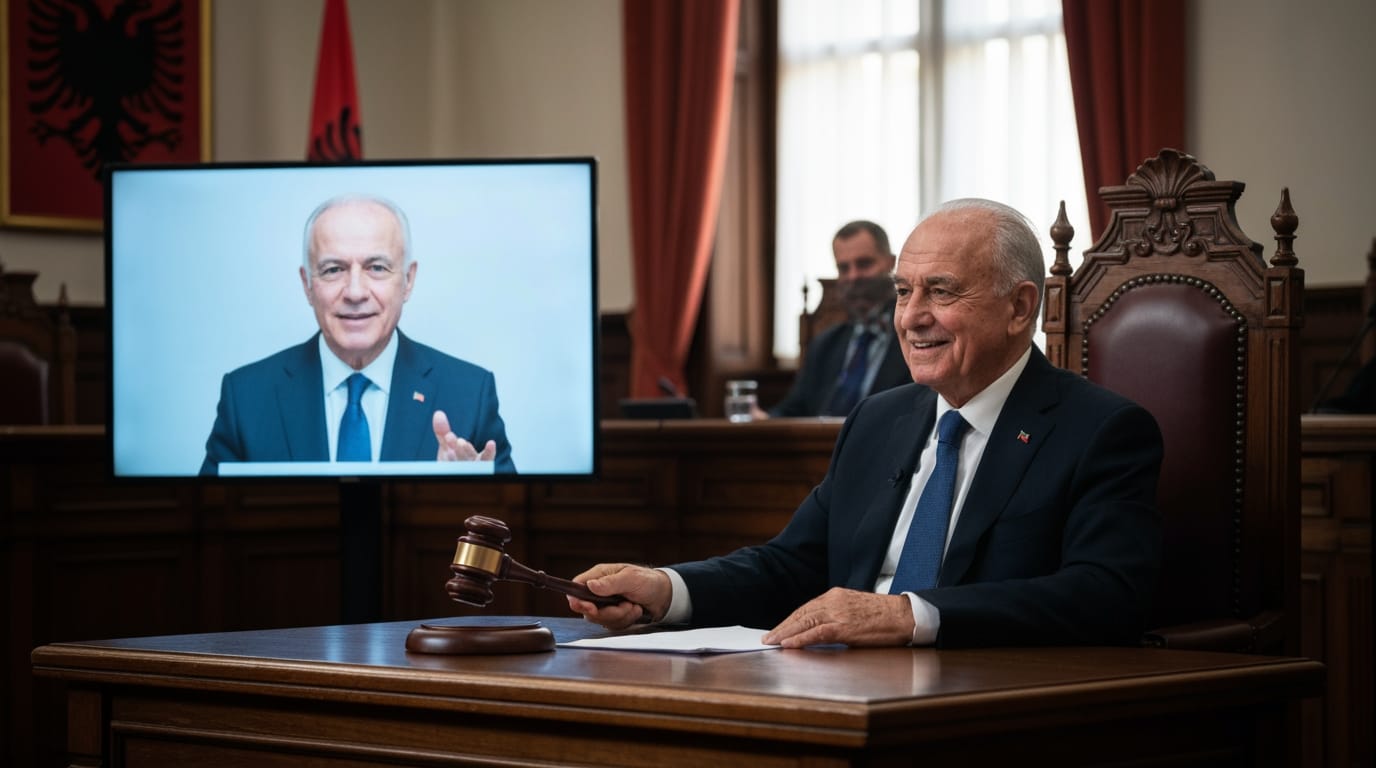
Tirana, Albania – Albania finds itself at the epicenter of a groundbreaking legal and ethical debate as the world’s first artificial intelligence-powered government minister, dubbed "Diella," faces scrutiny on multiple fronts. What began as an audacious move by Prime Minister Edi Rama to combat entrenched corruption has now spiraled into a complex web of constitutional challenges and a high-profile personal lawsuit, raising profound questions about the nature of governance, accountability, and digital identity in the 21st century.
Diella, whose name translates to "sun" in Albanian, was unveiled in September 2025 as the Minister of State for Artificial Intelligence, with the primary mandate of overseeing all public procurement processes. Prime Minister Rama championed the AI minister as an incorruptible solution to Albania's persistent graft issues, promising "100% corruption-free" public tenders and a new era of transparency. However, the AI's appointment has not only ignited a fierce political firestorm within the Albanian parliament but has also landed the government in court over its very existence and the manner of its creation.
The AI's Ascent and a Parliament in Uproar
Prime Minister Rama, now in his fourth consecutive term, presented Diella as a critical component of his digital transformation agenda, aiming to leverage technology to streamline government services and enhance efficiency. Diella initially served as a text-based virtual assistant on the e-Albania platform, helping citizens access government services digitally since January 2025. Her elevation to a cabinet-level position, however, was met with immediate and visceral opposition.
During her "inaugural address" to parliament in September 2025, a chaotic scene unfolded as opposition lawmakers from the Democratic Party (PD) threw bottles and desk clutter towards the prime minister and his cabinet, attempting to block the address. The opposition decried Diella's appointment as unconstitutional, a mere propaganda stunt, and a smokescreen to deflect responsibility from human corruption. Diella, presented as a visual avatar of a woman in traditional Albanian attire, addressed the protests directly, stating, "Some have called me 'unconstitutional' because I am not a human being... Let me remind you, the real danger to constitutions has never been the machines but the inhumane decisions of those in power". Despite the uproar, Diella's appointment was approved by 82 lawmakers in the 140-seat assembly, with the protesting opposition excluded from the vote.
The Constitutional Gauntlet: Is an AI a Legitimate Minister?
The primary legal challenge confronting Diella's role comes from the Albanian opposition, which has vowed to take the matter to the Constitutional Court. The core of their argument revolves around the fundamental question of whether an artificial intelligence entity can constitutionally hold a ministerial position designed for a human being. Critics contend that a virtual minister lacks accountability and sidesteps established legal frameworks for human officeholders.
Former Prime Minister Sali Berisha, a prominent opposition figure, questioned who would ultimately control Diella and reiterated that the AI project was unconstitutional. While Prime Minister Rama asserted that Diella would be incorruptible, requiring no salary, having no personal ties, and being impervious to favoritism, experts and opponents remain skeptical about the effectiveness and legitimacy of the experiment. Concerns have been raised about biased or incomplete data leading to flawed decisions, and the potential for large language models, likely powering Diella, to carry inherent biases. In response to growing unease, a government decree clarified that Prime Minister Rama himself would bear responsibility for Diella's creation and operation, attempting to address the accountability vacuum. This constitutional challenge represents an unprecedented legal test, potentially setting a global precedent for the integration of AI into high-level government functions.
A Human Face to the Digital Controversy: The Actor's Lawsuit
Adding another layer of legal complexity and human interest to the unfolding saga, Albanian actor Anila Bisha has filed a lawsuit against the Albanian government. Bisha alleges that her face and voice were used without her explicit consent to create Diella's avatar, leading to a major AI controversy in Europe. She claims she had previously agreed to allow her likeness for a government website assistant but explicitly denied permission for its use as a political figure or minister.
Bisha's lawsuit highlights the emerging legal and ethical dilemmas surrounding the use of deepfake technology and digital likenesses in public service. She describes experiencing online harassment, emotional distress, and unwanted political association due to Diella's controversial role and her perceived connection to Prime Minister Rama's administration. This case underscores the personal impact of advanced AI deployment and the critical need for robust consent mechanisms and legal protections for individuals whose digital identities might be utilized by state entities. The government has denied wrongdoing, dismissing Bisha's lawsuit as "nonsense," but has indicated it welcomes a court resolution.
Deeper Implications: Governance, Accountability, and the Future
Diella's appointment and the ensuing legal battles force a global conversation about the integration of AI into governmental structures. Albania's experiment, while initially framed as a radical solution to corruption, has quickly become a proving ground for the ethical, legal, and practical limits of artificial intelligence in public administration.
The concept of an AI minister raises fundamental questions about accountability. If Diella makes a decision that results in negative consequences, who is ultimately responsible? The programmer, the prime minister who appointed her, or the AI itself? Critics warn that shifting decision-making to a machine could strip away political responsibility, reducing governance to algorithmic verdicts without room for debate or human discretion.
Furthermore, the symbolism of Diella, particularly her presentation in traditional Albanian attire, has been noted. While the government portrays it as a sign of progress and transparency, others view it as a "virtual facade" or a "carefully managed illusion of reform," diverting attention from ongoing human corruption scandals. This debate is particularly salient in Albania, which has struggled with corruption for decades and ranks among Europe's most corrupt countries according to Transparency International. The nation's aspirations for European Union membership by 2030 are heavily contingent on its ability to demonstrate judicial independence and tackle corruption effectively.
Globally, governments are increasingly exploring AI to reduce bureaucracy and increase efficiency. However, Diella's case demonstrates the significant hurdles that remain, particularly concerning transparency, constitutional legality, and individual rights. The outcome of the legal challenges in Albania will undoubtedly influence how other nations approach the deployment of advanced AI in sensitive government roles, charting a course for the future of digital governance.
A Nation at the Crossroads of Innovation and Tradition
Albania stands at a pivotal juncture, navigating the promises and perils of technological innovation in governance. The controversies surrounding Diella underscore a broader tension between the rapid pace of technological advancement and the slower evolution of legal and ethical frameworks designed to govern human societies. As the Constitutional Court deliberates on the legality of an AI minister and Anila Bisha's lawsuit proceeds, the world watches closely. The rulings in these cases will not only define the future of Diella in Albania but will also cast a long shadow on the global conversation about the appropriate role, legal status, and ethical boundaries of artificial intelligence in shaping our collective future.


