Aleppo Engulfed: Syrian-Kurdish Clashes Threaten to Ignite Wider Regional Conflict
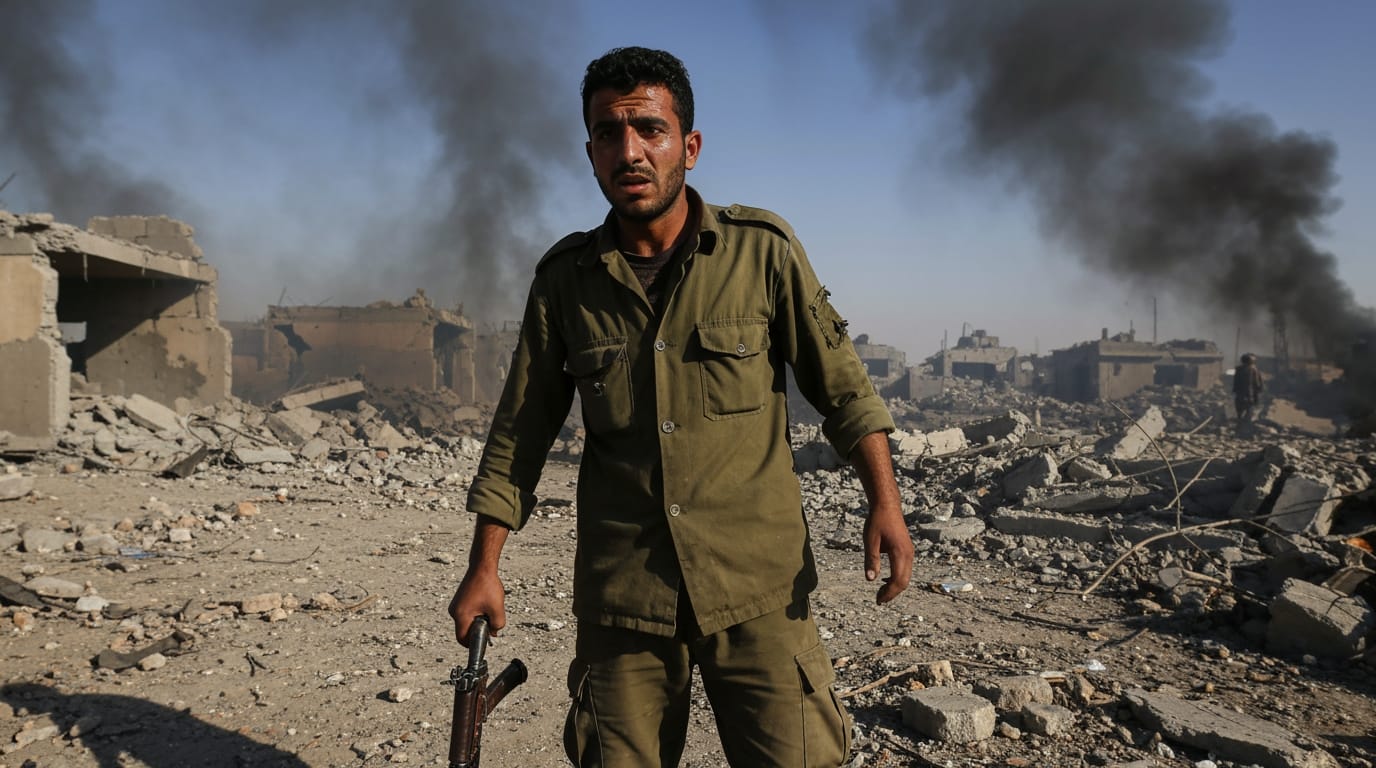
Aleppo, Syria – A precarious calm has been shattered in Syria's northern city of Aleppo, as deadly clashes between Syrian government forces and the Kurdish-led Syrian Democratic Forces (SDF) have escalated dramatically in recent days, sparking widespread concern that the localized conflict could spiral into a broader regional war. The renewed violence, concentrated in the predominantly Kurdish neighborhoods of Sheikh Maqsood and Ashrafieh, represents a critical test of a fragile March 2025 agreement intended to integrate Kurdish forces into state institutions and stabilize governance in SDF-held territories. The breakdown of this deal, coupled with a mounting civilian toll and the intricate web of regional and international interests, has observers warning of severe humanitarian and security repercussions across an already volatile Middle East.
Aleppo's Fiery Crossroads: A Shattered Accord
The latest round of hostilities erupted around January 6, 2026, marking a significant intensification of a simmering conflict. Residential areas in Sheikh Maqsood and Ashrafieh have borne the brunt of shelling and gunfire, resulting in civilian casualties and the displacement of tens of thousands of people. Reports indicate that at least five civilians have been killed and dozens injured since the clashes began, with some estimates putting the displaced population between 30,000 and 45,000, many fleeing towards the Afrin region. Essential services, including electricity and water, have experienced partial outages, and several hospitals have ceased operations, compounding an already dire humanitarian situation.
Both sides have exchanged accusations regarding the instigation of the violence. Syrian government security sources claim their forces were subjected to direct attacks by SDF-affiliated groups, while the SDF contends that government forces initiated the escalation by shelling residential neighborhoods. The Syrian army has declared Sheikh Maqsood and Ashrafieh as "closed military zones" and issued warnings to residents to evacuate, framing their actions as a response to what they describe as hundreds of attacks by the SDF between December 2025 and January 2026. Conversely, the SDF denies a direct military presence in these Aleppo neighborhoods, asserting that security had been handed over to local forces, and accuses pro-government groups of fabricating Kurdish military activity to justify their assault.
At the heart of the current crisis lies the stalled implementation of a March 2025 agreement between the Syrian government and the SDF. This deal aimed to merge Kurdish forces into the Syrian national army and reorganize security and administrative structures in areas under SDF control. However, deep mistrust and political disputes have prevented its effective realization, with the Kurds seeking decentralized rule that Damascus has consistently rejected. Observers note that both parties often intensify rhetoric to bolster their positions before talks, yet this cycle of violence underscores the profound divisions on the ground.
A Decade of Distrust and Disputed Autonomy
The Syrian Democratic Forces (SDF), predominantly Kurdish but multi-ethnic in composition, emerged in 2015 as a key partner for the U.S.-led coalition in the fight against the Islamic State (ISIS). Operating as the official military wing of the Autonomous Administration of North and East Syria (AANES), also known as Rojava, the SDF successfully expelled ISIS from significant territories, expanding its control into Arab-majority regions rich in oil and wheat. This de facto autonomy, established during the Syrian civil war, has been a long-standing point of contention with the Syrian central government, which views any form of self-rule as a threat to its territorial integrity.
The historical marginalization of Kurds in Syria, including the denial of citizenship and cultural rights for decades, fueled their aspirations for self-determination. While the SDF's multi-ethnic composition aims for a broader, decentralized democratic Syria, Damascus and Ankara reject autonomy, viewing it as a precursor to separatism. The current areas under AANES control are economically vital, possessing significant oil, gas, and agricultural resources, which further complicates any integration talks with the central government.
The Geopolitical Chessboard: External Interests at Play
The conflict in Aleppo is not merely an internal Syrian affair but a complex geopolitical chessboard where regional and international powers pursue their own strategic interests.
Turkey views the SDF, particularly its dominant People's Protection Units (YPG), as an extension of the Kurdistan Workers' Party (PKK), a group designated as a terrorist organization by Turkey and the United States. Ankara has long expressed hostility towards Kurdish self-governance along its southern border and has launched multiple military operations against the SDF. Amid the current Aleppo clashes, Turkish defense officials have explicitly stated their readiness to provide military support to the Syrian government if requested, framing the fighting as a "counter-terror operation". Turkey's Foreign Minister has blamed the SDF's "uncompromising stance" for the deadlock in integration talks and has been working with Syrian and American officials to de-escalate the unrest.
The United States has been a crucial backer of the SDF in its fight against ISIS, maintaining a military presence in northeastern Syria that the SDF sees as a safeguard against Turkish incursions. Washington has expressed concern over the Aleppo clashes, urging restraint and calling for dialogue, with U.S. envoy Tom Barrack actively mediating between Kurdish authorities and Damascus. However, U.S. policy faces inherent contradictions, as it supports Kurdish forces while also pushing for their integration into the Syrian state, a move that could undermine their autonomy and potentially weaken a key ally.
Russia, a staunch ally of the Syrian government, has historically played a mediating role between Damascus and the Kurds. Moscow has reinforced its military presence in Qamishli and aims to retain influence across Syria's fragmented landscape. Russian Foreign Minister Sergey Lavrov recently emphasized the importance of protecting Kurdish rights within a unified Syria and offered Moscow's mediation, while simultaneously supporting the Syrian government's efforts to reassert control. Russia's strategy involves balancing between various actors, including balancing against Turkish influence, to protect its interests in the region.
Intriguingly, Israel has also weighed in, condemning the Syrian government's attacks on the Kurdish minority in Aleppo. Israeli Foreign Minister Gideon Sa'ar highlighted the international community's "debt of honor" to the Kurds for their fight against ISIS, noting that the violence contradicts promises of a "new Syria". This condemnation comes despite a recently established U.S.-brokered communication mechanism between Israel and Syria aimed at lowering bilateral tensions.
Humanitarian Fallout and the Precipice of Wider Conflict
The human cost of the renewed fighting in Aleppo is already significant, with thousands displaced and basic services disrupted. Humanitarian organizations warn that prolonged conflict could exacerbate psychological trauma, especially among vulnerable populations, including children, women, and the elderly. The Syrian Observatory for Human Rights has accused Syrian authorities of "sectarian crimes and ethnic cleansing" against Kurds, allegations that authorities deny.
Analysts and officials universally caution that a failure to de-escalate the current tensions could trigger a wider conflict across northern Syria and beyond. The SDF spokesperson, Farhad Shami, explicitly warned that the fighting in Aleppo "opened the door to the expansion of the war into other areas". The complex interplay of regional and international actors, each with their own objectives, makes the situation particularly volatile. With the March 2025 integration agreement seemingly on the verge of collapse, the prospect of a unified, stable Syria remains distant, leaving the Kurdish population in a precarious position and the broader region teetering on the brink of further instability. The international community's efforts to foster dialogue and protect civilians are now more critical than ever to avert a catastrophic escalation.


